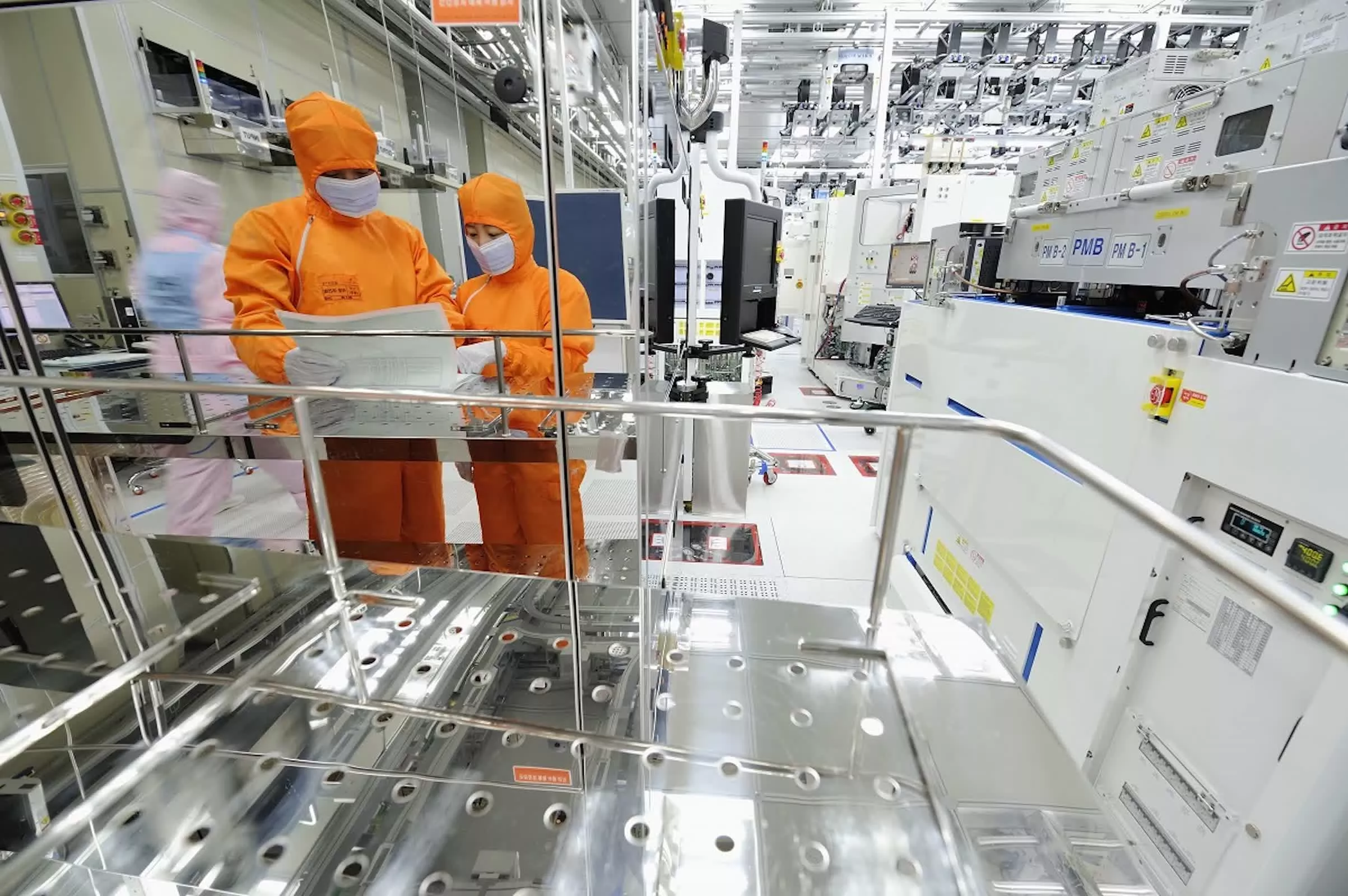
What just happened? SK Hynix says it has already sold out next year's supply of its key semiconductor products, driven by intense demand for high-performance memory chips for artificial intelligence systems. The company's third-quarter results show the industry's rapid transformation under the weight of AI investment, with profits reaching record levels and production schedules booked well into 2026.
The South Korean chipmaker reported an operating profit of 11.4 trillion won ($8 billion) for the three months ended September 30, a 62 percent increase from the same period last year. Revenue rose 39 percent year over year to 22.4 trillion won, fueled by strong orders for its high-bandwidth memory chips, or HBM.
Executives say demand for SK Hynix's latest memory technology continues to outstrip supply. Kim Kyu-hyun, head of DRAM marketing, described the markets for both DRAM and NAND memory as "extremely tight," noting that customers have already secured production slots for conventional memory chips extending into 2026.
"Our DRAM, NAND, as well as HBM capacity for next year has been sold out," he told The Financial Times.
The imbalance between supply and demand is most pronounced in the HBM segment. Research firm TrendForce notes that SK Hynix controls more than half of the global HBM market and produces chips used in many of Nvidia's AI accelerators. Rival Samsung Electronics holds just over a quarter of the market, while Micron Technology in the United States captures much of the remainder.

Strong AI-driven demand has also reshaped strategic partnerships. Earlier this month, SK Hynix and Samsung each signed preliminary agreements with OpenAI to supply semiconductors for the company's proposed $500 billion "Stargate" supercomputing data center project.
SK Hynix said anticipated demand from that initiative alone would more than double the industry's existing HBM capacity. The company plans to increase capital spending substantially to meet those projections and confirmed that it recently completed negotiations on HBM supply contracts with all major customers for 2025.
The company expects to begin volume production of its next-generation HBM4 chips in the fourth quarter of 2025. Kim Ki-tae, head of HBM sales and marketing, said the chip's rollout will represent a considerable leap in data-processing efficiency but cautioned that meeting market needs will remain challenging in the near term.
"HBM demand continues to increase rapidly, so it will be difficult for supply to catch up any time soon," he said.
Industry experts say the company's prospects will remain closely tied to the broader trajectory of AI infrastructure. Citi analysts noted that AI inference has sharply increased demand for high-performance server memory not only in the United States but also in China, where hyperscale cloud companies are accelerating similar investments. Counterpoint Research projects the global HBM market will reach roughly $43 billion by 2027, with both SK Hynix and Samsung benefiting from the growing demand.