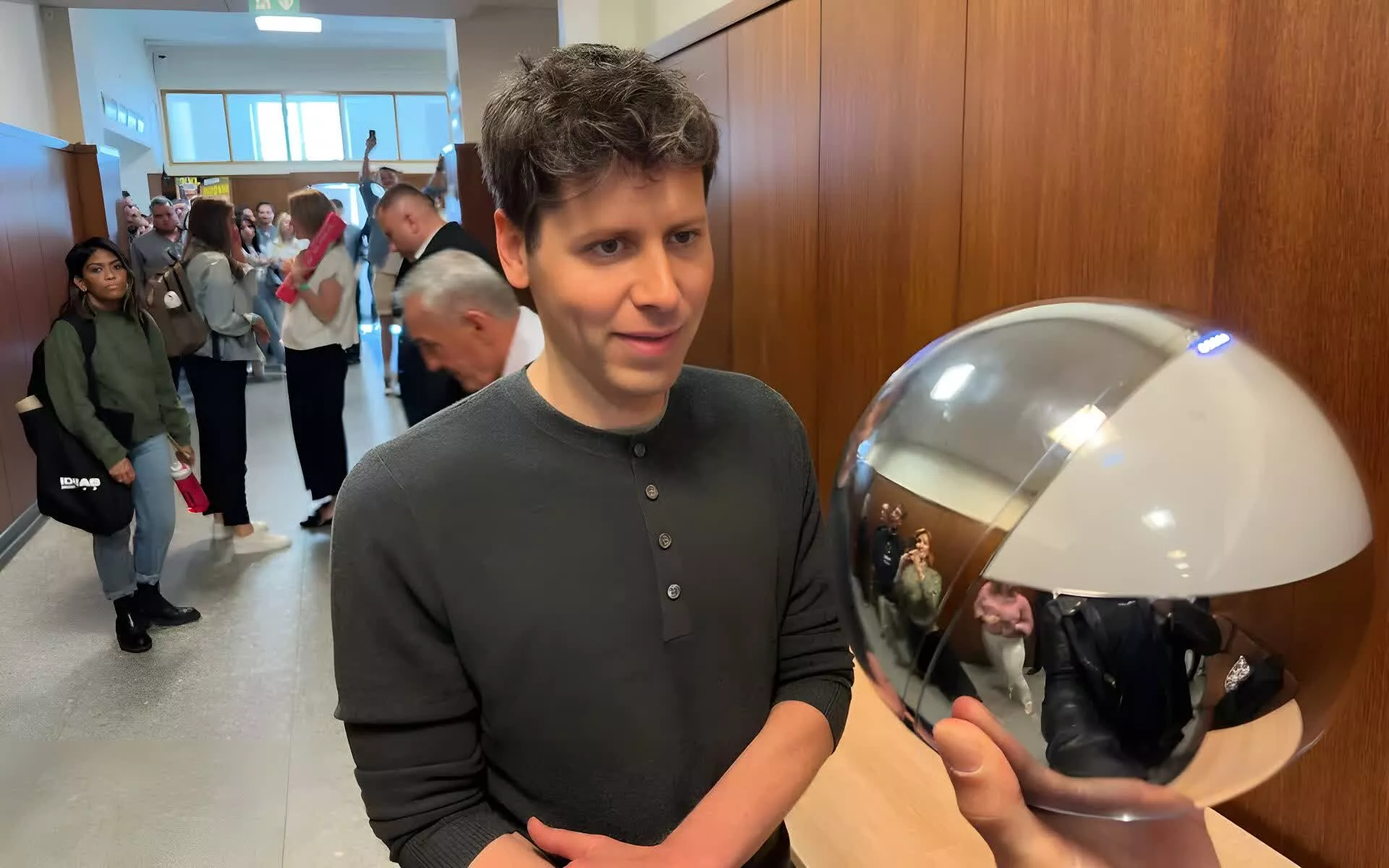
A hot potato: Not everything that Sam Altman touches is as successful as ChatGPT. The OpenAI boss' crypto-based World project – formerly called Worldcoin – has an ambitious plan to scan a billion people's eyeballs. But after several years and plenty of pushback, it's only reached 2% of that amount.
Blockchain/crypto-based World, part of Altman's Tools for Humanity startup, has a mission statement that sounds fairly unnerving: to "create a new identity & financial network owned by everyone."
World has received a lot of attention over its use of its Palantír-like Orbs that scan users' irises to confirm their identity, at which point a digital World ID is created that can be used pseudonymously in a wide variety of everyday applications.
World has a grand ambition of scanning a billion users. Business Insider reports that since the public launch in 2023, it has managed to hit just 2% of that target.
In fairness, that's still 17.5 million people who have handed over their biometric data, despite World being subject to regulatory scrutiny in many countries.
World was banned in Kenya a month after it launched. It has faced bans, suspensions, or serious regulatory orders in Spain, Hong Kong, Portugal, Indonesia, Germany (Bavaria), and Brazil, too. There have also been investigations carried out in South Korea and France, with privacy concerns the main reason behind these actions.
Portugal orders Sam Altman's Worldcoin to halt data collection https://t.co/xeqg0VHqPg
– Dr. Alexander Deicke (@AlexanderDeicke) April 3, 2024
Despite all the controversy, Tools for Humanity has a $2.5 billion valuation and attracted $240 million of investment from the likes of Andreessen Horowitz.
World is hoping to increase the number of eyeballs it scans by acting as an identity-verification contractor for some of the world most popular apps.
The company has announced a pilot program with Match Group to verify Tinder users in Japan and partnerships with companies like Stripe, Visa, and Razer. Reddit has also been in talks with Tools for Humanity to verify that its users are unique individuals, which sounds like a plan that wouldn't be welcomed by anyone.
World's Orb uses infrared cameras and depth sensors to capture a detailed image of the eye, converts it into a unique digital code (an encrypted IrisHash), and checks this against a global database to ensure each person registers only once. If unique, the system issues a World ID, which can later prove someone is human without revealing their identity through zero-knowledge cryptography.
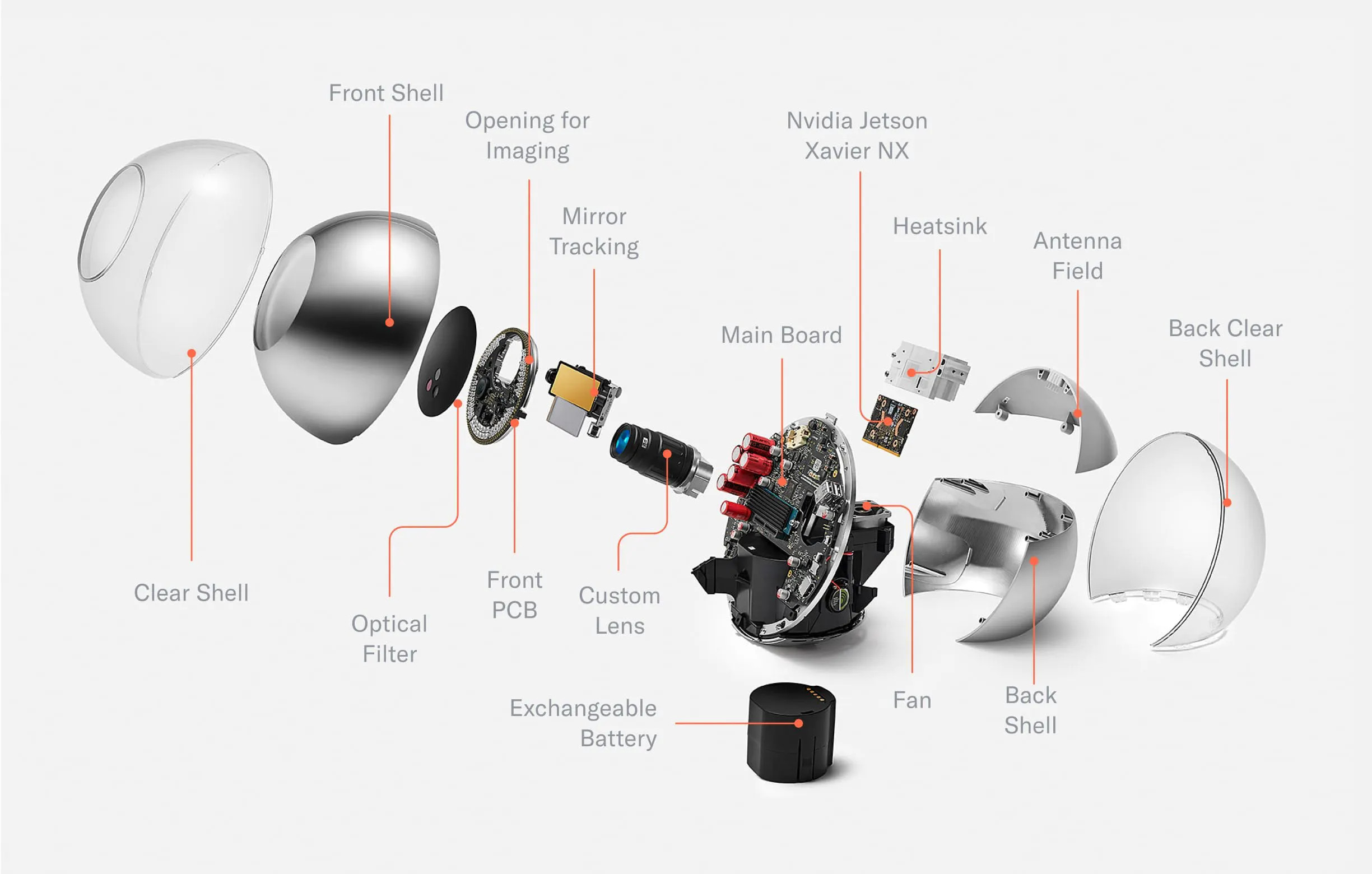
The Orb doesn't store personal details or, according to World, the raw images unless a user consents.
The irony that the man responsible for the generative AI revolution needs to build something that distinguishes humans from machines has not been lost. One former employee put it best with "He is creating the disease, but he also wants to create the cure."