
One of the biggest challenges in rolling out AI across enterprise environments is fully tapping into each organization's unique requirements, data sets, and existing infrastructure. If you're a startup with no legacy systems to plug into, every new AI product can look like a perfect fit. Established companies, however, don't have that luxury.
That's why I was intrigued by several of the announcements Amazon's AWS cloud division made at its annual re:Invent conference in Las Vegas. While other headlines may get louder buzz, the new AWS Factories initiative and the Nova Forge AI model customization platform feel far more consequential for the many organizations still wrestling with how to implement AI in a clearly beneficial, measurable way.
Toss in new control and evaluation tools for creating and deploying agents – something most companies need in order to trust agent output before deploying them internally – and AWS is offering a trio of features squarely aimed at meeting the customization needs of existing enterprises.
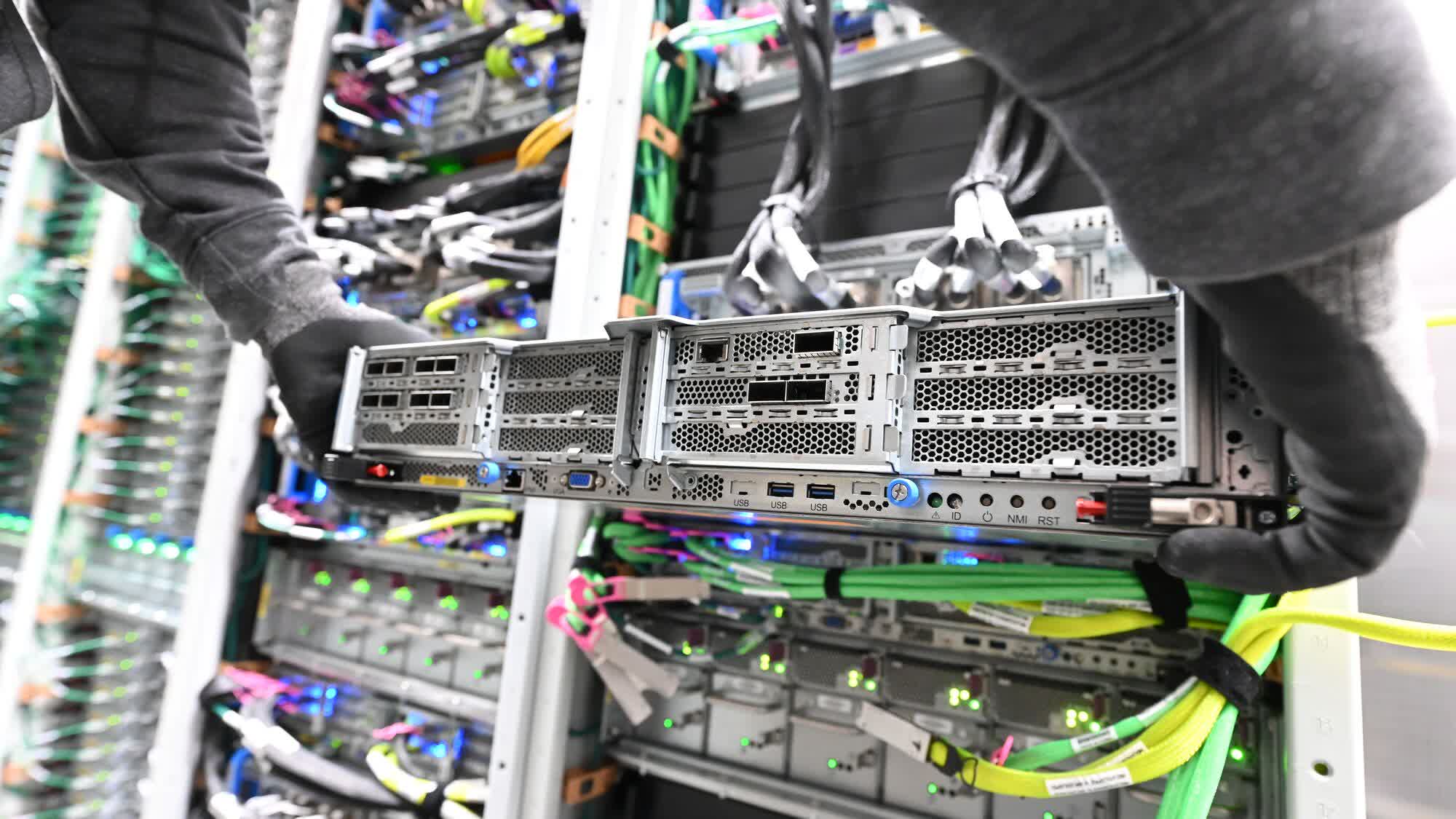
The most compelling news may be AWS Factories. What stood out is that AWS almost downplayed it, framing it as an expansion of a service that had previously been limited to a small set of customers.
AWS Factories allows companies to stand up AWS-powered AI infrastructure within their own on-prem environments. Organizations can install AI racks built with either AWS Trainium accelerators or the latest Nvidia GPUs, alongside the full AWS AI software stack. Practically speaking, this gives highly regulated industries a new and meaningful degree of flexibility.
Philosophically, it's a bigger shift. Just last year, AWS signaled no interest in extending its custom AI stack into customer data centers. Market reality intervened.
On-prem AI workloads are common – as my recent study, "The Future of AI is Hybrid," confirmed – and interest goes well beyond regulated sectors. Meanwhile, major cloud and model providers have already introduced on-prem options, making AWS look slightly late.
In truth, though, the movement toward hybrid AI that spans local data centers and public cloud resources is barely underway. AWS is still early enough to capture a very large opportunity. And by letting enterprises run workloads on AWS custom silicon in their own facilities, the company has leapfrogged even Google, which only recently announced plans to sell its TPU accelerators to third parties.
What makes AWS Factories even more interesting is that Amazon also unveiled plans to work first with Google Cloud (and next year with Microsoft Azure) to ease multi-cloud adoption. For decades, "multi-cloud" was practically a taboo term inside AWS, and the company was slow to embrace on-prem hybrid services when that trend began to accelerate. Seeing AWS actively smoothing the path to hybrid, multi-cloud, and hybrid-AI environments is remarkable.
The company's new Nova Forge offering is intriguing on many levels as well. After some early missteps with its own models, Amazon has continued to build out its Nova foundation model lineup (several new versions were also introduced at the show) underscoring its commitment.
More importantly, Nova Forge offers a new pathway for enterprises to use their own data to produce highly customized AI models trained for their specific needs. Instead of simply fine-tuning an existing model, Nova Forge provides a mechanism to fully train a custom frontier model without the astronomical cost and complexity of starting from scratch. It lets organizations insert their own data into multiple early training stages through pre-written "recipes," adjusting open weights as the process runs.
The result goes far beyond typical RAG-style fine-tuning and unlocks advanced capabilities, including reinforcement learning as the model continues to evolve in real use.
Of course, we're not just in an AI era but an agentic AI era, so AWS also announced a slate of agent-focused tools. One of the most important updates extends the existing Bedrock AgentCore framework.
The new AgentCore Evaluations continuously monitor agent behavior to ensure they do what they're intended to – and avoid what they shouldn't. Paired with a new security-centric AgentCore extension, these features should give enterprises more confidence that the billions of agents Amazon (and many others) expect to see in corporate environments can be trusted. Continuing the customization theme, organizations can tailor agent evaluation parameters so outputs and actions meet their own expectations and compliance standards.

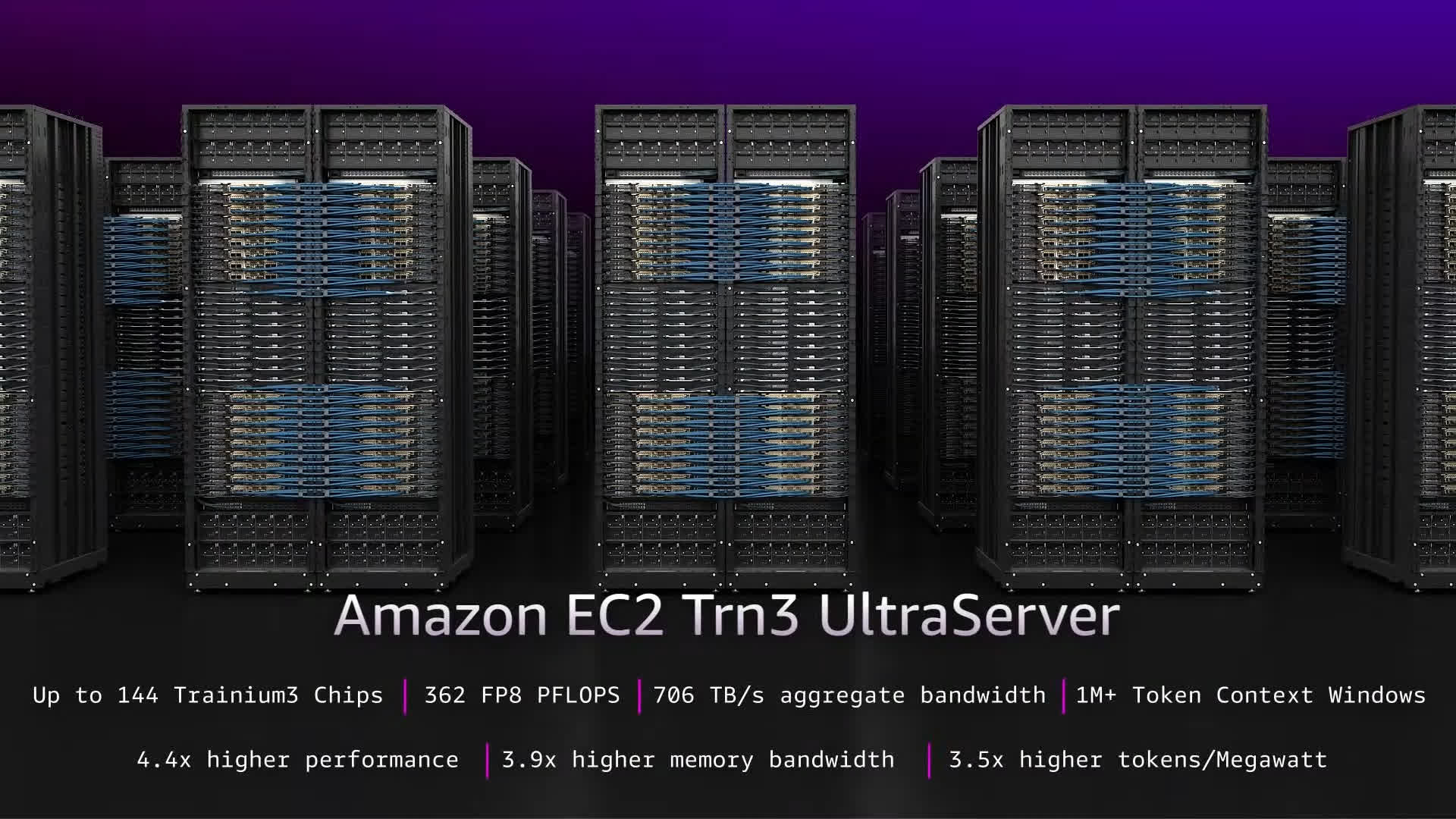
Alongside those customization efforts, AWS rolled out its usual flood of news. On the silicon front, it formally launched the Trainium 3 accelerator; introduced a new rack design showcasing AWS's custom chip-to-chip, rack-to-rack, and datacenter-to-datacenter networking; and even teased Trainium 4. The company also showed off fully autonomous "frontier agents" meant to turbocharge software developer productivity, and more.
All told, it was yet another firehose of new announcements at re:Invent and yet another example of how quickly developments in AI and agents continue to occur. But at the broader level, Amazon signaled a subtle shift in posture. Several announcements made it clear that AWS recognizes its role within a larger technology ecosystem and is focused on making it easier for companies that rely on multiple vendors (as most every company does!) to integrate AWS solutions alongside them. And that, is an important step forward.
Bob O'Donnell is the founder and chief analyst of TECHnalysis Research, LLC a technology consulting firm that provides strategic consulting and market research services to the technology industry and professional financial community. You can follow him on Twitter @bobodtech