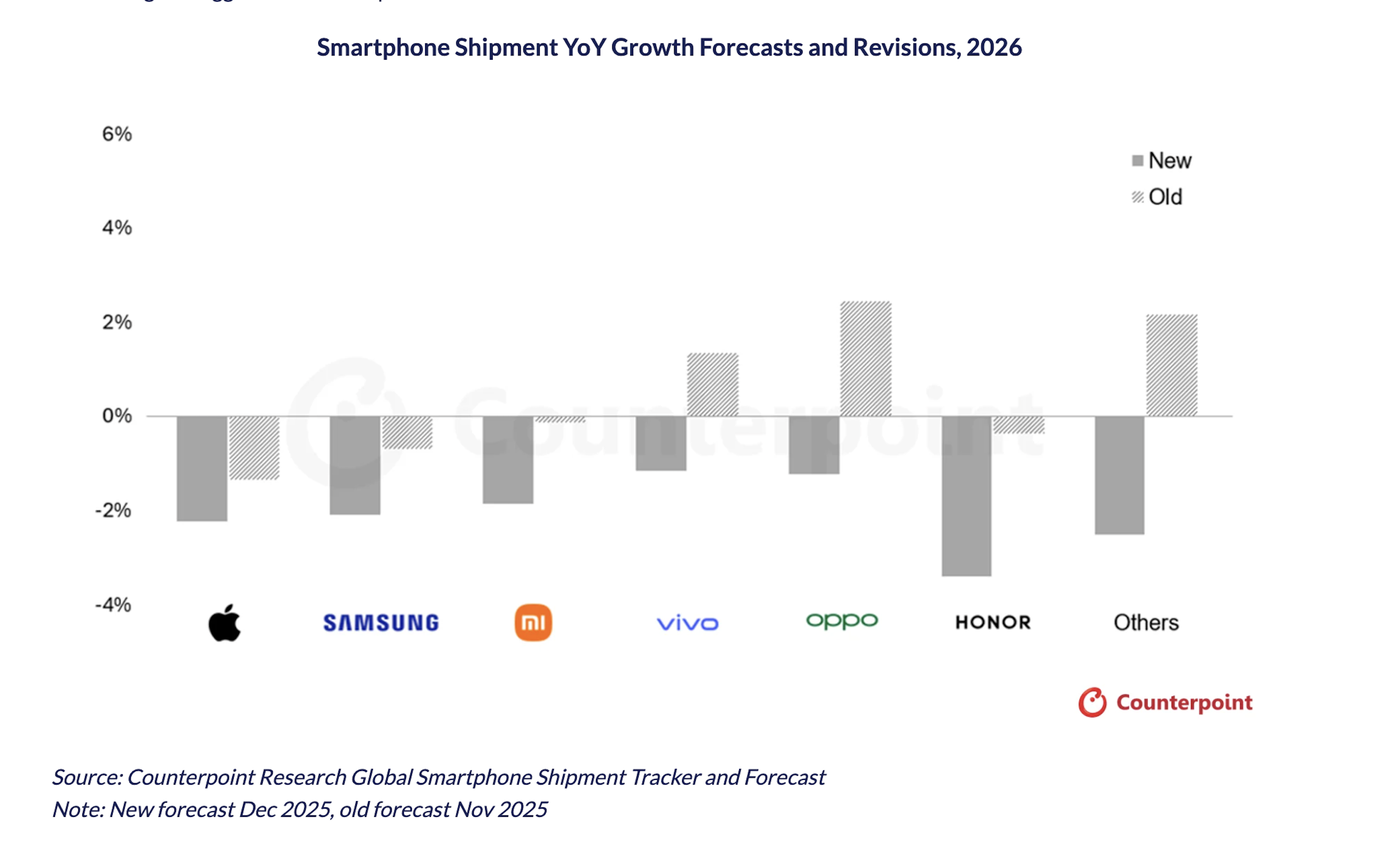
The takeaway: The global smartphone industry is heading toward a contraction in 2026, largely due to escalating component costs linked to the boom in artificial intelligence hardware demand. Counterpoint Research projects shipments will fall by about 2.1% next year, revising downward its earlier forecast, which expected declines at only a few brands. The analyst's new outlook lowers its 2026 forecast by 2.6%, with Honor, Oppo, and Vivo seeing the steepest drops compared with previous estimates.
Counterpoint now expects every major manufacturer to see a drop in year-over-year shipments. According to the report, low-end handsets are expected to be most severely impacted. It attributes the market weakness to increases in semiconductor and memory prices triggered by heightened demand from AI developers.
The firm notes that the cost of components for low-end smartphones has already risen by 20% to 30% since the start of 2025, and memory prices could jump by another 40% through Q2 2026. That surge could drive total bills of materials up between 8% and over 15% above current elevated levels, suggesting that manufacturers will have little choice but to pass those costs on to consumers.
Counterpoint also expects average selling prices to increase next year by 6.9%. The trend will further pressure budget-conscious buyers and may accelerate replacement cycles for higher-end phones – though at the expense of volume sales across all segments.
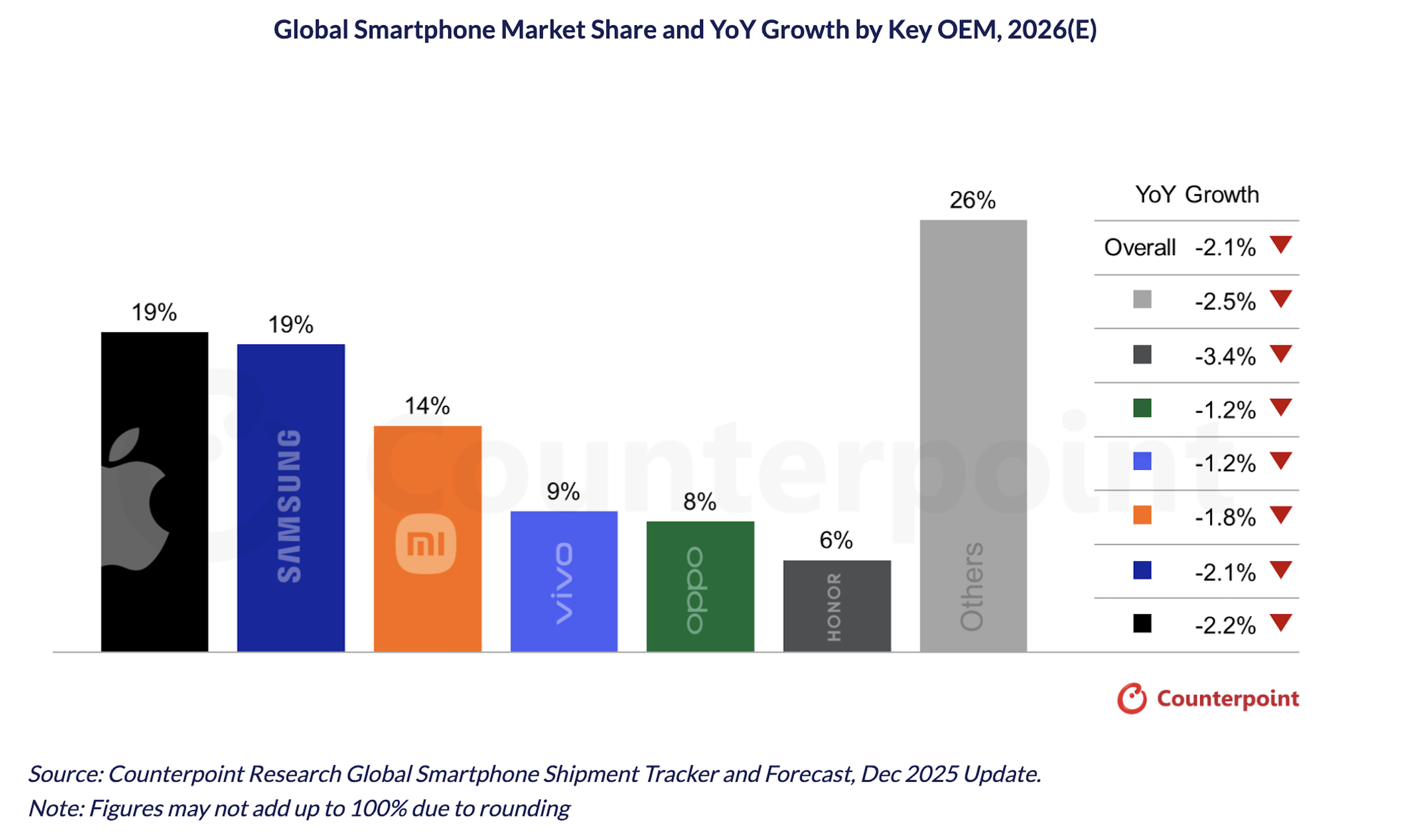
While the report sees all brands being affected, the impact will not be equal. Counterpoint says that Apple and Samsung are best positioned to ride out the downturn thanks to stronger balance sheets and more stable global supply chains.
Still, both companies are forecast to record shipment declines of around 2%. Other manufacturers have less flexibility. The report notes that Chinese OEMs – such as Xiaomi, Honor, and Oppo – face tougher conditions as profit margins shrink. Honor's shipments, for instance, could fall by more than 3%, and even Vivo and Oppo, previously expected to grow in 2026, are now projected to see declines.
If Counterpoint's revised forecast holds, 2026 could mark the second consecutive year of shrinkage for the global smartphone market, a reflection of how AI's explosive growth is reshaping not only computing but also the broader electronics supply chain.
Image credit: NSYS Group