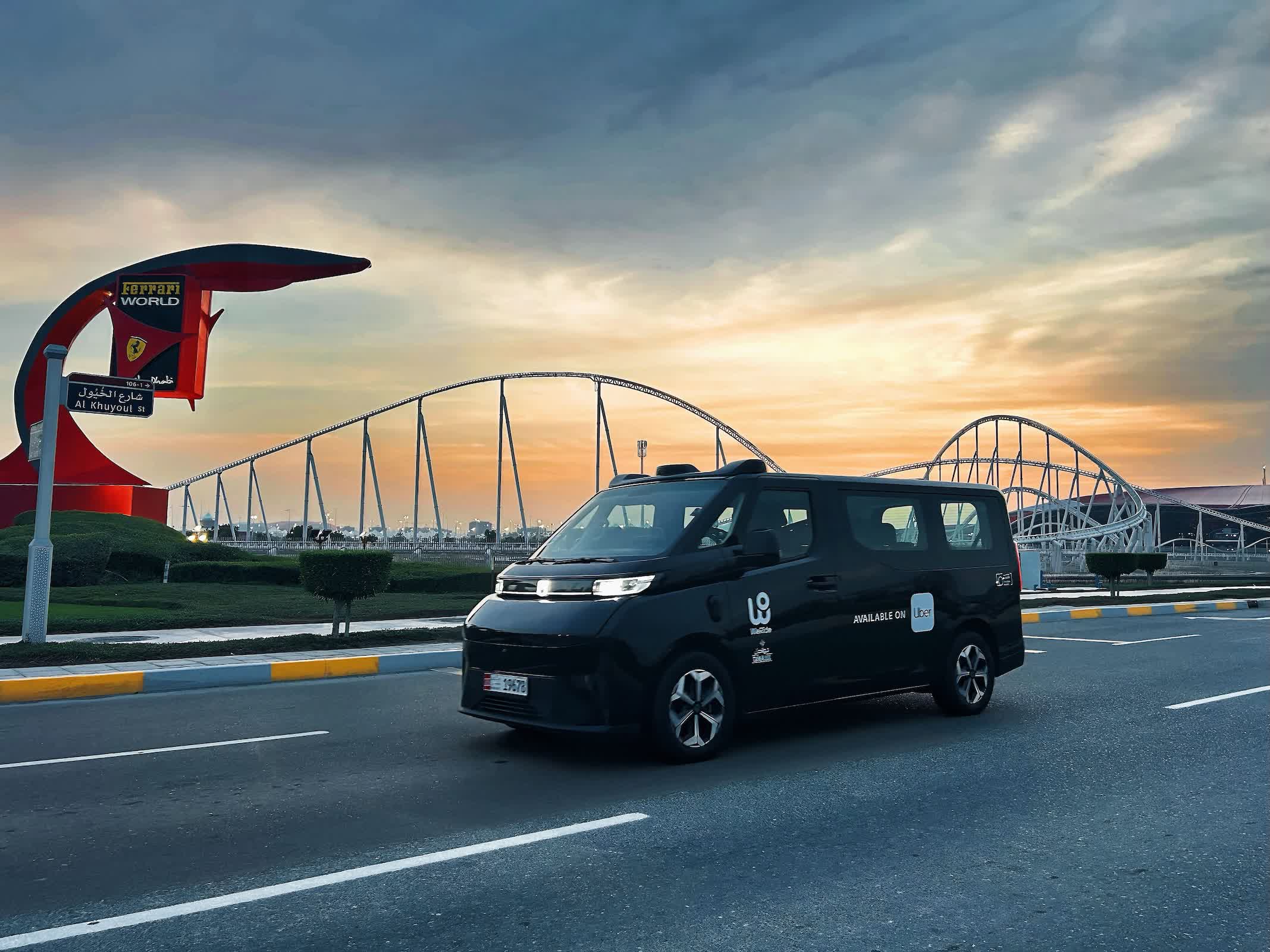
TL;DR: After years of controlled testing, 2025 marked a turning point for the global deployment of driverless taxis. Ride-hailing platforms and autonomous driving developers across North America, Europe, the Middle East, and Asia have begun transitioning from safety-driver trials to limited passenger services, betting that commercialized robotaxis will define the next era of urban mobility.
The goal, shared by nearly all major players, is to scale operations that reduce labor costs and human error while keeping fleets available at all hours. Progress remains closely tied to regional regulatory approvals and local partnerships that determine how far autonomous driving technology can advance commercially.
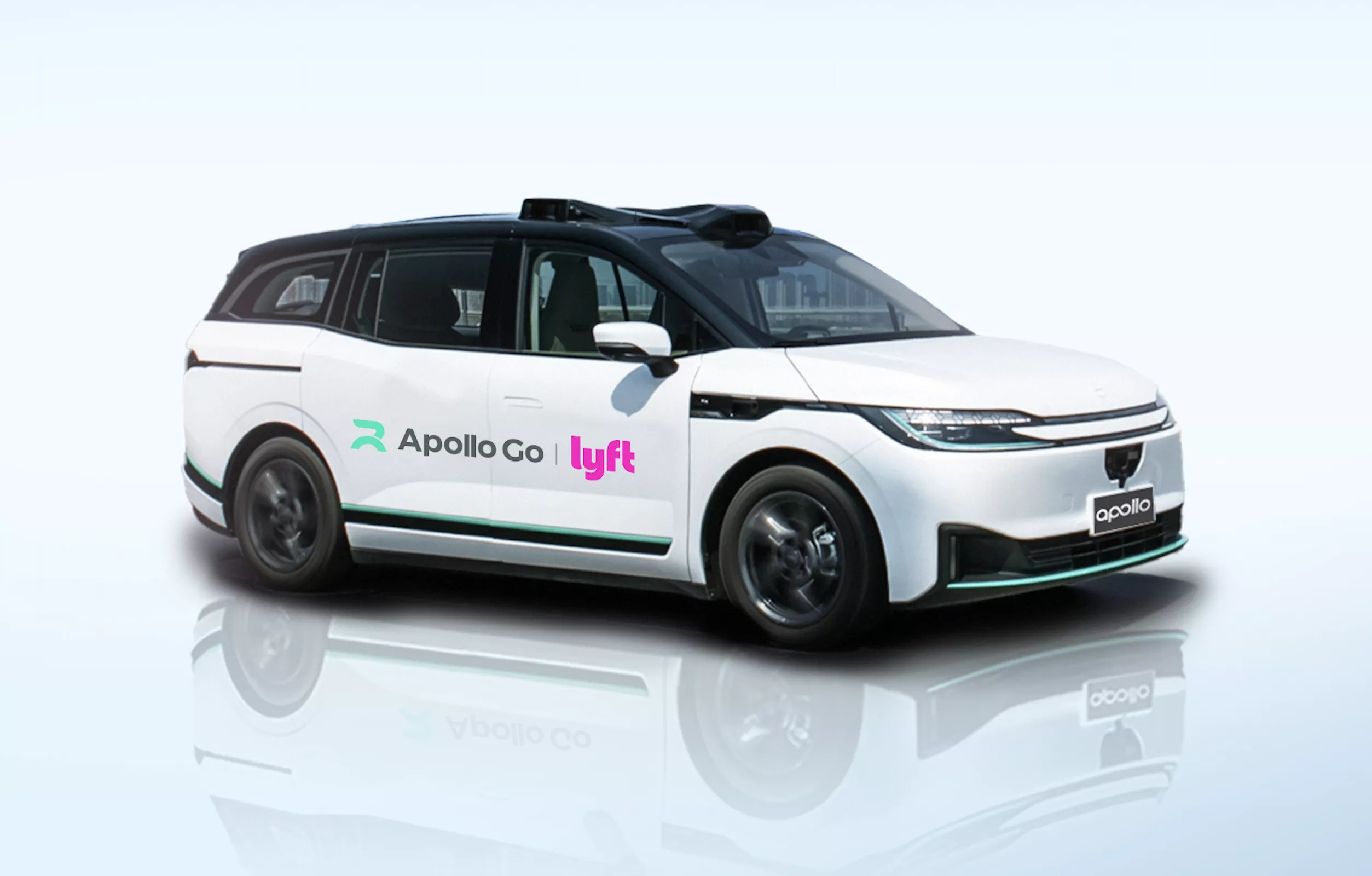
In the United Kingdom, Uber and Lyft have expanded their global footprint by partnering with China-based Baidu to test Apollo Go RT6 vehicles beginning in 2026. The initiative follows growing collaboration between Western ride-hailing firms and Chinese autonomous developers eager to enter new markets.
British startup Wayve, backed by SoftBank and Nvidia, continues to establish itself as one of the leading European firms in the space. It partnered with Uber in mid-2024 to begin advanced testing in the UK, with fully driverless operations targeted for 2026. Wayve's approach, focused on "embodied AI," combines neural network learning with real-world driving experience, distinguishing it from rule-based systems.
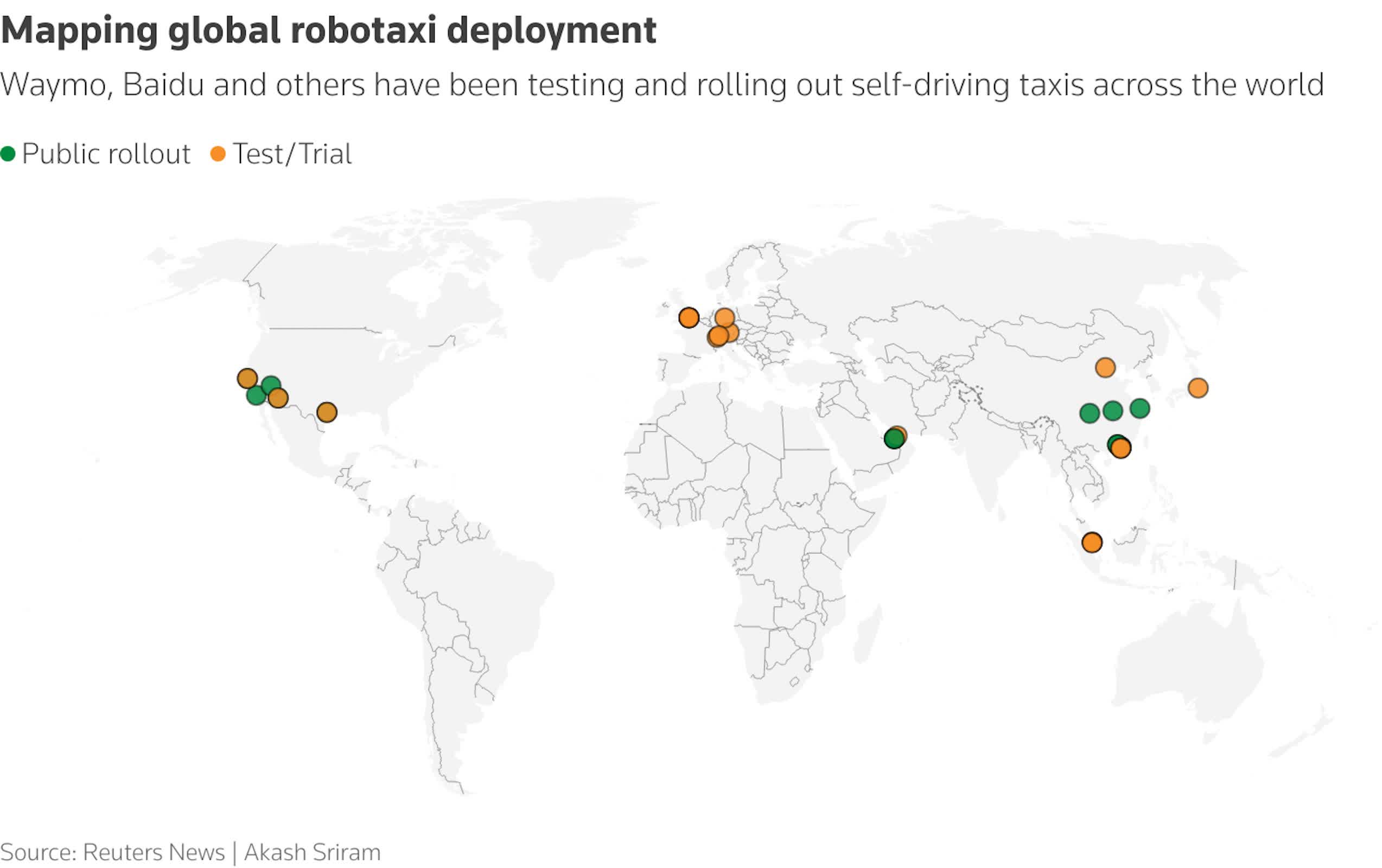
In the Middle East, Chinese firm WeRide and Uber jointly launched Level 4 driverless ride services in Abu Dhabi in late 2025 before expanding to Dubai. WeRide said a fully commercial, driverless rollout in Dubai is planned for early 2026. It has also begun testing in Singapore and secured driverless permits in Switzerland, operating through Uber's platform in Riyadh while maintaining services in Beijing and Guangzhou.
Baidu's autonomous driving unit Apollo Go accelerated its international expansion through several partnerships in 2025. In November, it began testing self-driving vehicles in collaboration with Abu Dhabi's Integrated Transport Centre and UAE-based Autogo, with commercial service expected to follow by 2026. Earlier in the year, Baidu signed a deal with Swiss Post's PostBus to launch the AmiGo robotaxi in Switzerland, with full operations targeting early 2027.
Within China, Baidu remains a dominant player, having received the country's first commercial driverless permits in 2022 for operations in Chongqing and Wuhan. Its service has since grown to include Shenzhen and Beijing, alongside testing approval in Hong Kong obtained in late 2024.
Alphabet subsidiary Waymo, one of the earliest leaders in autonomous ride-hailing, announced plans to begin operations in London in 2026, marking its first significant presence in Europe. The company continues to operate driverless fleets in Phoenix, San Francisco, and Los Angeles. It has been testing in Tokyo in partnership with Nihon Kotsu, where drivers currently oversee vehicles during trials.
Chinese competitor Pony.ai expanded its commercial presence throughout 2025, launching paid robotaxi services in Guangzhou and Shanghai while obtaining Shenzhen's first citywide permit for driverless operations. Testing of its seventh-generation vehicle platform began in Beijing, and the company announced plans to initiate robotaxi services for airport staff at Hong Kong International Airport.
Amazon's autonomous arm, Zoox, has expanded operations to major US urban centers. By late 2025, it was offering free rides to select users in San Francisco and the Las Vegas Strip while awaiting full approval to charge fares. Its custom-built robotaxi uses a bidirectional design optimized for urban density and operates without traditional driver controls.
Tesla took early steps toward its long-stated goal of offering a robotaxi service, starting limited paid rides in Austin using Model Y SUVs, with onboard safety drivers monitoring. The company, which continues to refine its Full Self-Driving system, is testing vehicles without human monitors and received approval to operate in Arizona in November.
China-based Momenta deepened its regional strategy in December by partnering with Singapore's Grab, which included an undisclosed investment. The collaboration coincided with a joint venture between Momenta, Mercedes-Benz, and UAE operator Lumo to create a luxury robotaxi service in Abu Dhabi. Launch is scheduled for 2026 with global expansion to follow.
Image credit: Reuters