
In context: Most modern games are designed for a global audience, often including English localization, a sharp contrast to older releases that remained Japan-only. Some hidden Japanese gems still lack proper translations, but AI tools like Interpreter could make them more accessible.
Developer Bertrand Quenin recently released an open-source project called "Interpreter" that aims to provide real-time translation for Japanese retro games. The tool can capture Japanese text from virtually any on-screen window, perform live optical character recognition, and render an English translation directly over the game as it runs.
Interpreter operates entirely offline, handling OCR and translation locally without relying on cloud services or paid APIs. The tool is free to use and inherently private, as captured text never leaves the user's machine. Translations are displayed using two overlay modes: a banner mode that functions like subtitles, and an in-place mode that renders English text directly over the original Japanese.
Two other open-source projects lie at the heart of Interpreter's OCR and translation capabilities. MeikiOCR accurately extracts Japanese text from video games, while the large language model Sugoi V4 converts Japanese ideograms into English.
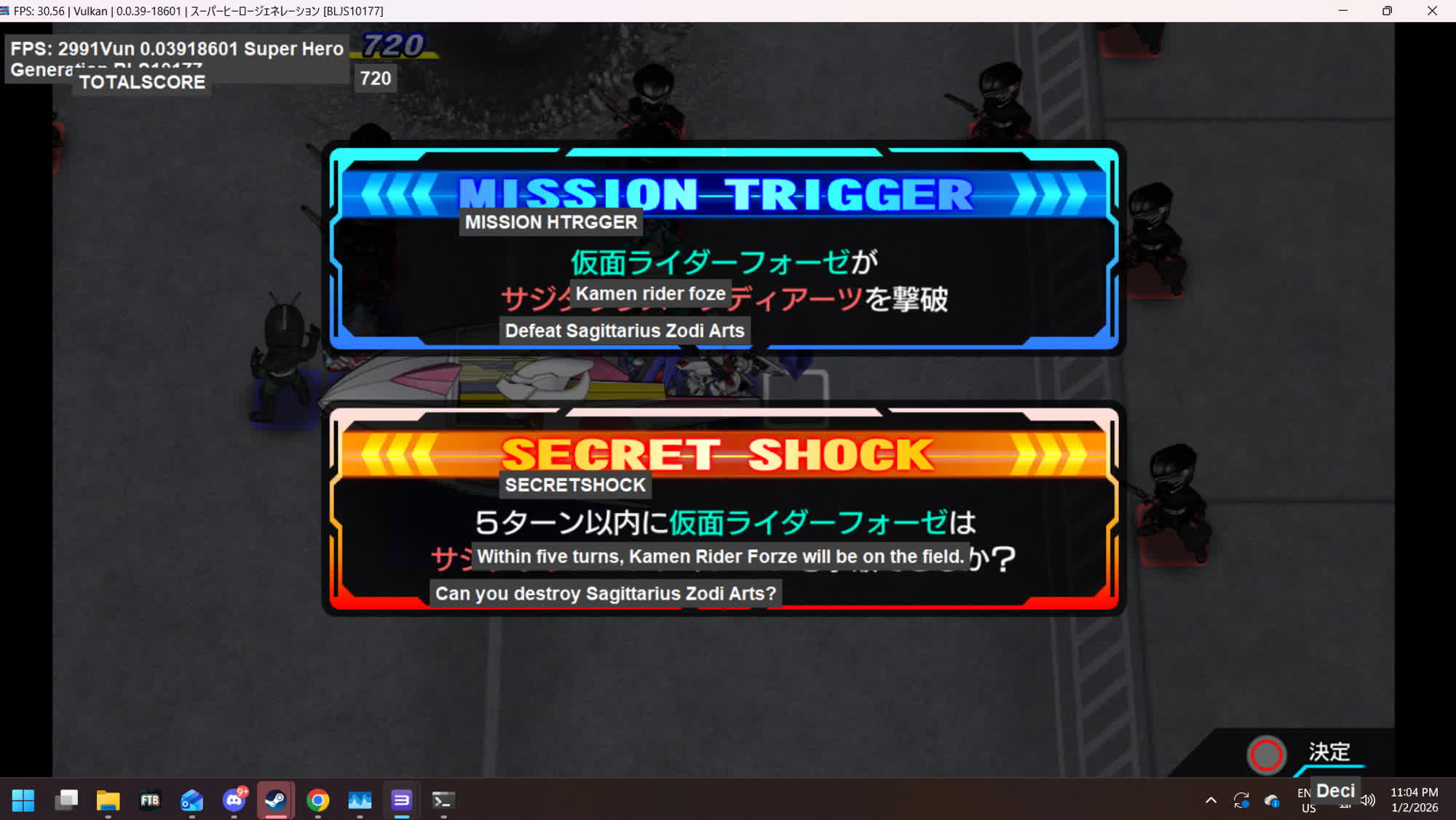
Interpreter runs on all major PC operating systems, including Windows, Linux, and macOS. On Windows, users install the Python-based project by running a PowerShell script. The developers caution that initial OCR accuracy may be inconsistent and that first-time launches can be slow. Adjusting a few settings in the graphical interface and caching the OCR and language models locally typically resolves both issues.
Judging from early feedback on ResetEra, Interpreter is an intriguing project, but it still faces compatibility and reliability issues. Some users suggest it could be far more helpful and efficient if integrated directly into emulators as a plugin. For now, the tool appears to work on the PS3 emulator RPCS3, but only in windowed mode.
In the past, several tools have offered automatic translations for Japanese games, with varying accuracy and reliability. One such tool, Universal Game Translator, relies on Google's Cloud Vision API and cannot operate offline. Other projects, such as Romhacking.net, have historically provided a place to share and download fan translation projects. Even as Interpreter addresses its performance and compatibility issues, these amateur translations will likely remain the best option for preserving the gameplay experience on some retro releases for the time being.