
What just happened? Deep beneath Zhejiang University in eastern China, scientists have switched on what is now the world's most powerful hypergravity machine – a massive centrifuge capable of producing forces 1,900 times stronger than Earth's gravity.
The new system, called CHIEF1900, was built by Shanghai Electric Nuclear Power Group as part of China's Centrifugal Hypergravity and Interdisciplinary Experiment Facility, or CHIEF. It follows the launch of CHIEF1300 only months earlier and quickly eclipses it in performance and capability.
Hypergravity centrifuges are tools used to study how extreme gravitational forces affect materials, structures, and biological systems. These experiments can reveal the way that plants and cells might behave in other planetary environments, or how large-scale civil engineering projects respond to stress.
CHIEF1900 surpasses the country's earlier CHIEF1300 model, which came online in September and temporarily held the record for the world's largest hypergravity machine. That title had belonged to the US Army Corps of Engineers in Vicksburg, Mississippi, whose centrifuge offers a capacity of about 1,200 g-tonnes.
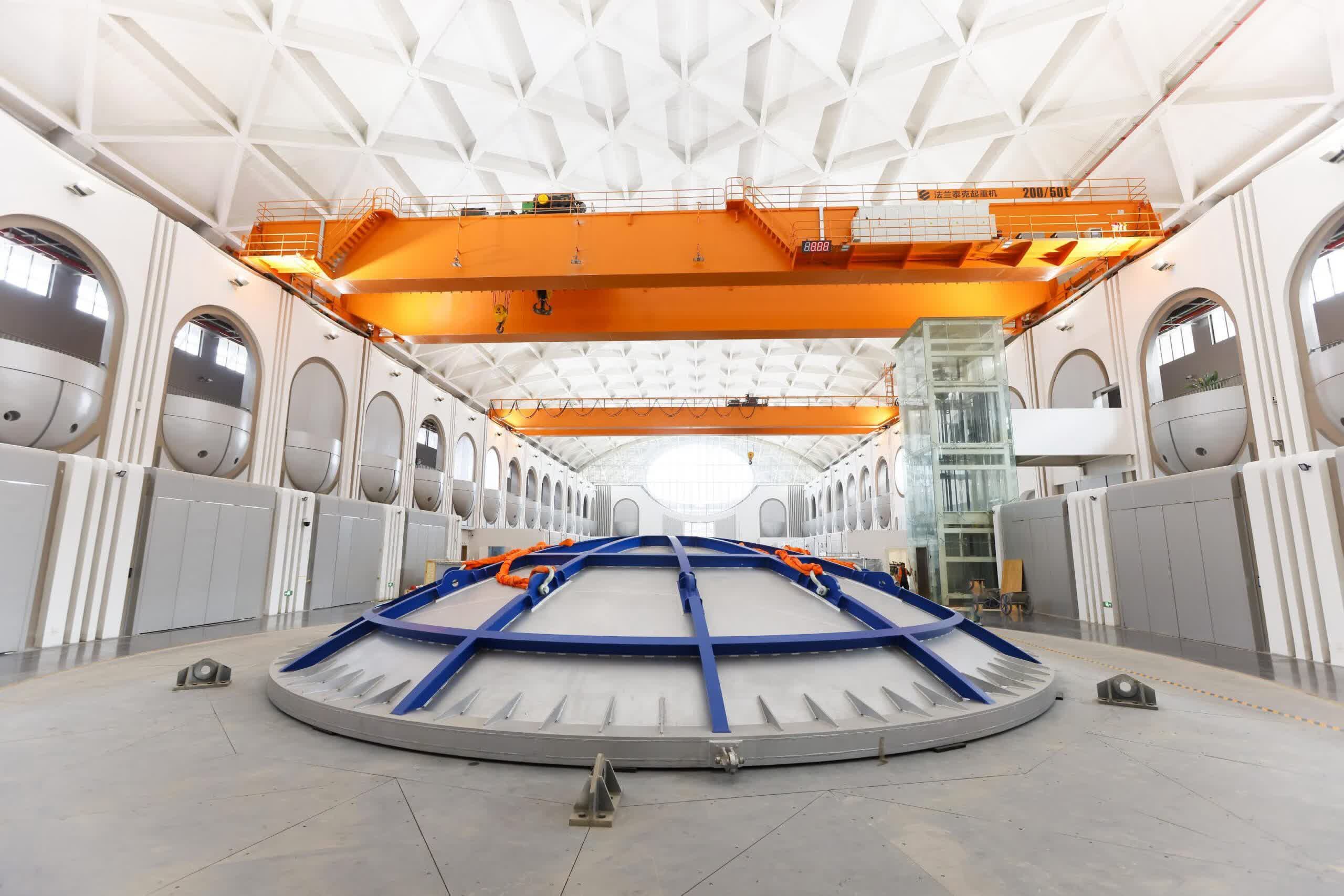
The scale of difference is striking. While a household washing machine reaches about two g-tonnes at full spin, CHIEF1900 operates at 1,900 g-tonnes, multiplying Earth's gravity nearly two-thousandfold. The facility, buried about 50 feet underground to minimize vibration, was built with an estimated budget of about $285 million and is open to international researchers.
Scientists describe machines like CHIEF as tools for "compressing space and time." In practical terms, increasing gravity this way allows them to simulate large, long-term scenarios at a much smaller and faster scale.
A classic example in civil engineering is spinning a three-meter model of a dam wall at 100 g reproduces the same stress experienced by a 300-meter-high dam in the real world. By applying hypergravity, researchers can compress decades or even centuries of mechanical or geological processes into hours of data collection.
The applications span geotechnical research, environmental testing, and urban infrastructure planning. Scientists can model how pollutants spread through soil over millennia or how vibrations from high-speed trains interact with the ground – problems that would otherwise require impractically long observation periods.
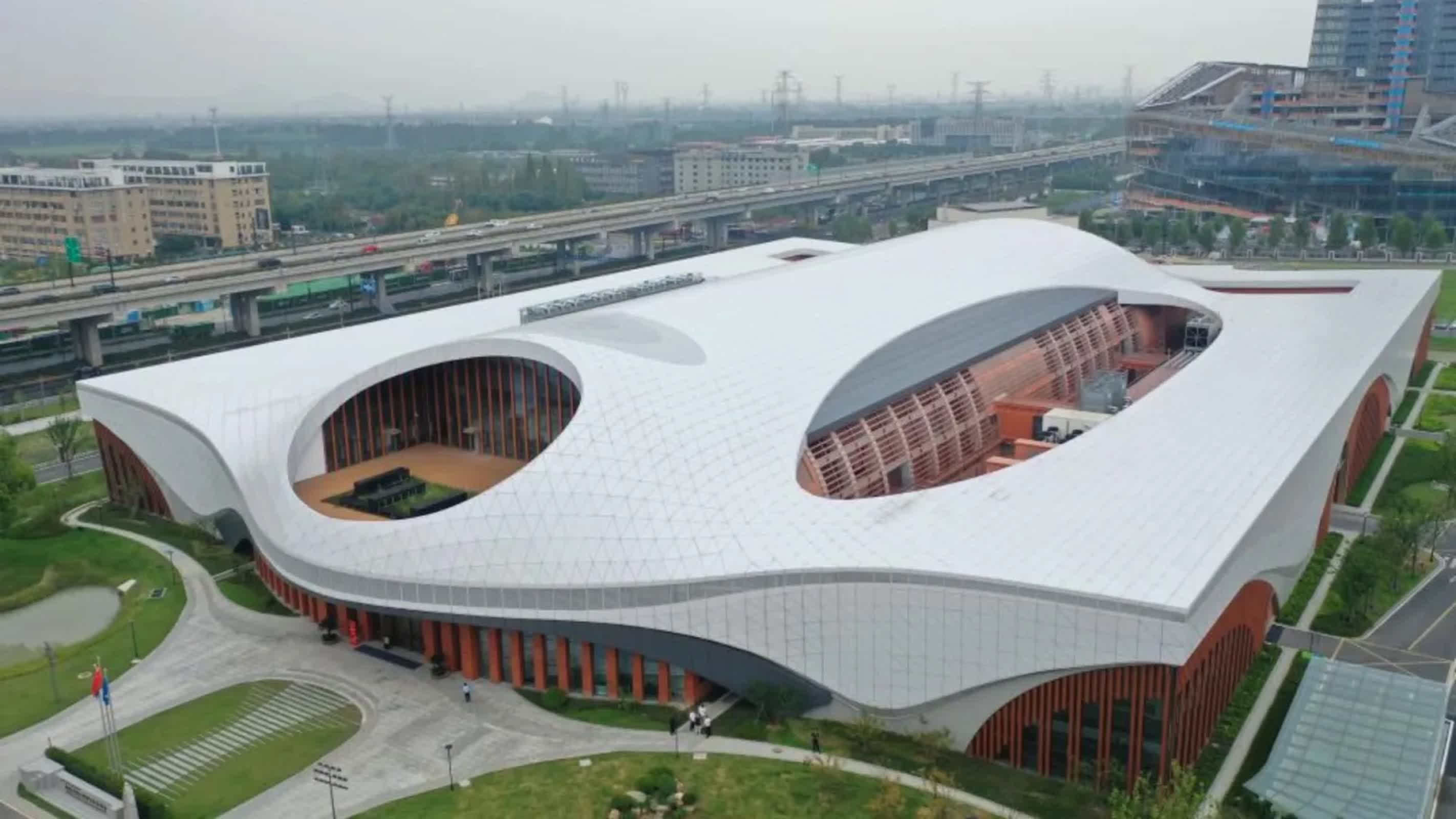
Constructing CHIEF1900 demanded collaboration across multiple disciplines, including mechanical, civil, and environmental engineering. Scaling the centrifuge to this magnitude introduced new technical challenges, especially around motion control and thermal management.
At top rotational speeds, the spinning arms generate tremendous heat and mechanical stress. Engineers responded by designing a vacuum-based temperature control system that combines coolant circulation with air ventilation to stabilize performance.
The machine's precision and endurance depend on the careful balance of these systems. Even slight asymmetry or vibration could offset data accuracy or endanger the experiment.
The CHIEF project's rapid progression – from CHIEF1300 in September to CHIEF1900 by year's end – shows how quickly China is scaling up its experimental capabilities in physics and large-scale engineering. The facility aims to position Zhejiang University as a global hub for hypergravity studies, open to teams exploring fields from aerospace dynamics to environmental resilience.
Image credit: Interesting Engineering