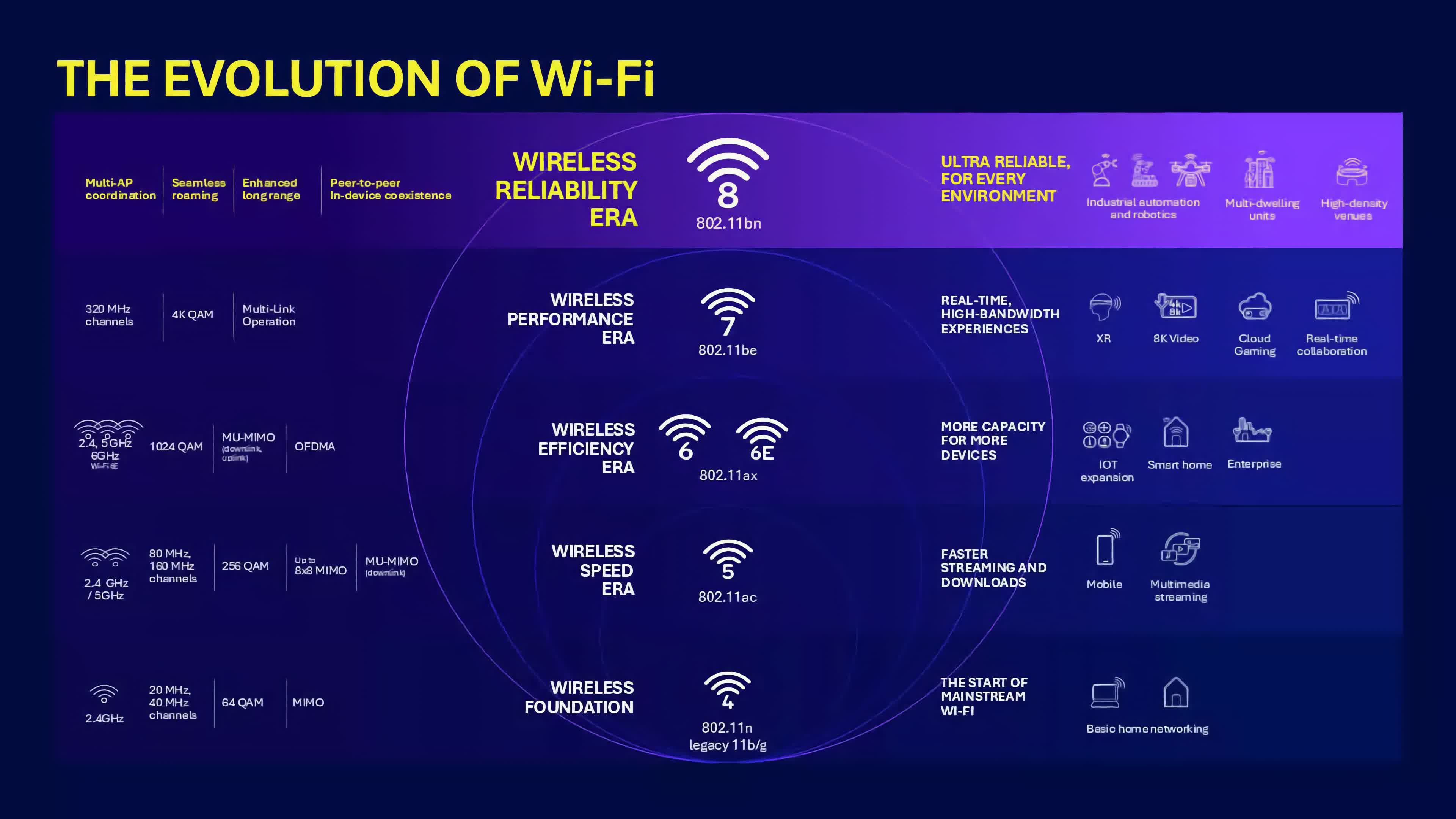
First look: Just two years after Wi-Fi 7's commercial rollout, the next generation of wireless networking has arrived – at least in prototype form. CES 2026 offered an unexpected preview of Wi-Fi 8, with major manufacturers introducing early hardware built on a standard that's still years from completion.
Unlike past upgrades focused primarily on headline-grabbing speed boosts, Wi-Fi 8 is aimed at improving connection stability, power efficiency, and consistency across devices. It retains Wi-Fi 7's already high data speeds but seeks to refine how devices communicate with each other, maintain performance across distance, and handle intensive streaming or gaming sessions with fewer signal drops and less lag.
Although the IEEE's official 802.11bn specification for Wi-Fi 8 isn't expected to be finalized until 2028, router and chip makers are already preparing products based on the draft version – with plans to bring them to market this year.
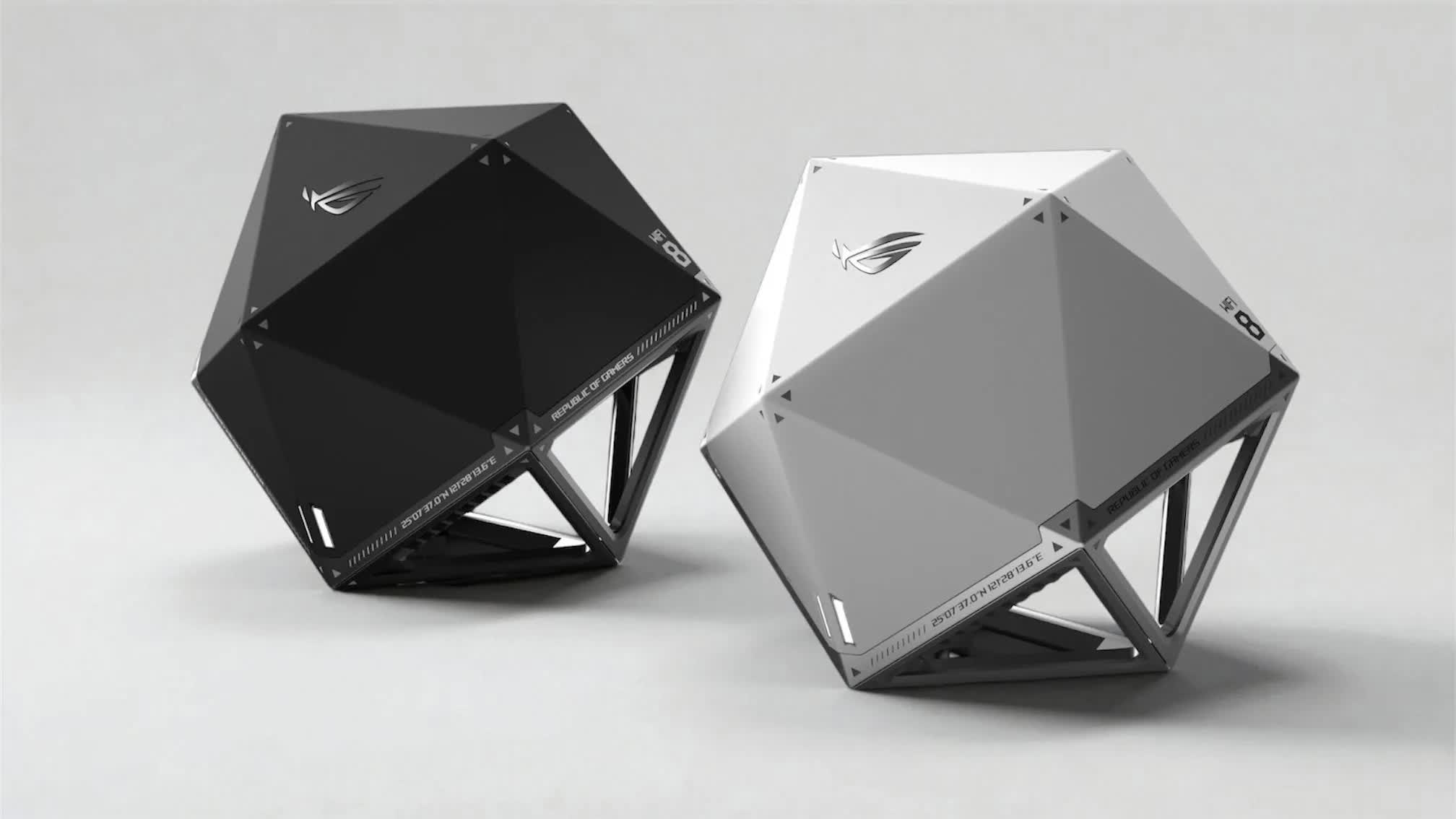
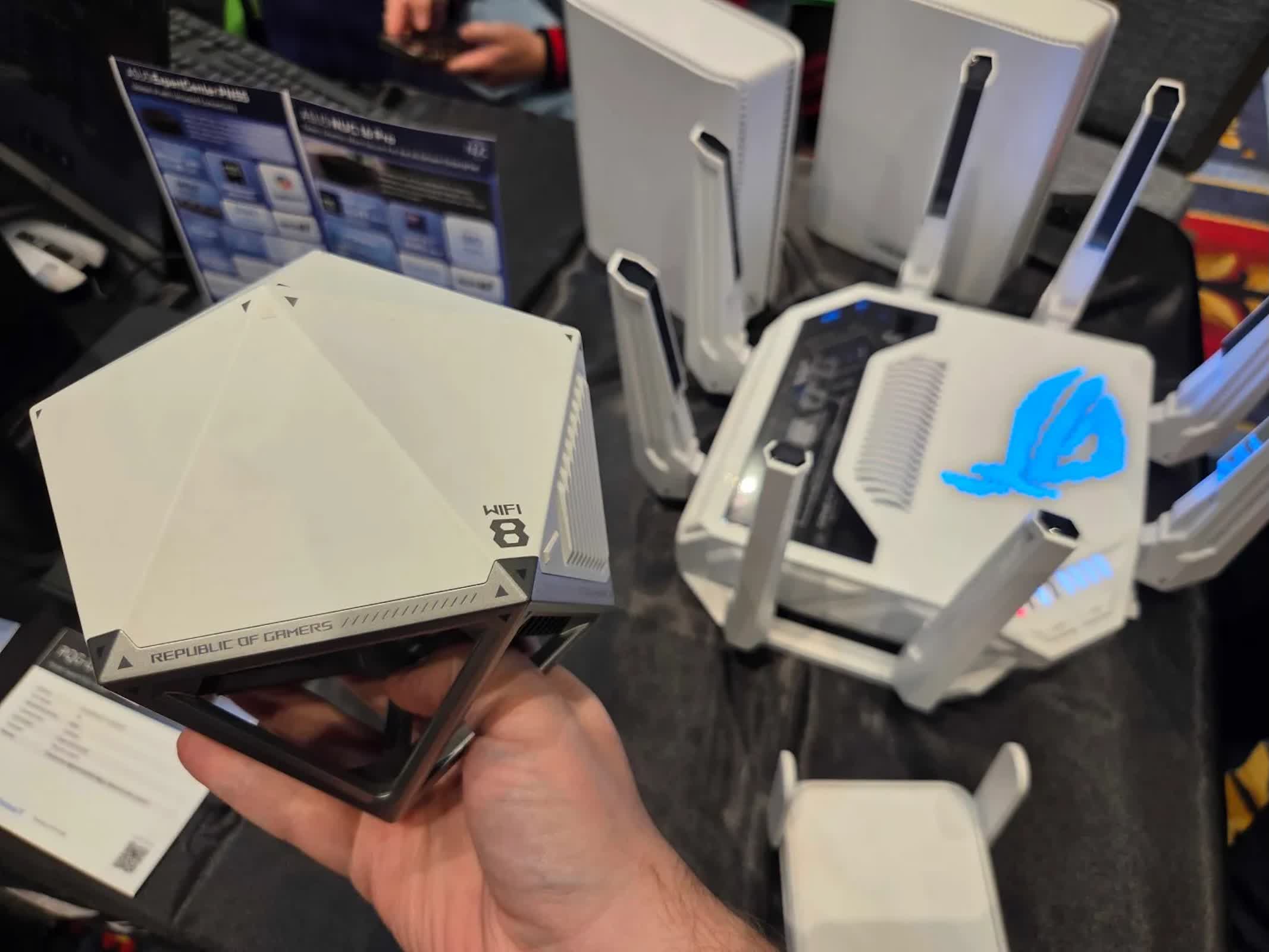
Among the early adopters, Asus drew attention with a design shift as bold as its technology. The company's concept router, the ROG NeoCore, stood in sharp contrast to last year's heavily antenna-clad model. The new polyhedral unit resembles a 20-sided die, with a hollow base and no external antennae sprawl typical of high-end devices.
According to Asus, the NeoCore maintains Wi-Fi 7-level peak speeds but achieves higher throughput and lower latency, aiming to move more data simultaneously with fewer bottlenecks. The Verge's reporter Sean Hollister, who examined the mock-up at the show, says that the prototype "broke when I picked it up."
Chip designers are already supplying the silicon backbone for this emerging generation. Broadcom introduced its new Wi-Fi 8 lineup, featuring the BCM4918 application processor alongside two dual-band radios – the BCM6714 and BCM6719. The devices are designed to power both consumer-grade routers and network gateways intended for service providers.
MediaTek also announced its own Wi-Fi 8 chip family, the Filogic 8000 series. The company says the platform will support "premium and flagship devices," ranging from enterprise access points and smartphones to laptops, televisions, and smart home equipment. The first products carrying Filogic 8000 hardware are expected to ship later this year.
The Wi-Fi 8 specification, formally known as IEEE 802.11bn, is still under active development. According to the IEEE's current schedule, ratification isn't anticipated until sometime between mid and late 2028. That leaves manufacturers to rely on preliminary versions of the spec – a common practice in wireless technology cycles, but one that nearly guarantees firmware updates once the final standard is approved.
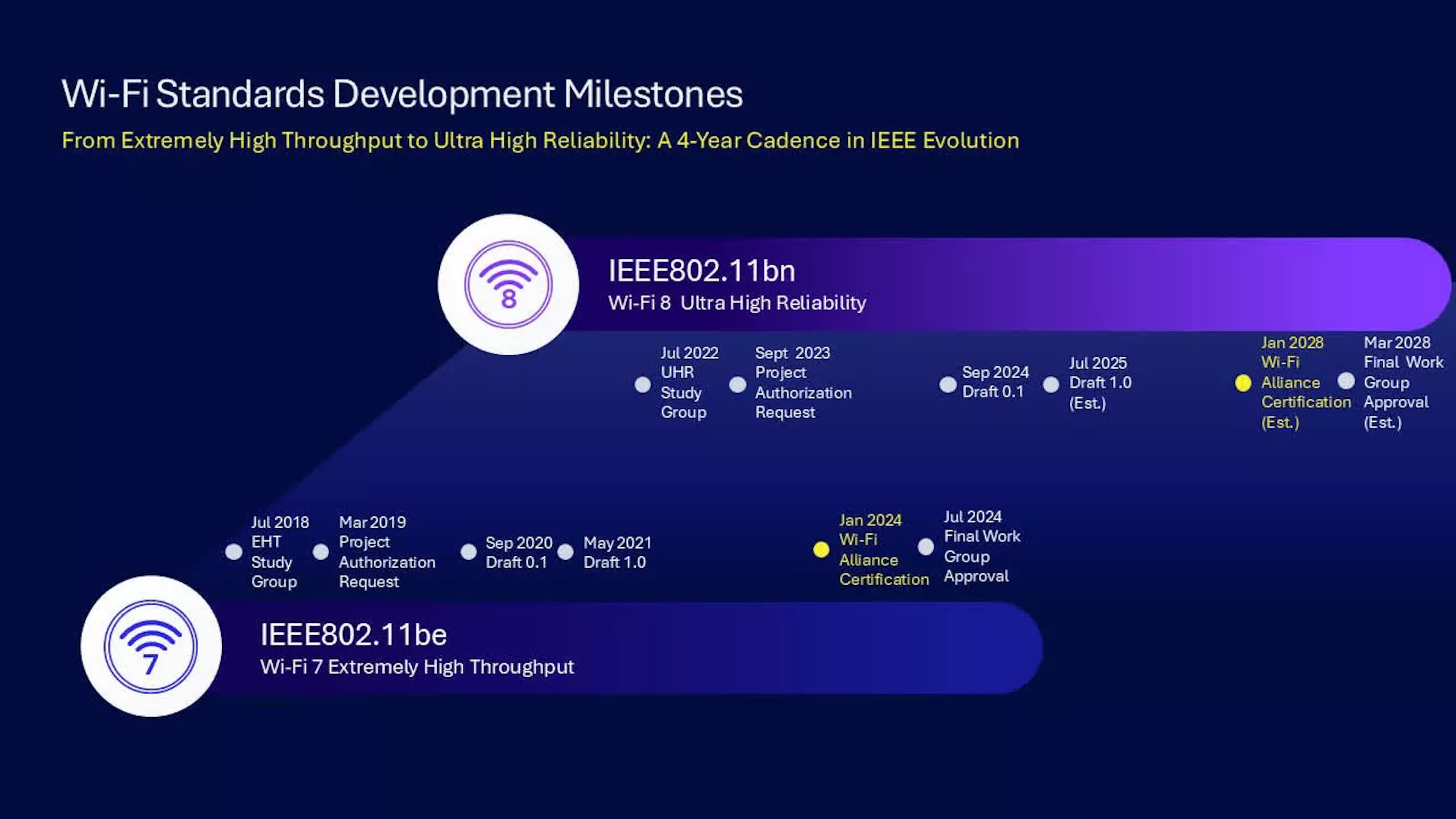
Kevin Robinson, CEO of the non-profit Wi-Fi Alliance, told The Verge that the rush of CES activity is a normal stage in the ecosystem's evolution. "Wi-Fi Alliance is in the early stages of selecting Wi-Fi 8 features, and it is common for the Wi-Fi ecosystem to begin its work on silicon, reference designs, early product development, and technology previews ahead of Wi-Fi certified availability," he said.
If the trajectory holds, early Wi-Fi 8 devices could reach consumers before the end of this year, long before the formal standard exists. That means the first adopters may buy routers and chips that later require updates to align with the finished specification.