
In a nutshell: Intel's Panther Lake CPUs for laptops and compact PCs were the talk of the town at CES 2026. Chipzilla made some bold claims regarding the platform's performance compared to the competition and now that the first wave of reviews are hitting the Internet, we're getting to see if Intel can back up those assertions.
The Verge recently got their hands on a brand new Asus Zenbook Duo powered by Intel's Core Ultra X9 388H Panther Lake CPU. This flagship model features 16 total cores, runs at a max Turbo frequency of 5.1 GHz, and is paired with a healthy 18 MB of L3 cache. The team has been putting it through the paces, and the initial impressions are very positive.
In their testing, Intel's first 18A chip was fast enough for multitasking and plenty powerful for 1080p gaming at high settings. Battery life impressed as well, with the dual-screen machine lasting more than a full day on a single charge.

Image: The Verge
Speaking of battery power, The Verge found the laptop to be nearly as fast when running on battery power as it was when connected to the wall (that's not always the case with Windows laptops). Reviewer Antonio G. Di Benedetto described it as a big win for editors and content creators, and one that helps the machine match the strengths of modern MacBooks.
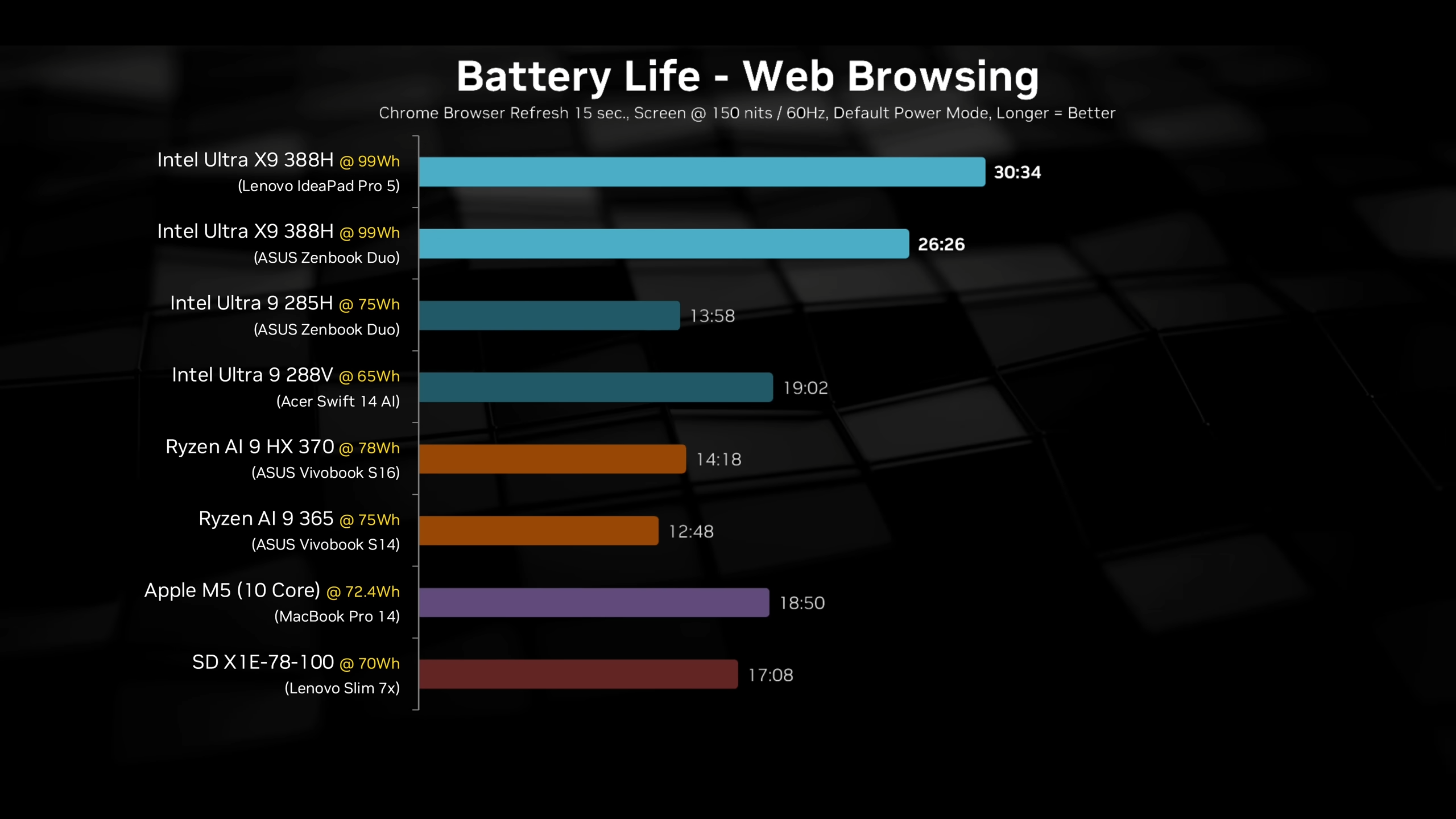
Hardware Canucks received a pair of Panther Lake laptops for evaluation, including a Lenovo IdeaPad Pro 5 and an Asus Zenbook Duo – both with the Core Ultra X9 388H Panther Lake CPU. What immediately stood out to them was the battery life. In their web browsing battery test, the Lenovo lasted well over 30 hours and the dual-screen Asus was good for more than 26 hours before needing to be plugged in.
Viewed another way, if used for an average of eight hours per day, you could expect to get nearly four days of usage out of the Lenovo.
Benchmark by Hardware Canucks
Dig deeper, however, and you'll realize that the web browsing results don't necessarily tell the full story.
For one, both of these machines have 99.9 Wh batteries. That's much larger than other systems in the same category, so keep in mind that you aren't really comparing apples to apples. Also of note is the fact that the Panther Lake machines didn't perform as impressively in other battery stress tests, like video playback or streaming video.
When battery efficiency was broken down based on minutes / Wh ratings, the findings were easier to compare to competing platforms (and showed that AMD has a lot of catching up to do).
The gang over at PC Mag also took Panther Lake for a spin, and found the Xe3 graphics architecture to be the star of the show. While the Arc B390 integrated graphics in their test machine (an Asus Zenbook Duo, just like The Verge received) wasn't able to hang with most discrete GPUs like those from Nvidia (although it wasn't far off from the RTX 4050), it held its own when tempering expectations.
In Call of Duty: Modern Warfare 3, for example, the Panther Lake system averaged 80 frames per second at 1200p with minimum graphics settings and 52 FPS when turning the eye candy all the way up. Running Cyberpunk 2077 natively at 1200p resulted in an average of 35 frames per second, but enabling frame generation tech pushed the frame rate all the way up to 155.
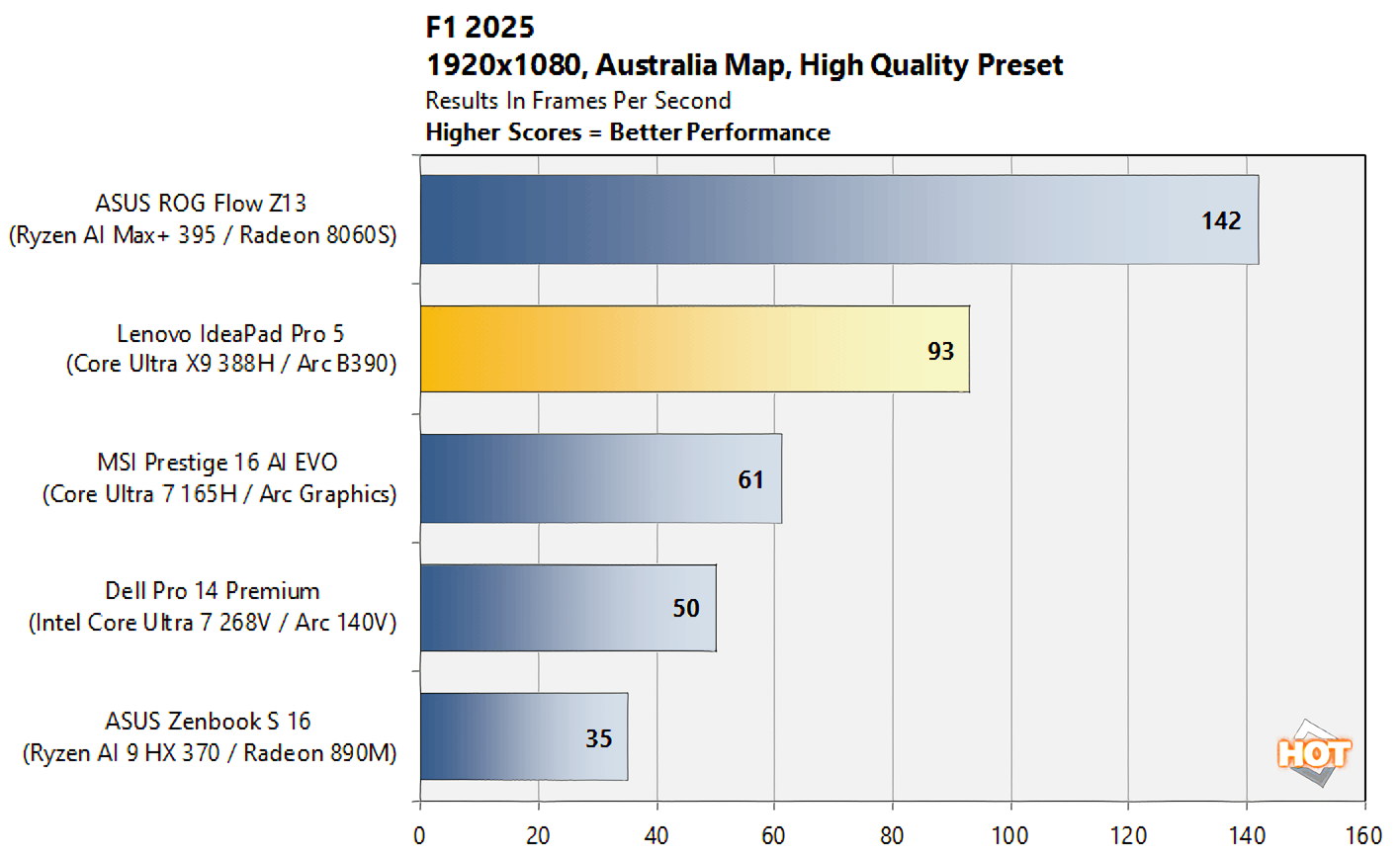
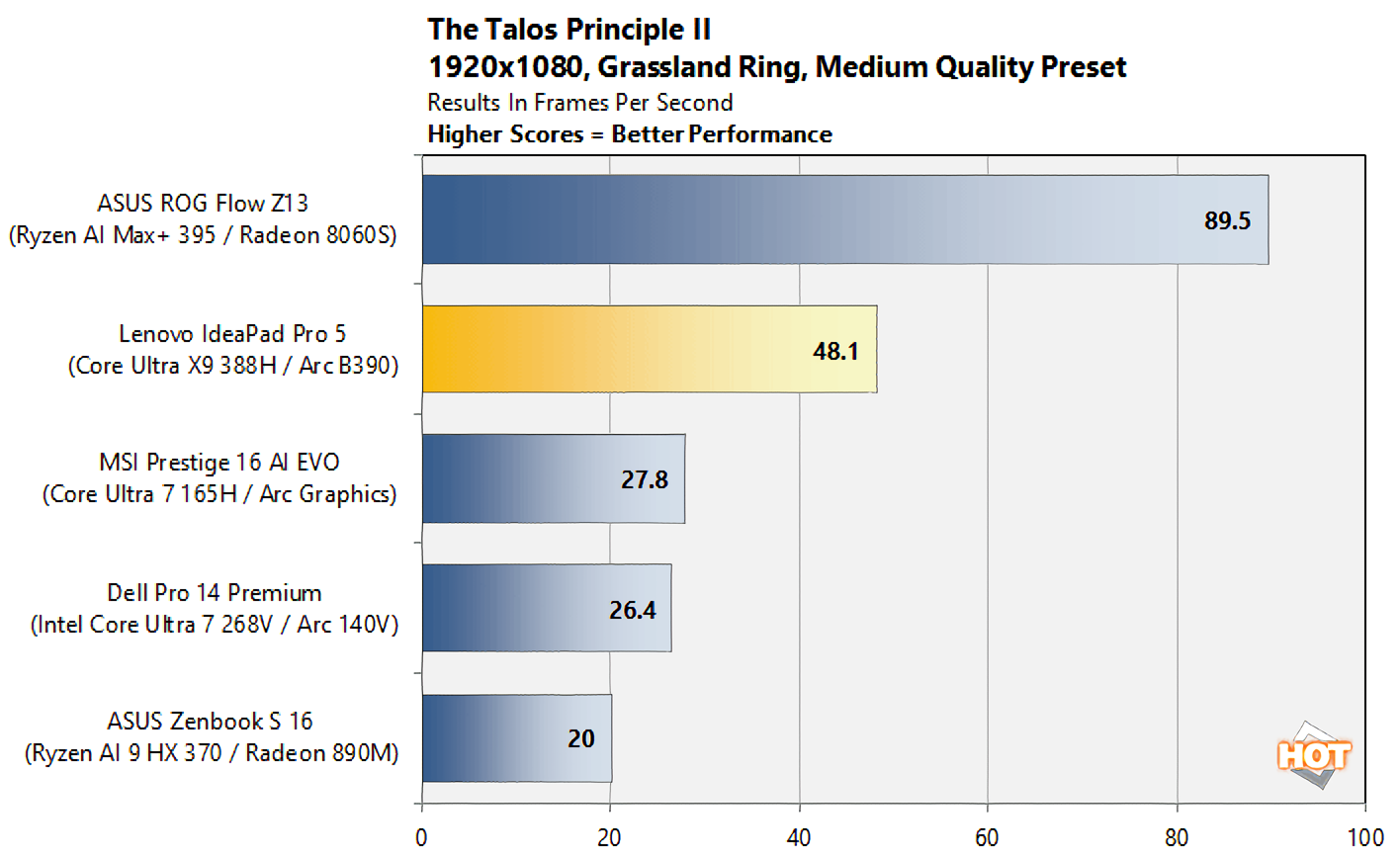
Benchmarks by Hot Hardware
In F1 2024, the Asus laptop averaged around 34 frames per second with XeSS off – turning it on bumped the frame rate up to 111. Hot Hardware experienced very similar results in F1 2025.
Wired, meanwhile, tested the Core Ultra X9 388H in a 16-inch Lenovo IdeaPad and the Core Ultra X7 358H in a MSI Prestige 14 Flip. In terms of pure single-core CPU performance, Intel's latest chips do impress but they still can't compete with Apple's excellent M series, which had the edge in Cinebench 24.
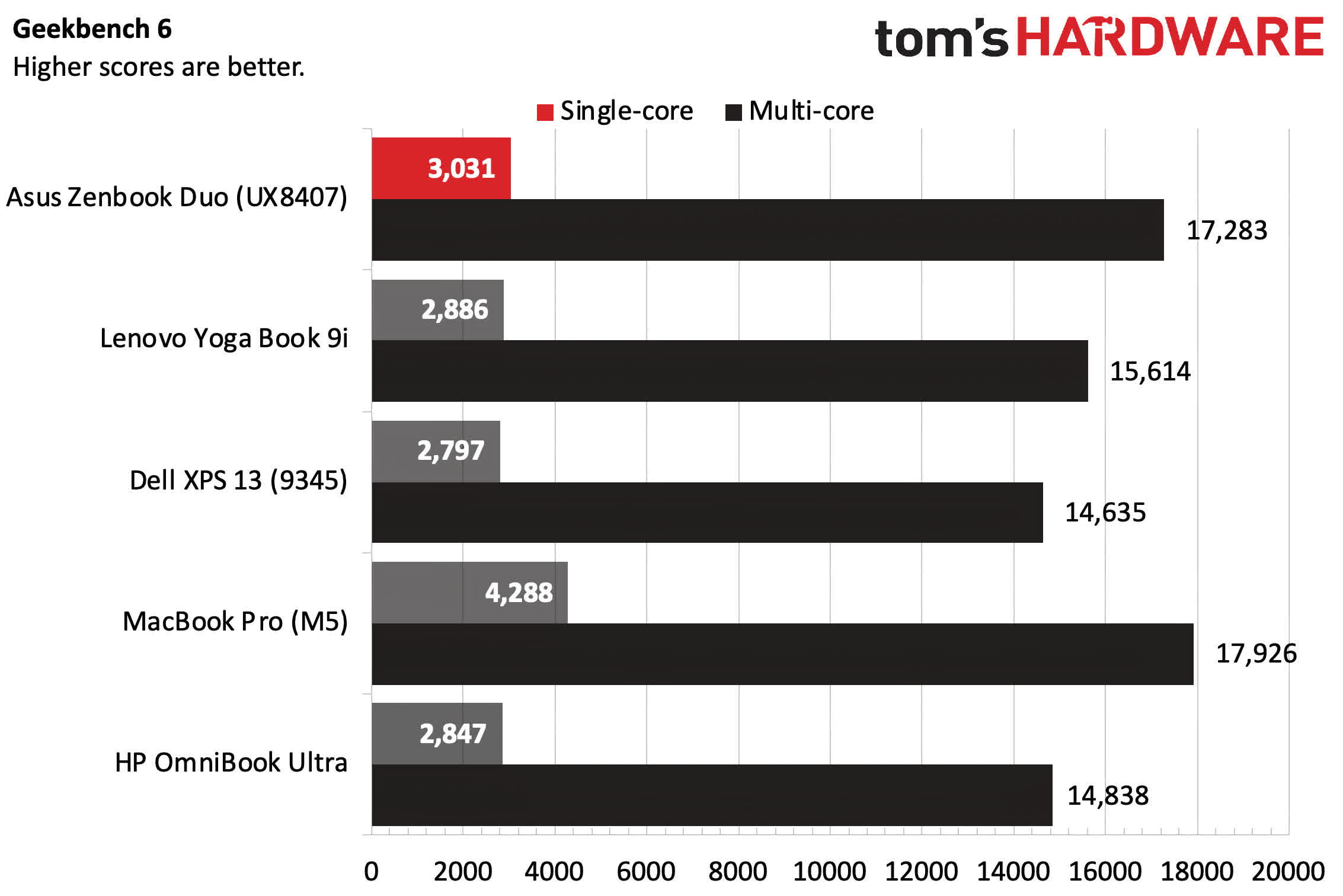
It was a similar story for Tom's Hardware in Geekbench 6, where the ZenBook Duo's single-core score simply couldn't keep up with the M5-powered MacBook Pro. Things were a bit closer in the multi-core test, however.
Wired also took the machines out for a few rounds of gaming and it didn't disappoint. In Cyberpunk 2077, the Lenovo laptop settled in around 55 FPS at medium graphics settings without any upscaling / frame generation. The machine could only muster around 36 FPS natively in Marvel Rivals, but turning on the XeSS 2.0 Quality setting boosted the frame rate to 54 without a huge impact on image quality.
For a portable that isn't marketed as a gaming laptop, that's quite respectable.

Intel's Panther Lake processor lineup is years in the making. Former CEO Pat Gelsinger described it as the cornerstone of their turnaround strategy, so to say the company has a lot riding on its success would be a massive understatement.
The good news is that Panther Lake looks to be exactly what the chipmaker needed and couldn't have arrived at a more pivotal time. With AMD in a strong position and relative newcomers like Apple and Qualcomm fighting for market share, Intel simply couldn't afford to put out another lackluster mobile chip.
It's still early but by all indications, Intel looks to have a real winner on its hands with Panther Lake.