
Bottom line: Many people likely assumed that Meta CEO Mark Zuckerberg's virtual reality ambitions were over when the company publicly stepped back from the sector earlier this year. However, while the losses attributed to the Metaverse division have since shrunk, it is still losing billions per quarter, edging total losses since the end of 2020 ever closer to the $100 billion mark.
Meta's earnings report for the second quarter of 2026 primarily focuses on the company's AI and smart-glasses-related ambitions, but buried in the numbers is yet another multi-billion-dollar loss from the Reality Labs division. Meta may have shifted priorities, but it has apparently not completely given up on the dream of a shared global virtual reality space.
Mark Zuckerberg once justified dumping tens of billions of dollars into the metaverse by claiming that the sector could be worth trillions by 2030. In 2023, a Meta-commissioned report claimed that people putting on virtual reality headsets to work and play in a shared space could contribute $760 billion to the US GDP by 2035.
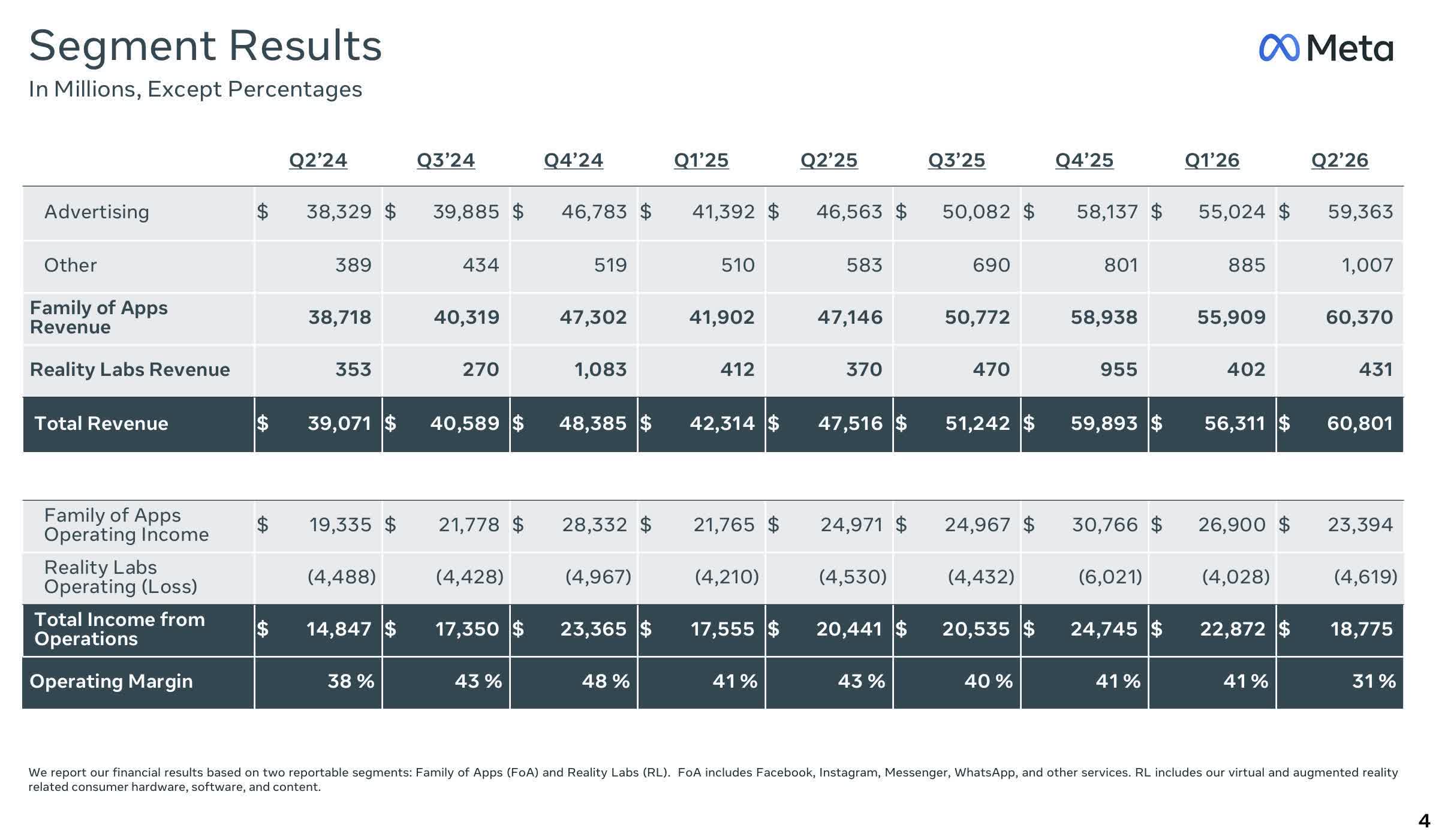
The CEO's tune changed when generative AI took priority. After Reality Labs posted a $6 billion quarterly loss in January, bringing total losses since Q4 2020 to $80 billion, Meta cut hundreds of jobs from the division and placed its main VR app, Horizon Worlds, into maintenance mode.
Most CEOs would likely have long since cut their losses, but Reality Labs lost $4 billion in Q1 2026 and another $4.6 billion in Q2, bringing the total to approximately $88 billion. The division generated revenue of $402 million and $431 million in the two quarters, respectively.
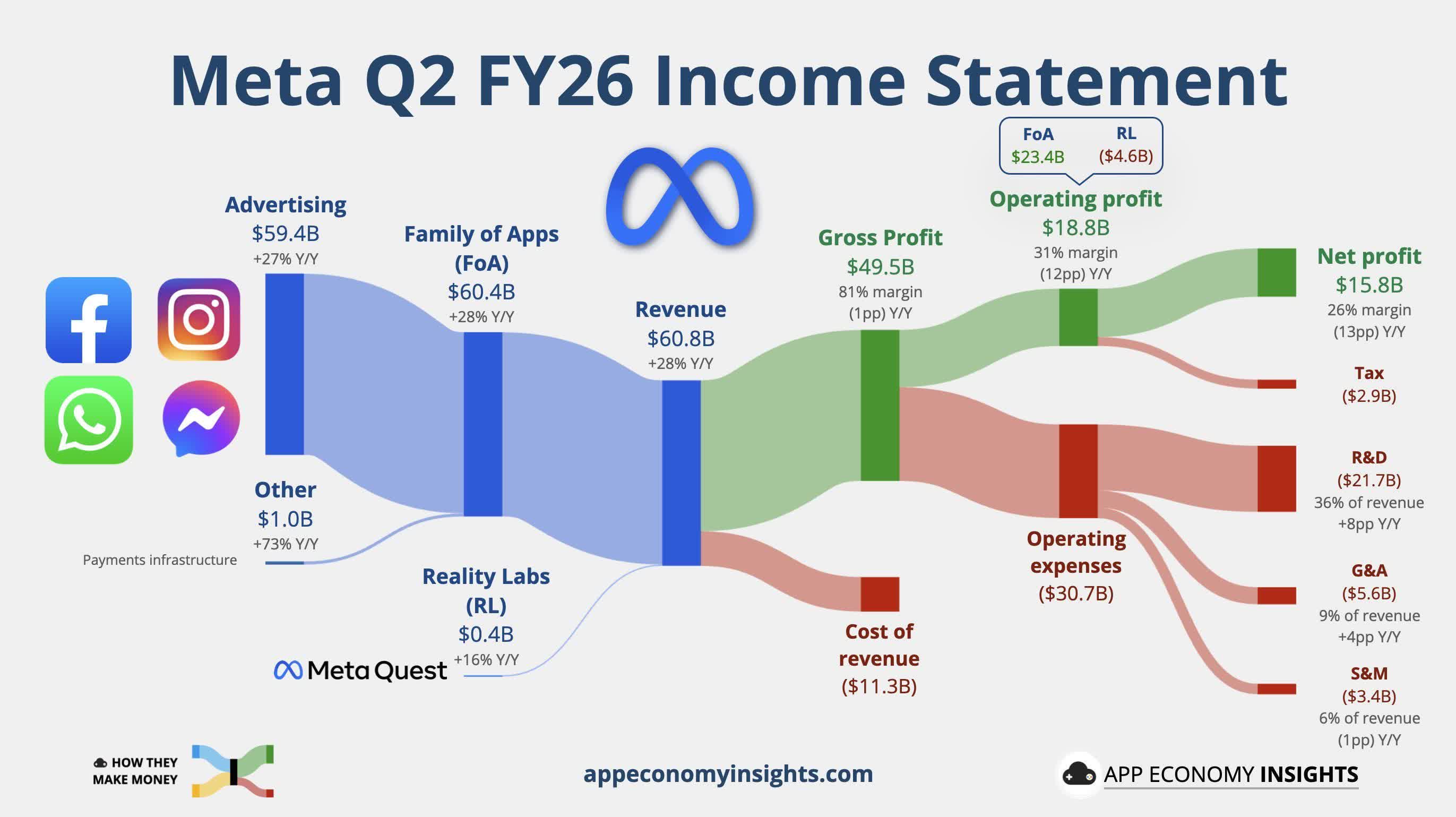
While noting a $15.8 billion profit in Q2, down approximately 13% YoY, Zuckerberg was predictably optimistic about the future of AI and smart glasses during the earnings call. He lauded the company's recently deployed Muse image and video generation tools, along with its plans to monetize AI via subscriptions. Meanwhile, CFO Susan Li explained how Meta's AI-powered algorithms are driving social media adoption, even as the social network giant faces lawsuits in 40 US states for allegedly driving a teen mental health crisis.
Smart glasses are another favorite controversial sector for Zuckerberg, who sees the form factor as a preferable path for extended reality rather than headsets. The recently released Meta Glasses are the first to include Muse AI out of the box, but fundamental privacy concerns continue to haunt the concept of camera-equipped glasses. The controversy reportedly prompted Apple to delay its take on smart glasses until it can showcase a product that users feel safe around.