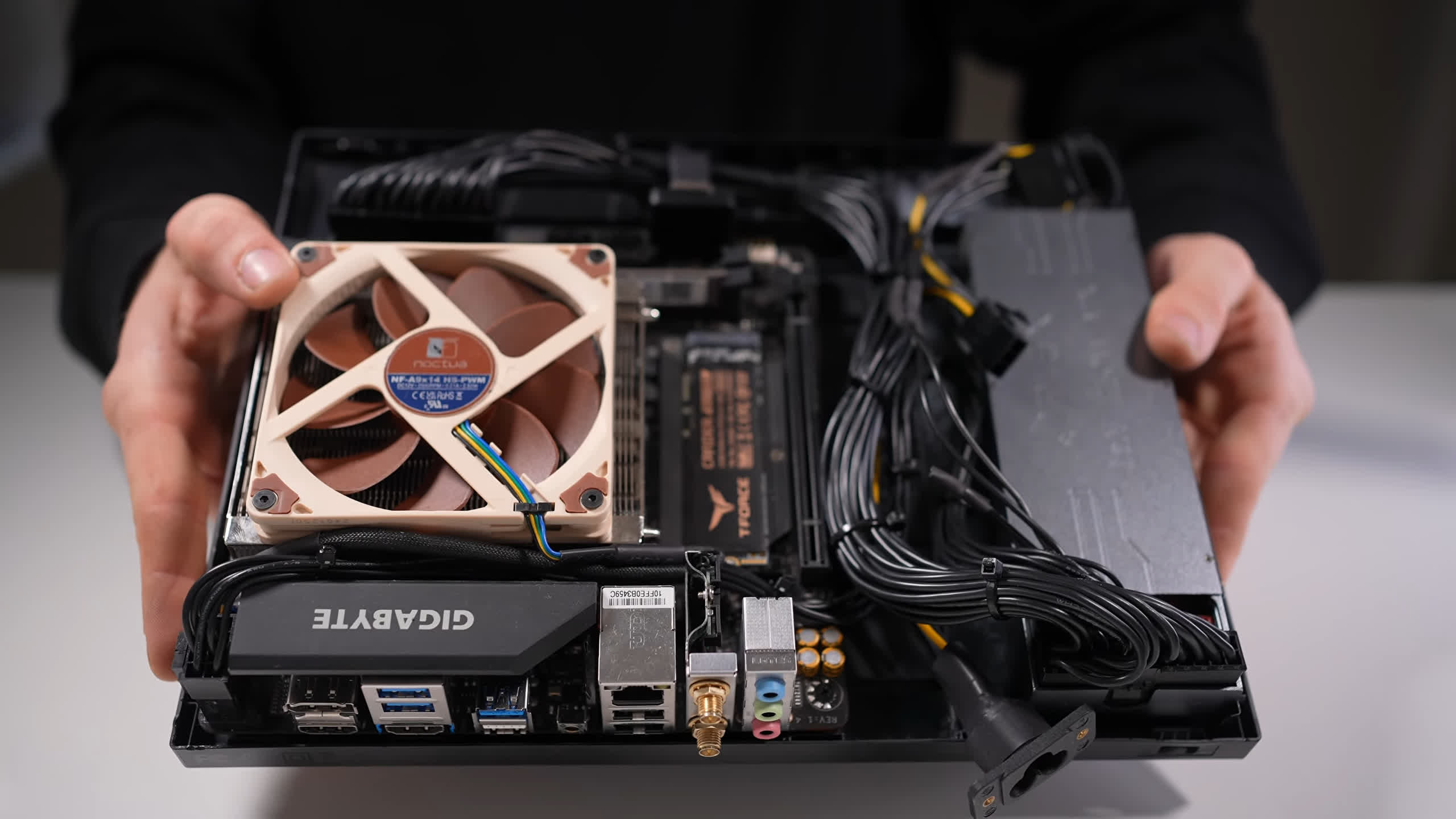
In brief: You can cram a PC into pretty much anything these days. Taking on that challenge was YouTube channel PhasedTech, which managed to squash an entire desktop computer into the small dimensions of an Xbox One S – with a few differences from what we've seen in similar projects.
PhasedTech notes that a number of people have turned their consoles into gaming PCs, but these usually relied on external power bricks and integrated graphics.
The YouTube channel had some restrictions for its build: a fully internal PC inside the original Xbox One S shell, with a dedicated CPU, internal power supply, and a functioning disc drive.
PhasedTech also decided to only alter the back and bottom of the console's shell. No glue could be used, either – everything had to be mounted.
The size constraints mean that a mid-range PC was the most suitable system. It consists of a mini-ITX motherboard with 16GB of DDR4 ultra-low-profile memory slotted inside.
At the heart of this PC sits an AMD Ryzen 5 3600 CPU, which is cooled by a low-profile Noctua NH-L9i. Storage comes in the form of an NVMe SSD, while a 250W flex PSU provides the power. Meanwhile, the graphics come from a low-profile, single-slot Nvidia RTX 3050.
Fitting all of that hardware inside the Xbox One S wasn't straightforward. With just 4.4 liters of internal volume to work with, component placement became a puzzle.
The motherboard had to sit toward the rear-left of the shell, while the flex ATX power supply was positioned carefully to leave just enough clearance for the slim optical drive. The RTX 3050 is mounted vertically above the drive using a PCIe riser, allowing both the GPU and CPU cooler to draw air from the console's original top vent.
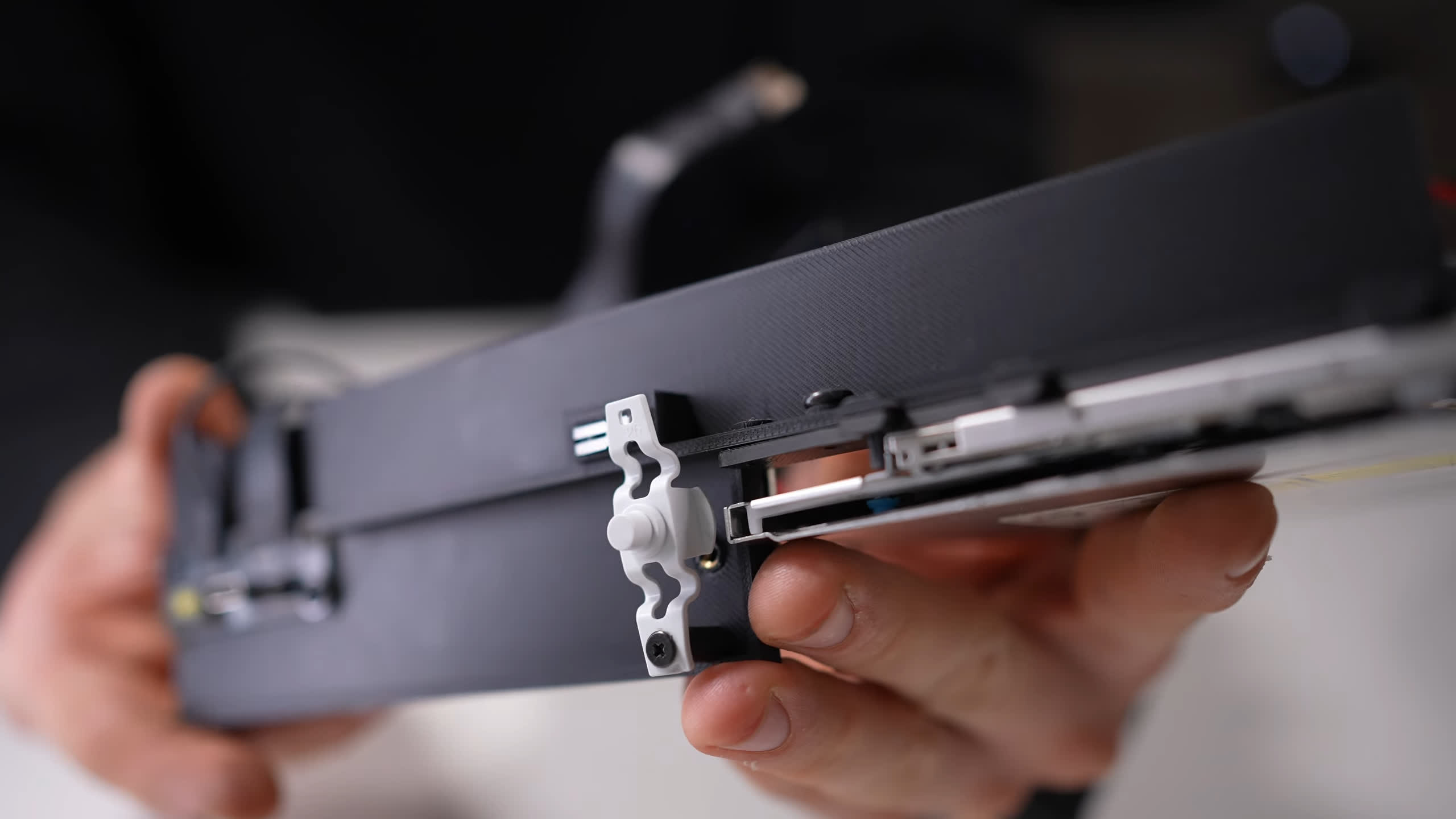
To avoid adhesives, PhasedTech designed and 3D-printed a series of custom brackets that mount directly to existing screw points and structural cutouts in the shell.
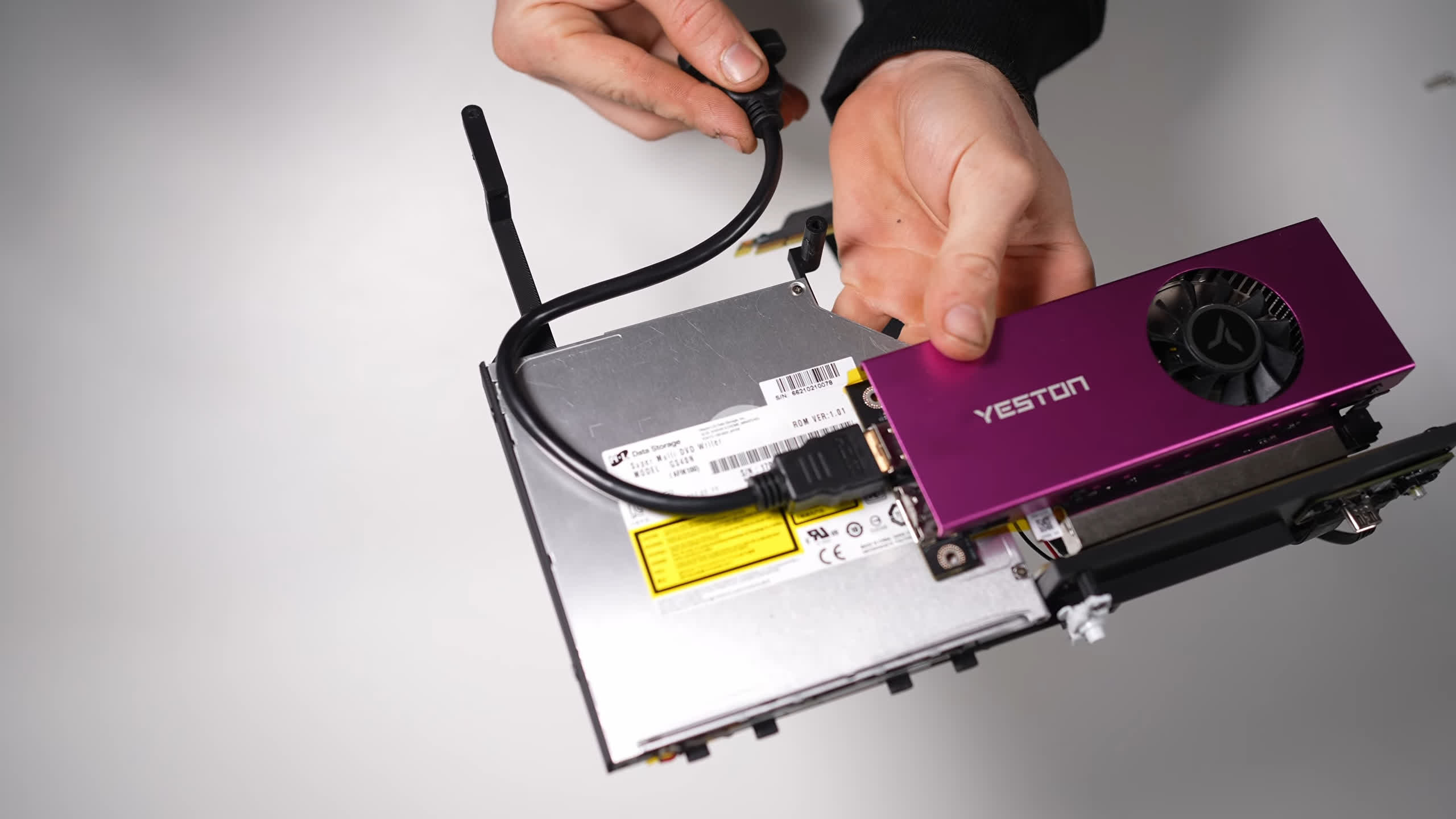
These brackets secure everything from the optical drive and GPU riser to the power and eject buttons, which remain fully functional thanks to some careful soldering and microswitch placement.
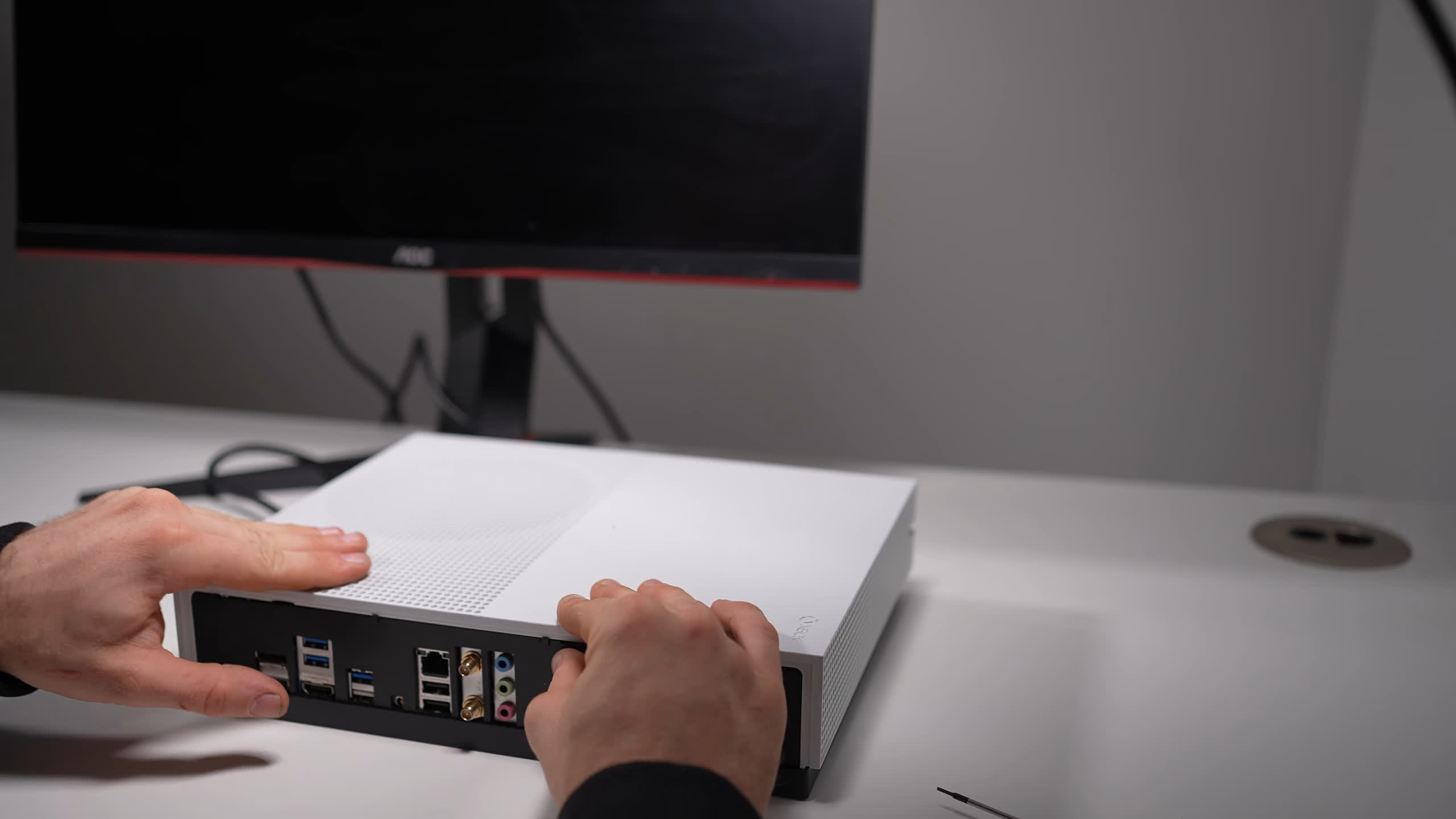
Even the rear I/O is handled cleanly, with a custom-printed I/O shield.
Thermals were one of the biggest concerns. Under load, CPU and GPU temperatures can reach around 80°C, which is high but still within safe limits given the cramped enclosure and low-profile cooling.
Performance is respectable. In esports titles like Counter-Strike 2 and Valorant, the system can hit around 200 fps at 1080p with medium settings, making it more than usable for light gaming or living-room PC duties.
As PhasedTech notes, the project was less about raw performance and more about seeing how much modern PC hardware could be squeezed into an aging console shell while keeping it looking stock. On that front, it's hard to argue with the results.