In a small lab at the University of California, Santa Cruz, clusters of mouse brain cells have taken on a task normally reserved for computer algorithms: keeping a simulated pole balanced upright. The experiment, which used real biological tissue to tackle a classic test problem in control engineering, shows that scientists can shape living neural circuits through structured feedback.
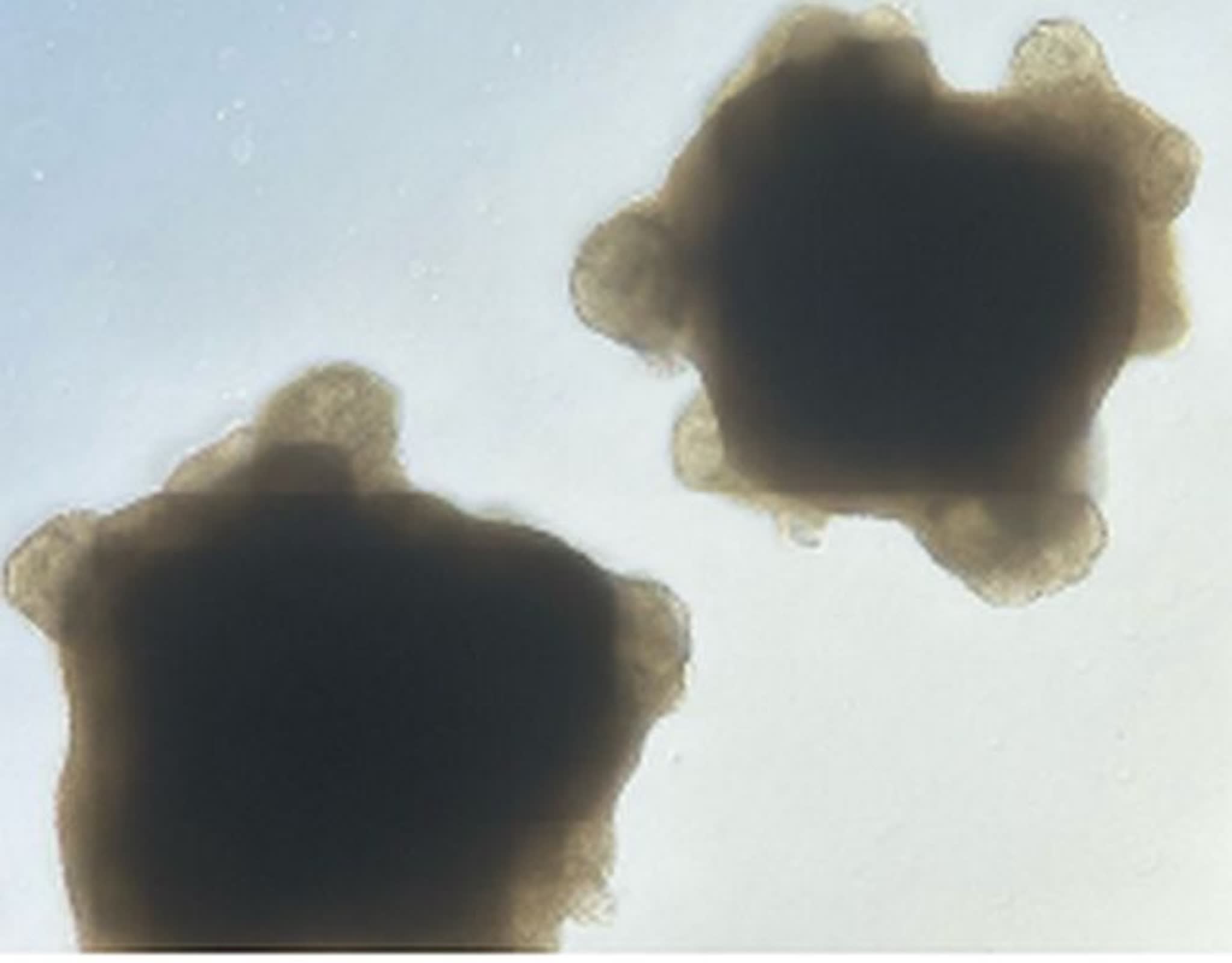
The research, detailed in Cell Reports, centers on cortical organoids – tiny spheres of brain tissue grown from mouse stem cells. These lab-grown neural clusters are far from capable of thought, but they do form functioning electrical connections and can respond to external signals.
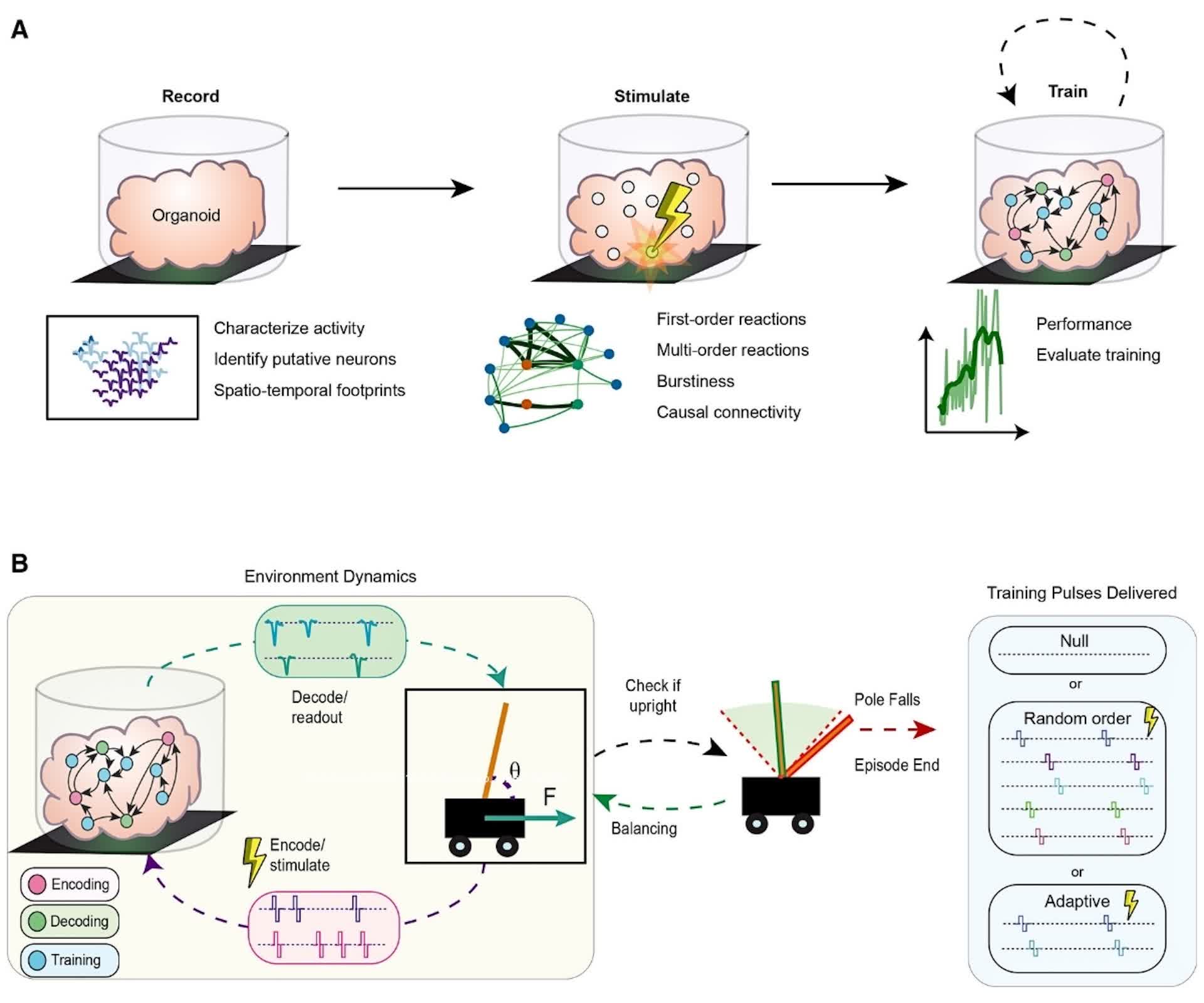
What makes this study unusual is how the researchers used those signals. By linking the organoids to a virtual control environment, the team created a closed feedback loop in which neural activity determined the movement of a digital cart trying to keep a pole balanced vertically.
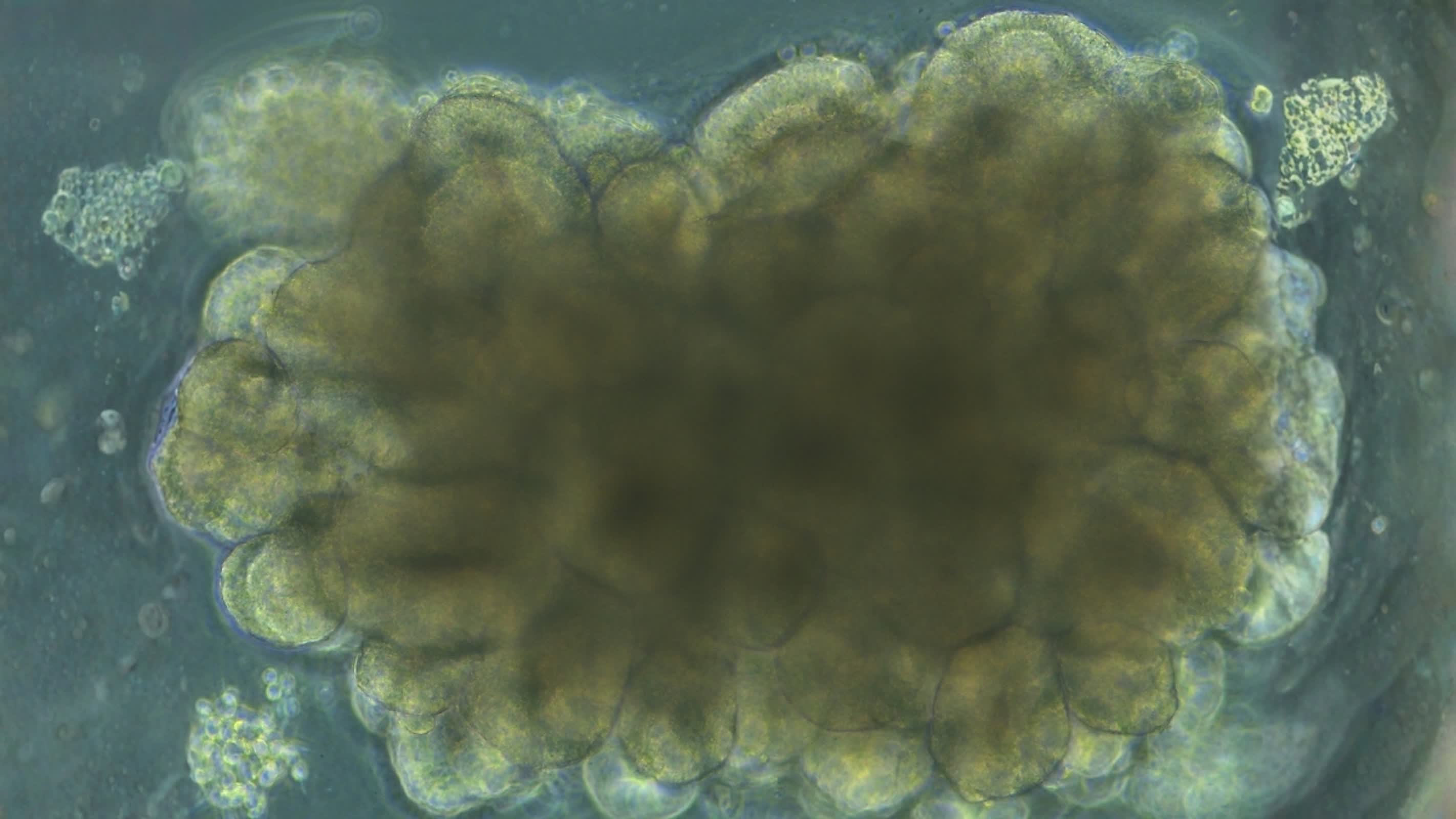
The experiment used the cartpole problem, a longstanding test in robotics and reinforcement learning. The principle is simple: a pole hinged on a moving cart must stay upright as it wobbles. Small corrections can prolong balance, while delayed or poorly sized responses cause failure. Because the system is unstable, even minor missteps lead to collapse.
Ash Robbins, a robotics and artificial intelligence researcher at UC Santa Cruz, and his colleagues wanted to see whether neural circuits in a dish could be "coached" to perform better. The organoids received different experimental conditions. Some received no feedback after each round, others received random electrical signals, and a third group received adaptive feedback that changed in response to their past results.
When a series of attempts went worse than the previous average, a burst of high-frequency stimulation reached specific neurons chosen by an algorithm, mimicking a corrective nudge. Those nudges paid off: organoids that received adaptive feedback achieved proficient control in 46 percent of the test cycles – a rate more than ten times that of organoids receiving no feedback and those stimulated randomly.
"When we can actively choose training stimuli, we can actually shape the network to solve the problem," Robbins said.
The team compared the results against a random controller to ensure that the apparent "learning" wasn't due to luck. The difference, they found, was substantial enough to suggest genuine adaptation in the neural circuits.
However, the process didn't yield long-lasting memory, which is perhaps unsurprising. When the organoids were left inactive for about 45 minutes, their earlier improvements vanished, reverting to baseline behavior. The finding implies that while neural tissue can reorganize in response to stimuli, maintaining these changes may require more complex structures or sustained activation.
Study contributor David Haussler noted that the broader goal isn't to build biological computers but to understand how neural systems modify themselves – a key factor in neurodegenerative disease research.
"We want to make it clear that our goal is to advance brain research and the treatment of neurological diseases, not to replace robotic controllers or other kinds of computers with lab-grown brain tissue," he noted.