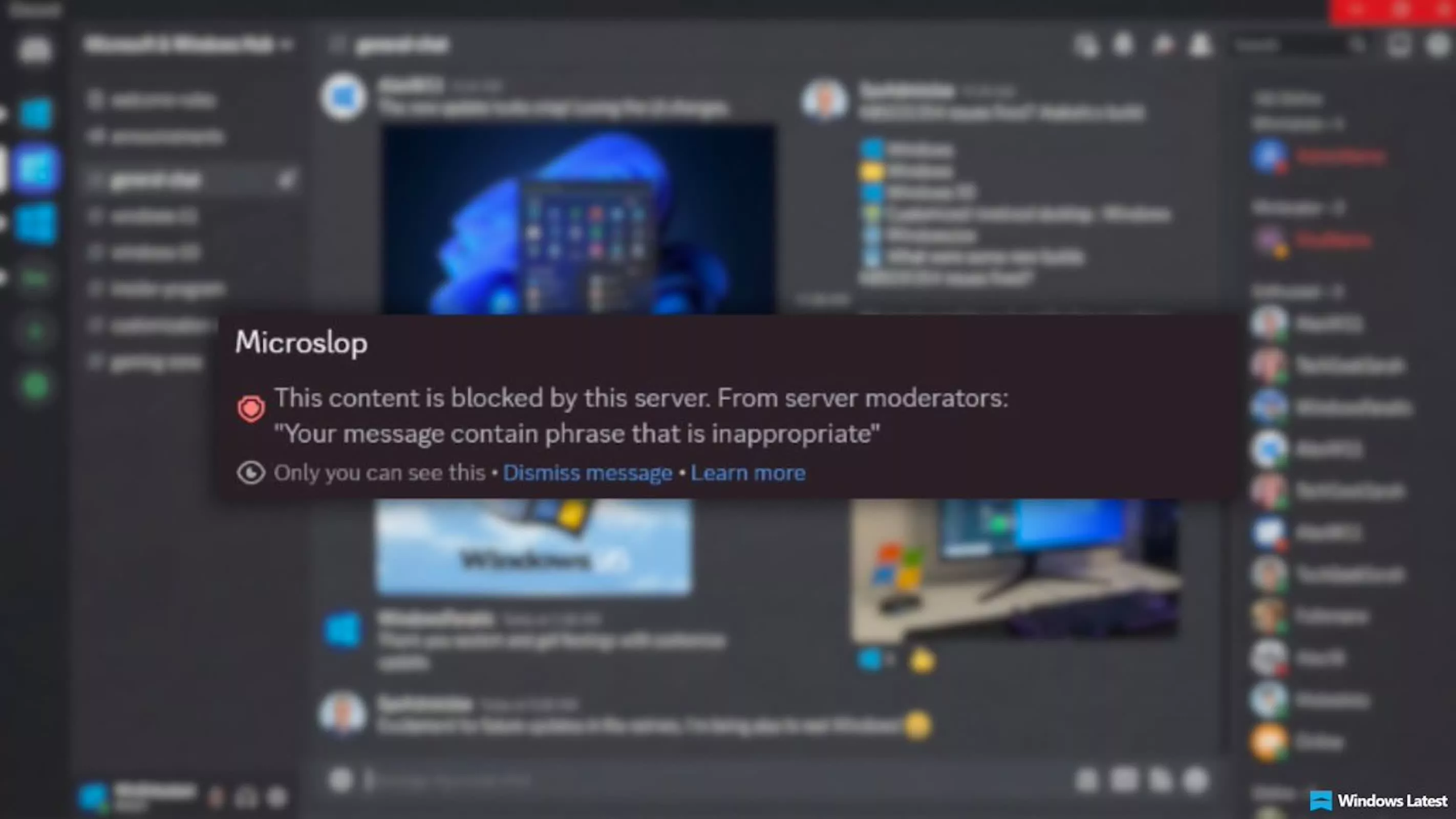
Facepalm: Microsoft's latest PR headache didn't come from Windows 11 updates or a Copilot feature rollout, but from a more unlikely source... its own Discord community. A temporary moderation rule in the official Copilot server, which Microsoft later said was intended to slow spam, triggered a wave of backlash, memes, and accusations that the company was scrubbing criticism.
Trouble began when users discovered that Discord messages containing the word "Microslop," a mocking nickname for the company's AI-heavy direction, were automatically blocked. Those attempting to post the word received a notice saying their message included a "prohibited phrase."Screenshots spread quickly across social media, pushing what might have been a minor moderation tweak into a full-blown controversy.
Things escalated fast. Once the filter was spotted on X, users began experimenting with variations like "Microsl0p" and "Micr0slop." Those slipped through, suggesting the system relied on straightforward keyword matching rather than context-aware moderation.
Microsoft has started blocking "microslop" comments in Copilot's official Discord server. pic.twitter.com/7wZ4KiERPz
– Pirat_Nation (@Pirat_Nation) March 1, 2026
When Microsoft launched the Copilot Discord server in late 2024, the mood was largely optimistic. Early adopters gathered to swap workflows, test preview features, and compare Copilot's performance across Windows 11, Office, and Edge.
Much of the discussion focused on deeper integrations, particularly Copilot's expanding ability to pull contextual information from connected services such as Outlook, Gmail, and Google Contacts. These integrations, powered by Microsoft's so-called "connectors," allow the AI to retrieve details like phone numbers and email addresses from linked accounts.
But as Copilot spread further across Windows 11, enthusiasm began to mix with frustration. Some users argued that Microsoft's AI-first push was coming at the expense of system performance and reliability.
Microsoft banned the word 'Microslop' in its Copilot Discord server, then began restricting access after users started posting 'Microsl0p' and other funnies https://t.co/S4FIBaQvgl
– George Mount (@gjmount) March 2, 2026
By early 2026, Microsoft itself acknowledged that parts of its AI-first strategy had gone off course. Executives promised to refocus Windows 11 toward speed and stability. Yet just as Microsoft sought to rebuild goodwill, its Copilot Discord became the flashpoint for another round of criticism.
After reports revealed the "Microslop" block, users began flooding the Discord with posts testing which phrases would trigger moderation. Some accounts repeatedly posted the banned term or mocked the policy outright. As moderation ramped up, access to message history and posting permissions were restricted for many users.
What began as keyword filtering had turned into containment. Entire sections of the server were temporarily locked down, and discussion threads disappeared. Soon after, Microsoft confirmed the move, citing what it described as a coordinated spam attack.
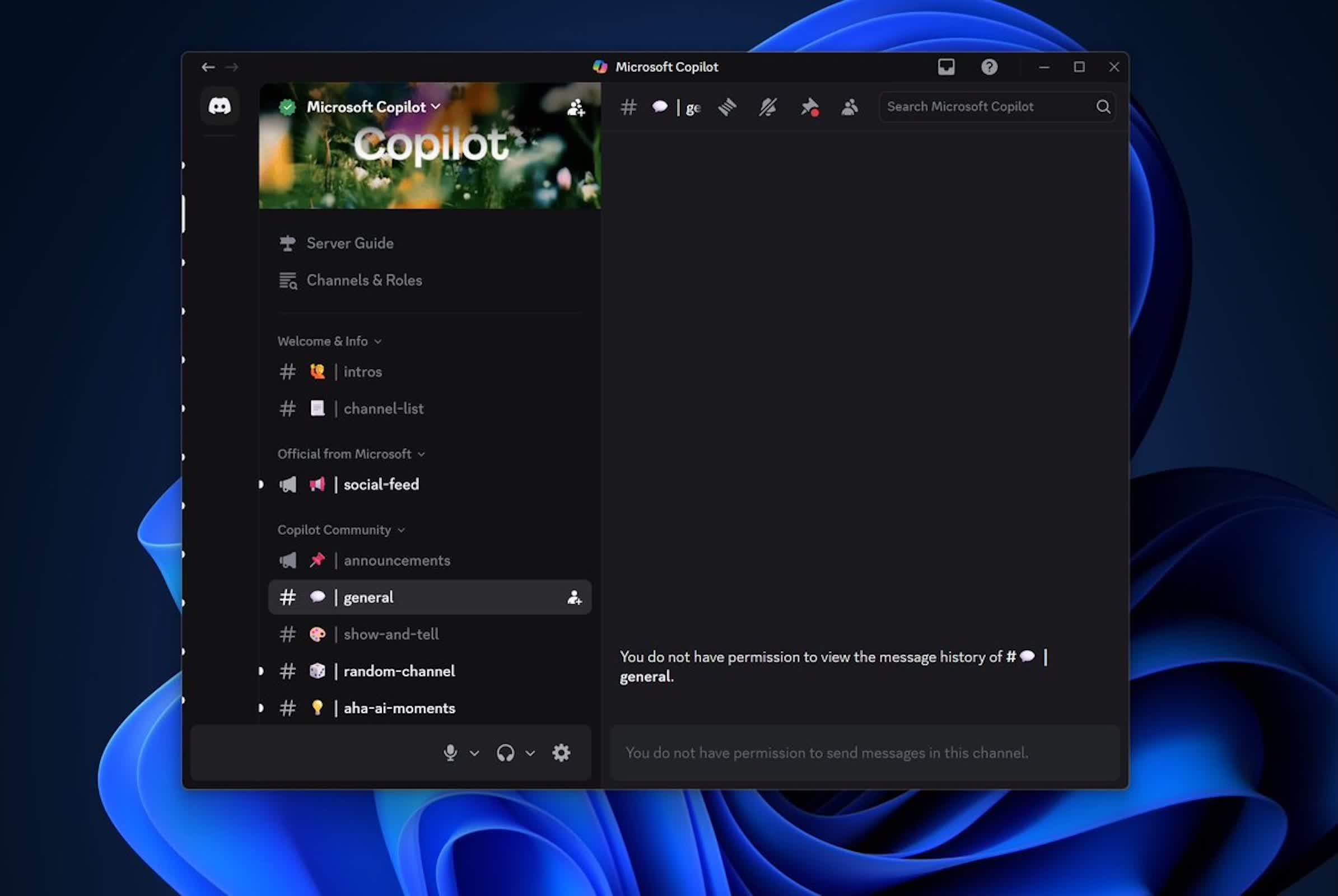
In a statement to Windows Latest, a Microsoft spokesperson said the Discord downtime and word filters were temporary responses to waves of spam designed to disrupt conversations. "The Copilot Discord channel has recently been targeted by spammers attempting to disrupt and overwhelm the space with harmful content not related to Copilot," the statement said. The spokesperson added that moderators used "temporary filters for select terms" to manage the influx until stronger safeguards could be implemented.
Microsoft did not deny that "Microslop" was among the filtered words but stressed that the move was not intended to suppress criticism. The company said the server lockdown would remain only until automated defenses improved.
The timing could hardly have been worse. Microsoft is still working to repair its reputation among Windows users unhappy with forced AI integration, resource-heavy background processes, and intrusive Copilot features embedded across the operating system. Social media mockery has become constant, and "Microslop" – once a fringe joke – now trends anytime the company unveils another AI push.
Meanwhile, competitors like OpenAI, Anthropic, and Google continue refining AI models that often outperform or outpace Microsoft's in flexibility and speed. Even Apple, traditionally conservative in public AI rollouts, is now positioning itself as a privacy-centric alternative.
For Microsoft, keeping its Copilot brand from becoming synonymous with bloatware has become almost as urgent as improving Windows 11's stability. And the Discord episode, however small, underscores how fragile that image remains.