In brief: Although various telecom providers began developing 6G as soon as 5G hit the market several years ago, most consumers likely won't experience the next-generation wireless technology until the end of this decade. At a recent conference in Barcelona, Nvidia, Qualcomm, and several other companies outlined the groundwork for 6G. Meanwhile, devices supporting Wi-Fi 8 could debut before the end of this year.
Qualcomm announced a strategic coalition with numerous telecom operators and other technology companies to prepare for the global rollout of 6G. At MWC 2026, the partners established a roadmap aimed at launching commercial deployments beginning in 2029.
Samsung, Huawei, LG, and others have been researching 6G since at least 2019, around the time consumers first gained access to 5G networks. By integrating satellites with advanced antenna systems, telecom providers hope to deliver data rates several times faster than 5G while also improving reliability and energy efficiency.
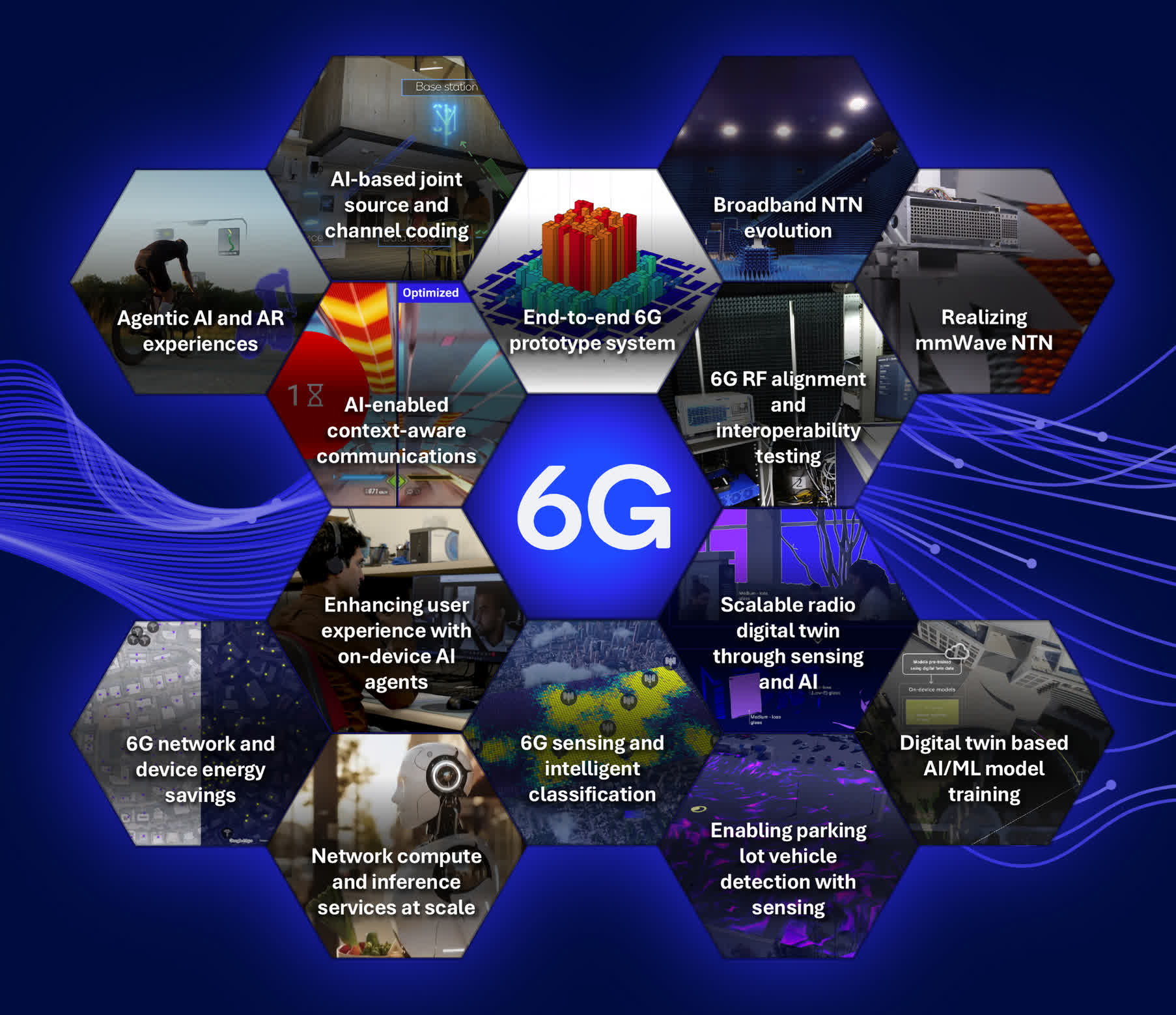
Qualcomm says intelligent radios with integrated wide-area sensing, AI-driven network autonomy, virtualized and cloud-based RAN, energy-efficient computing, and other emerging technologies will form the foundation of 6G. Telecom operators hope the next-generation standard will finally unlock a broad range of AI capabilities – an unfulfilled promise many made during the 5G rollout.
Perhaps unsurprisingly, Nvidia – the primary driver of the ongoing AI boom – has emerged as a key player in 6G development. At MWC, the chipmaker advocated for making core 6G components open-source from the outset.
While SK Telecom attributes 5G's underwhelming deployment to poor planning and limited demand, others argue that Ericsson and Nokia function as gatekeepers in non-Chinese markets, potentially limiting broader industry participation. Although 5G delivered the anticipated gains in bandwidth and performance, the additional capacity did not produce the transformative technological shifts some had envisioned.
Nvidia, Ericsson, Nokia, the Linux Foundation, and the US Department of Defense, among others, hope that making 6G's foundational technologies open-source will enable the standard to be AI-native from the outset. Nvidia also hopes that AI applications powered by 6G networks will run on its chips.
Qualcomm's 6G coalition includes Microsoft, Meta, LG, Amazon, Asus, Dell, Ericsson, Motorola, Samsung, and numerous other companies. The group plans to develop early standards and oversee initial system validation of 6G-compliant devices in 2028, followed by a full commercial rollout in 2029. This timeline aligns with projections made in 2019 that 6G would begin reaching consumers around 2030.
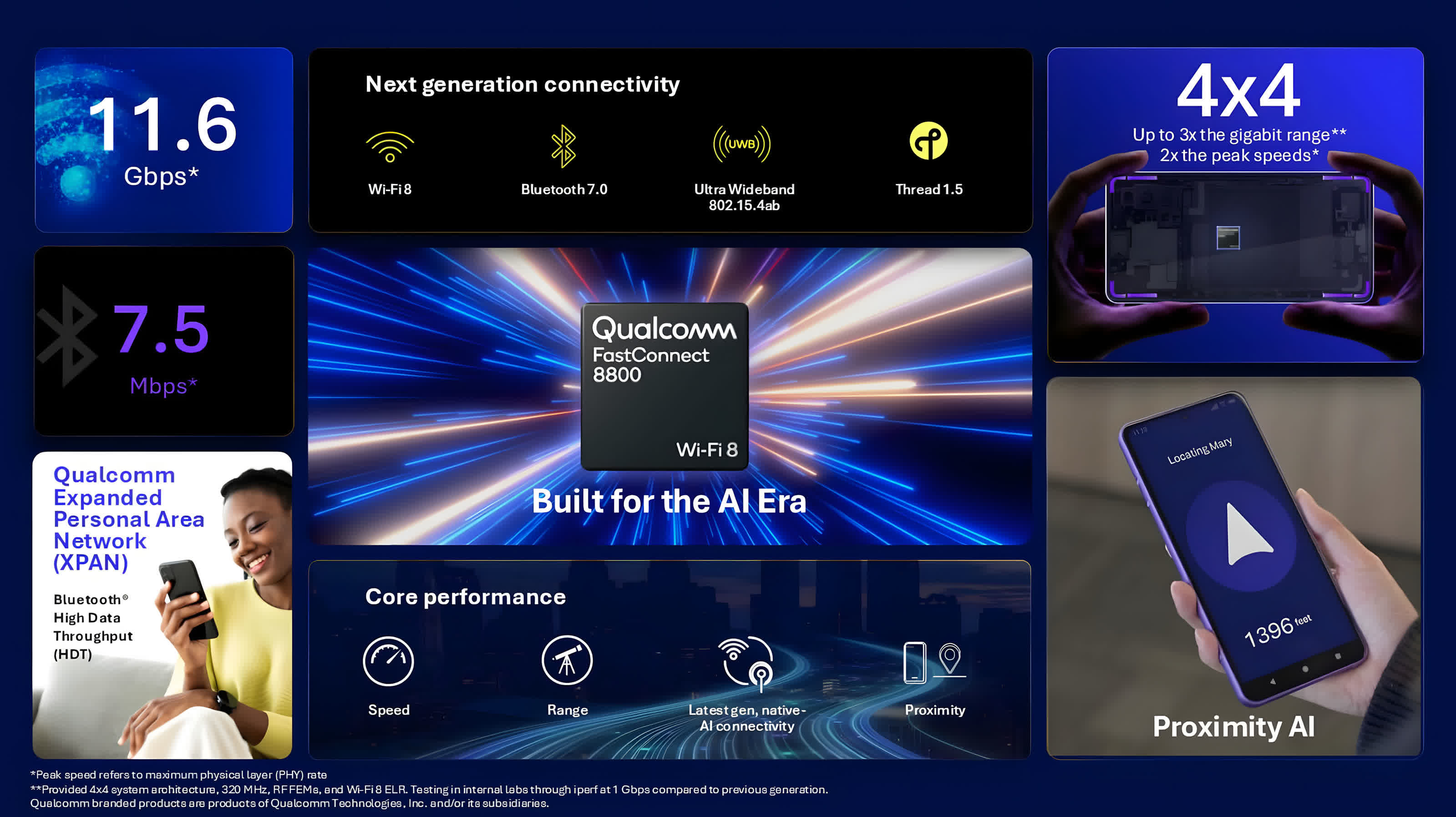
At MWC, Qualcomm also unveiled its new Wi-Fi 8 modem, the FastConnect 8800. Featuring what the company calls "AI-native" network interface card technology, the chip doubles peak Wi-Fi speeds compared to its Wi-Fi 7-based predecessors, surpassing 10 Gbps. It also supports Bluetooth 7.0 and Bluetooth High Data Throughput.
Wi-Fi 8 – outlined by Qualcomm and tested by TP-Link last year – prioritizes improved signal strength and reliability over raw speed. The standard aims to maintain Wi-Fi 7 – level performance in crowded environments with heavy signal interference. IoT and enterprise-focused Dragonwing Wi-Fi 8 products are expected to debut in late 2026.