
In brief: Steam Deck verification has become one of the most useful features of the popular handheld gaming PC, clearly indicating which games deliver a smooth experience on the device. At GDC, Valve published the requirements for games to receive the verification badge for its upcoming living room PC and VR headset.
Unsurprisingly, Steam Machine verification requirements will be more lenient than those for the Steam Deck, since the Machine is expected to provide roughly six times more performance headroom. Meanwhile, verification requirements for locally installed games on the Steam Frame will be stricter.
Valve's information booklet states that all Steam Deck – verified games will automatically receive Steam Machine verification. Furthermore, if a game's default resolution or text legibility is the only issue preventing full Deck verification, it will also receive automatic verification on the newer device.
As with the Deck, other issues – such as performance or SteamOS compatibility – will result in titles being labeled "Playable," "Unsupported," or "Test."
Notably, because Valve expects Steam Machine users to connect the Linux desktop to various displays such as TVs, monitors, and even the Steam Frame across a broad range of resolutions, Steam Machine verification will not include resolution or legibility requirements.
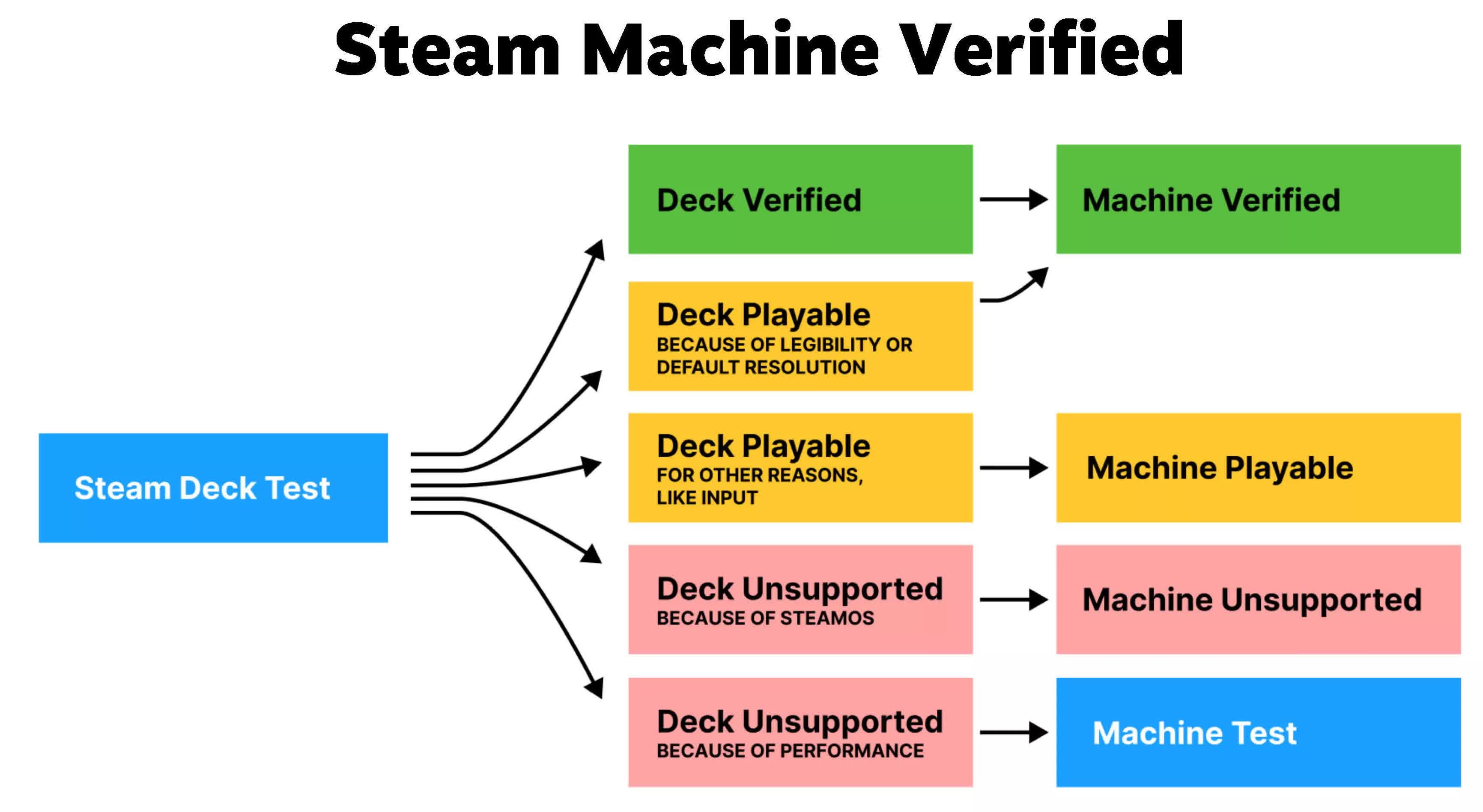
The primary requirements are that a game support gamepad and gyro controls, allow multiple controllers (including for single-player games, likely for accessibility), and maintain 30 frames per second at 1080p on minimum graphics settings. Although Valve previously claimed that the Steam Machine targets 60 fps gameplay at 4K, that metric accounts for upscaling.
Meanwhile, Steam Frame verification will evaluate performance and compatibility only when games are installed locally on the VR headset. Streaming performance depends on the host PC, and Valve will handle all streaming optimizations without requiring any input from developers.
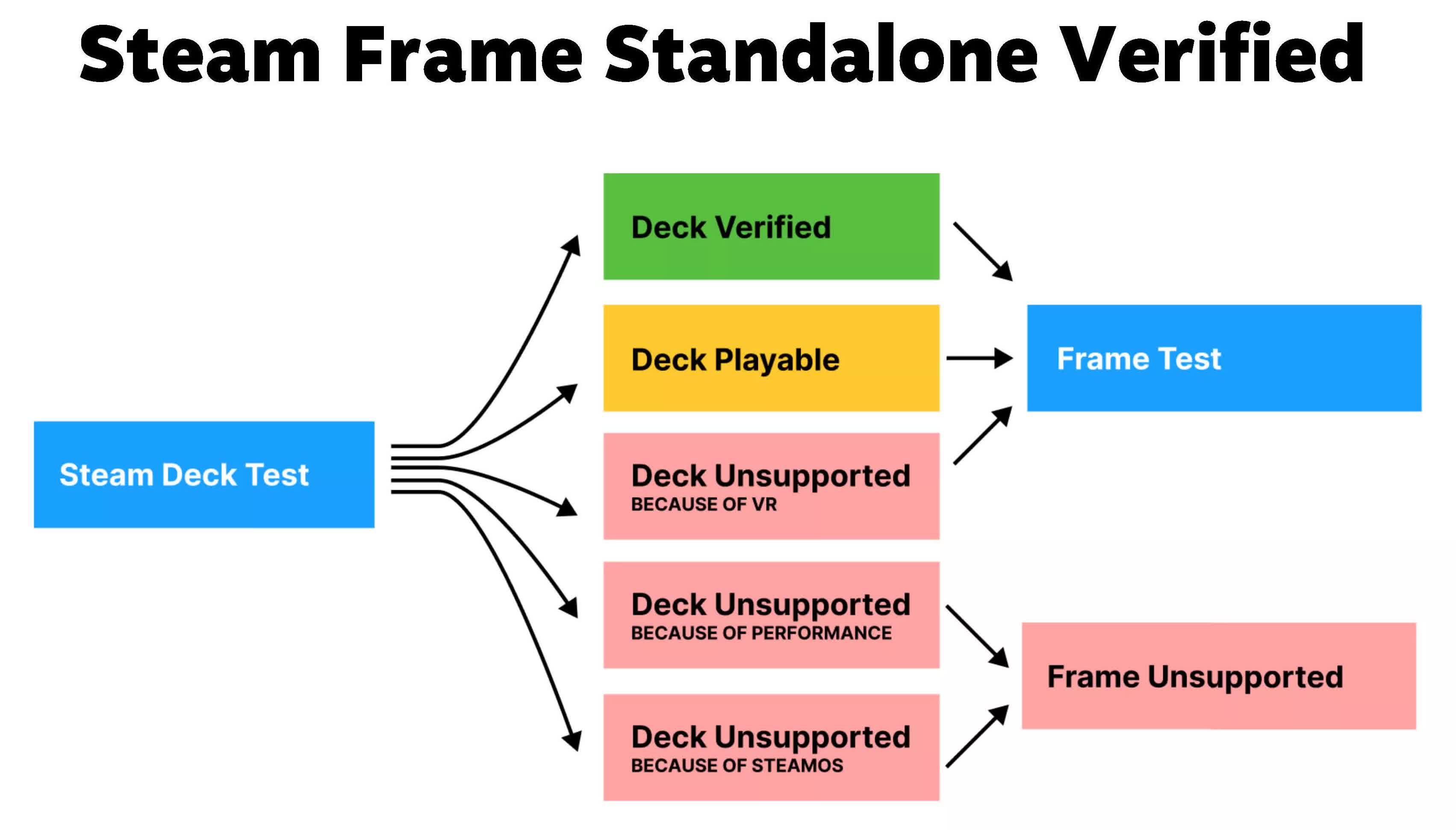
The company will test performance and compatibility for both VR and non-VR games, since the Steam Frame can display traditional media in theater mode.
All verified games must display text legibly and fully support the Steam Frame controllers, which include the same inputs as standard gamepads. Theater-mode games must maintain at least 30 fps at 720p on the headset's Snapdragon 8 Gen 3 processor, while VR titles must achieve 90 fps for a smooth experience. Steam Deck – verified games do not receive automatic Steam Frame verification.
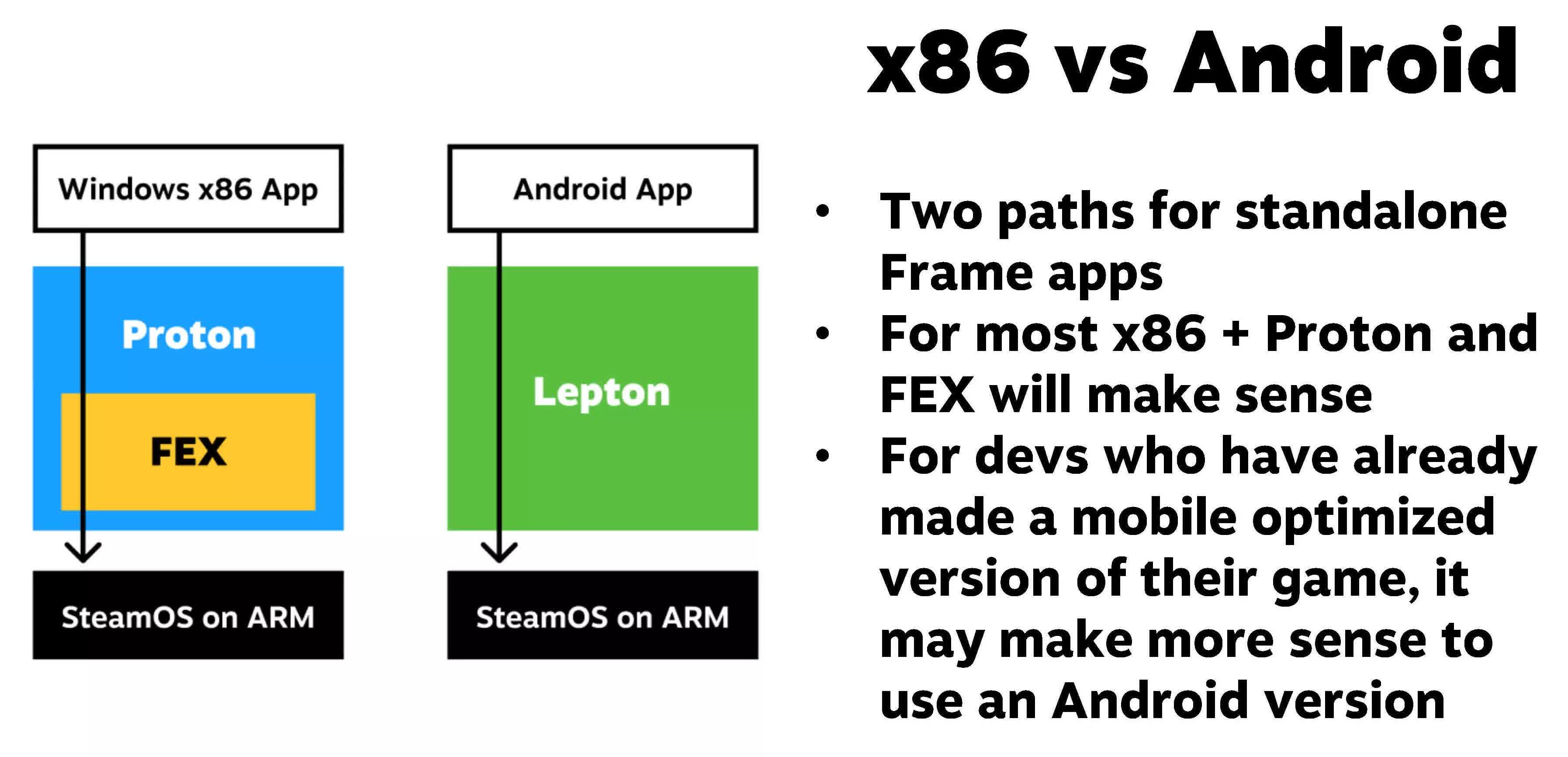
Valve advises VR developers to choose carefully between releasing x86-based software or Android apps for the Steam Frame. The device translates Windows x86 code into Linux via Proton, and then into Arm via FEX, while Android apps transition directly to SteamOS via Lepton. VR games that already support Arm-based devices, such as the Meta Quest, will translate to the Steam Frame more easily.
Although Valve initially aimed to launch the two devices along with the new Steam Controller in the first quarter of 2026, ongoing memory shortages across the tech sector caused a delay. The company still hopes to release its new hardware this year, but rising RAM costs will likely push the price higher than originally intended.