
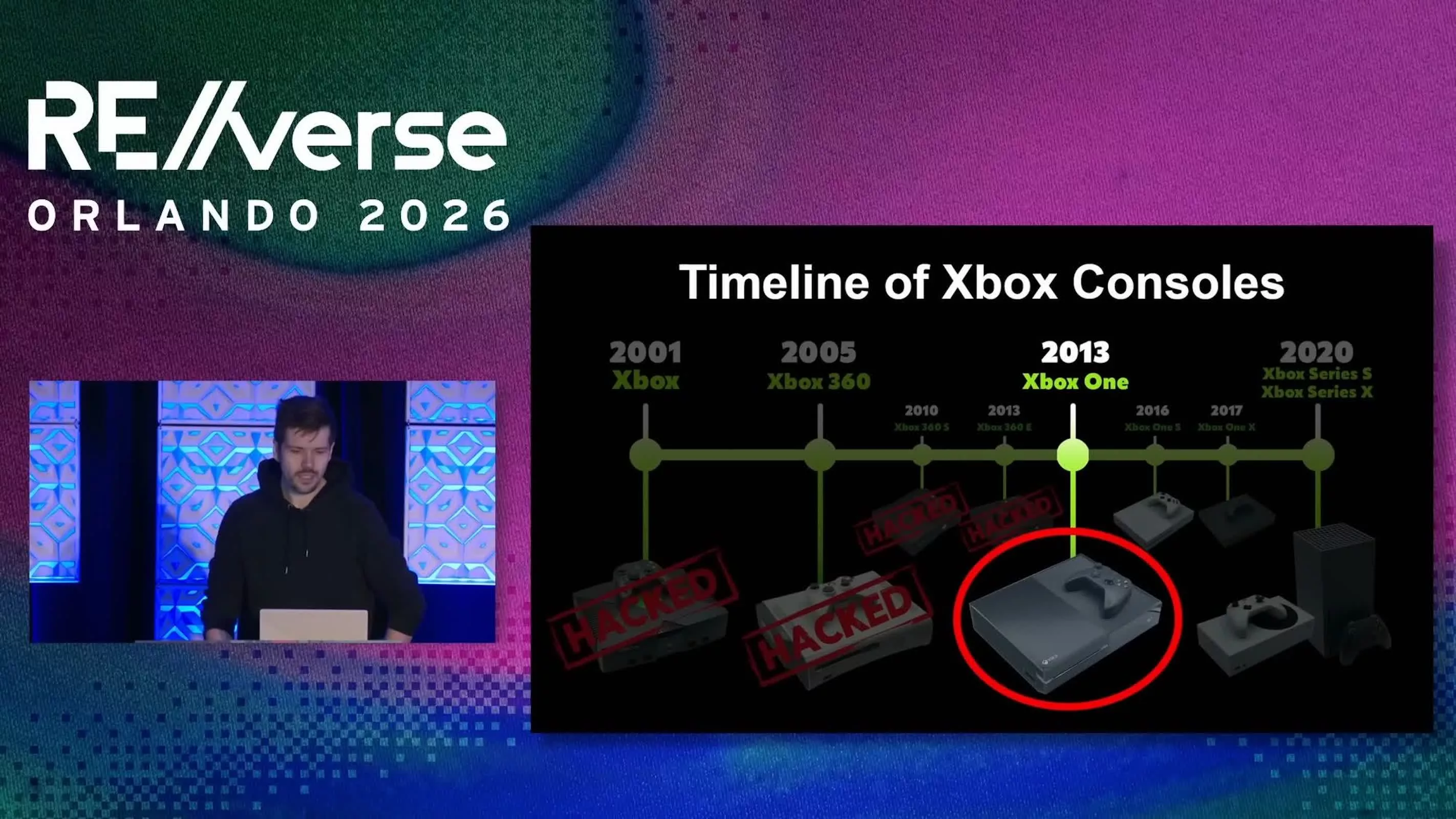
A hot potato: For more than a decade, the Xbox One stood as a remarkable exception in console security – a machine long considered impervious to hacking attempts. That reputation is now over. At the RE//verse 2026 conference, security researcher Markus "Doom" Gaasedelen unveiled what he calls the "Bliss" double glitch, a voltage-based exploit that entirely undermines Microsoft's most fortified console platform.
The demonstration marks the first public, reproducible breach of the Xbox One's hardware-level defenses, a milestone in console hacking that recalls the famous Reset Glitch Hack that compromised the Xbox 360 years earlier. But Gaasedelen's technique goes deeper, operating below the software stack, against the boot ROM on the Xbox One's system-on-chip. The result, he explained, is full system control – from boot ROM to hypervisor – through a pair of perfectly timed voltage faults.
When the Xbox One launched in 2013, Microsoft had engineered what many in the security community described as a near-impenetrable hardware platform.
The company integrated multiple layers of encryption and authentication, binding CPU firmware, operating system, and game binaries together through a tightly controlled chain of trust. Even years after release, Xbox engineers still referred to it as "the most secure product Microsoft has ever produced."
Unlike the Xbox 360, which fell after modders exploited reset-line vulnerabilities, the Xbox One's secure boot process was built to eliminate every possible external injection point. Its use of an embedded ARM-based security co-processor – responsible for validating each stage of the boot sequence – meant that without a valid cryptographic signature, nothing could execute. For years, that approach proved bulletproof.
Gaasedelen's insight was to move entirely below the software stack. Traditional "reset glitching" manipulates timing in the boot sequence, but as he explained, the Xbox One's architecture left no footholds there. Instead, he turned to voltage glitching – a fault injection method that physically disturbs the CPU's power rail for fractions of a second.
By briefly collapsing voltage at critical execution moments, it becomes possible to make the processor skip or misinterpret instructions, opening tiny windows of opportunity. The challenge, however, is precision: even a nanosecond's difference can change the result from a successful bypass to a system crash.
Gaasedelen developed custom instrumentation hardware to measure and time these events, essentially building tools that allowed him to "see" inside the Xbox One's silicon behavior.
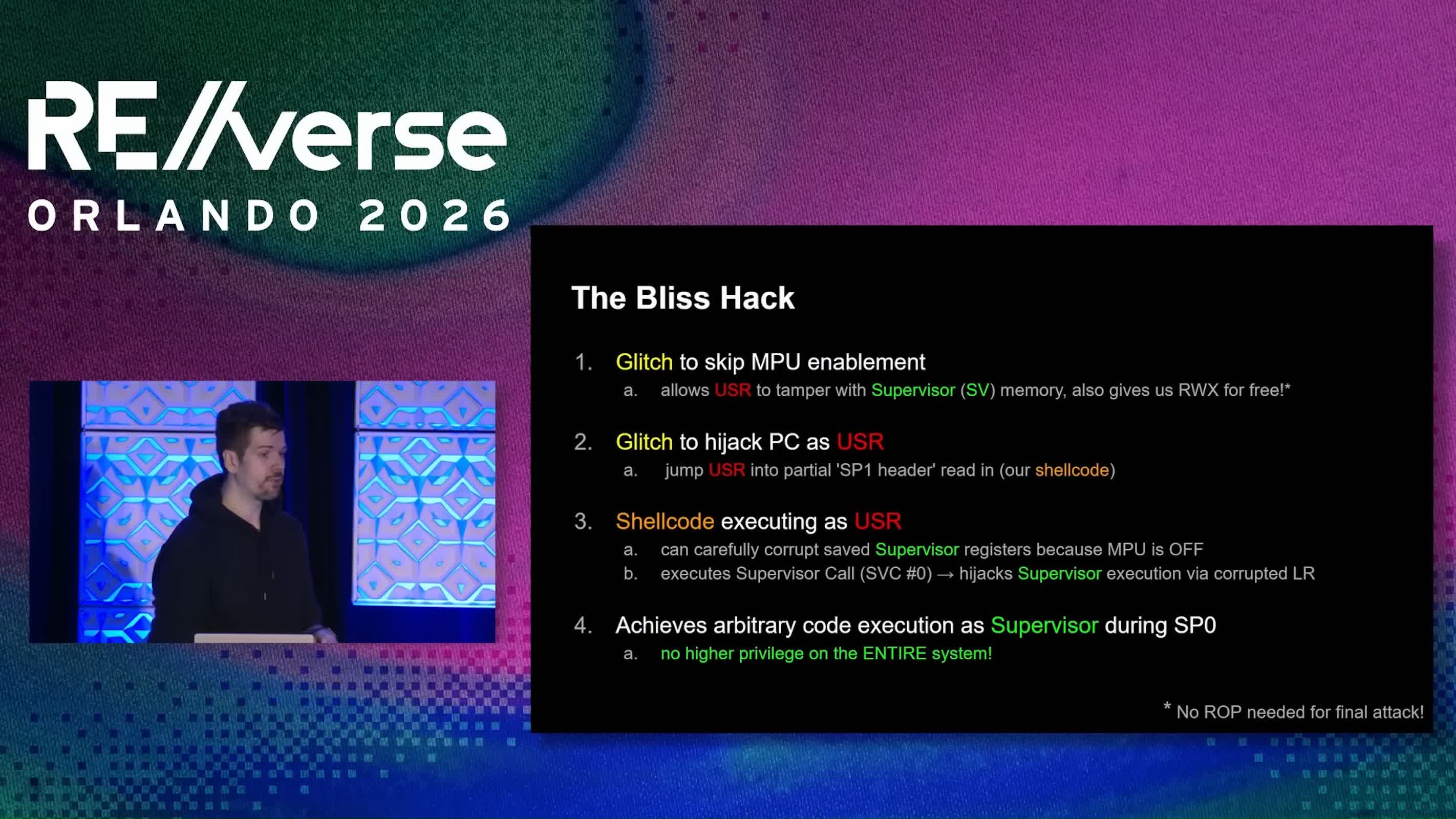
That groundwork led to the discovery of the Bliss method – a dual-timing attack requiring two distinct voltage glitches at specific points in the startup sequence. The first glitch prevents proper initialization of ARM Cortex memory-protection routines. The second targets a memory-copy (Memcpy) instruction during the header read process. Executed exactly right, those glitches divert execution to attacker-controlled memory, effectively hijacking the boot chain.
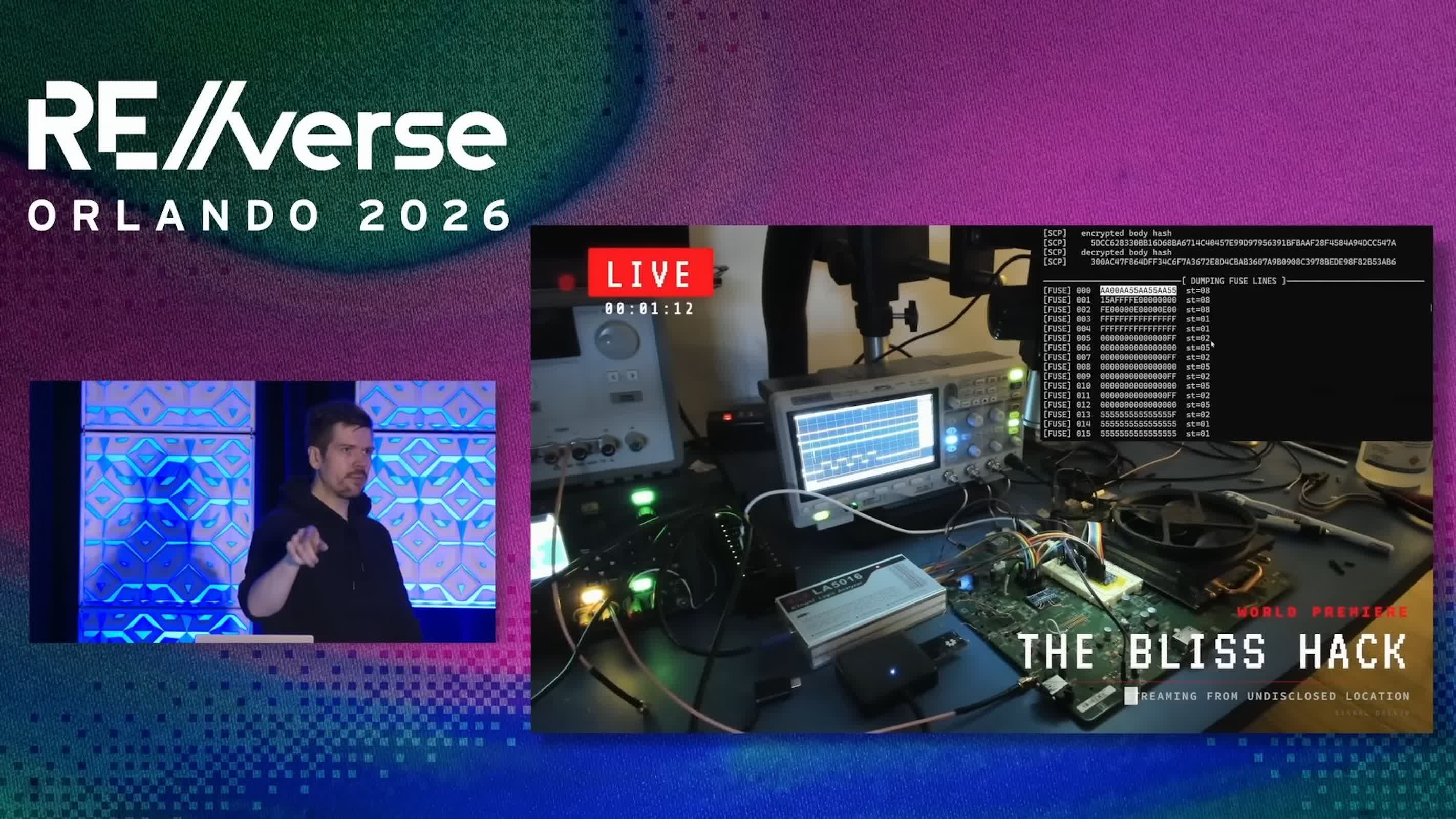
Unlike most modern exploits, Gaasedelen's technique doesn't rely on software vulnerabilities that can be fixed through a firmware update. It targets immutable code hardwired into the chip – the boot ROM etched into the chip's silicon. As such, he described Bliss as "unpatchable," enabling unsigned code to run across every layer, including the security processor and the hypervisor.
Once exploited, the system can load arbitrary operating systems or reveal encrypted firmware, making private keys and protected software accessible for study or preservation. For researchers and archivists, this opens unprecedented opportunities to document the Xbox One's internals, fully understand its architecture, and accurately emulate its environment in software.
While Gaasedelen presented his findings at a technical conference, the implications reach far beyond security research. Digital preservationists now have a legitimate path to extract, catalog, and study Xbox One firmware – a crucial step in keeping console-era software accessible once online services shut down.
There is also speculation that developers may refine Bliss into a modchip-like tool that automates the precise electrical conditions required for the glitch sequence. That could blur the boundary between legitimate research and console modification, a familiar tension from past hardware generations.
For Microsoft, however, the practical threat may be limited. The Xbox One, now a legacy platform, has largely been replaced by newer systems with updated security architectures inherited from the same design lineage. Still, the Bliss exploit reminds the industry that "unhackable" is never forever – even when the barrier lies in hardware.