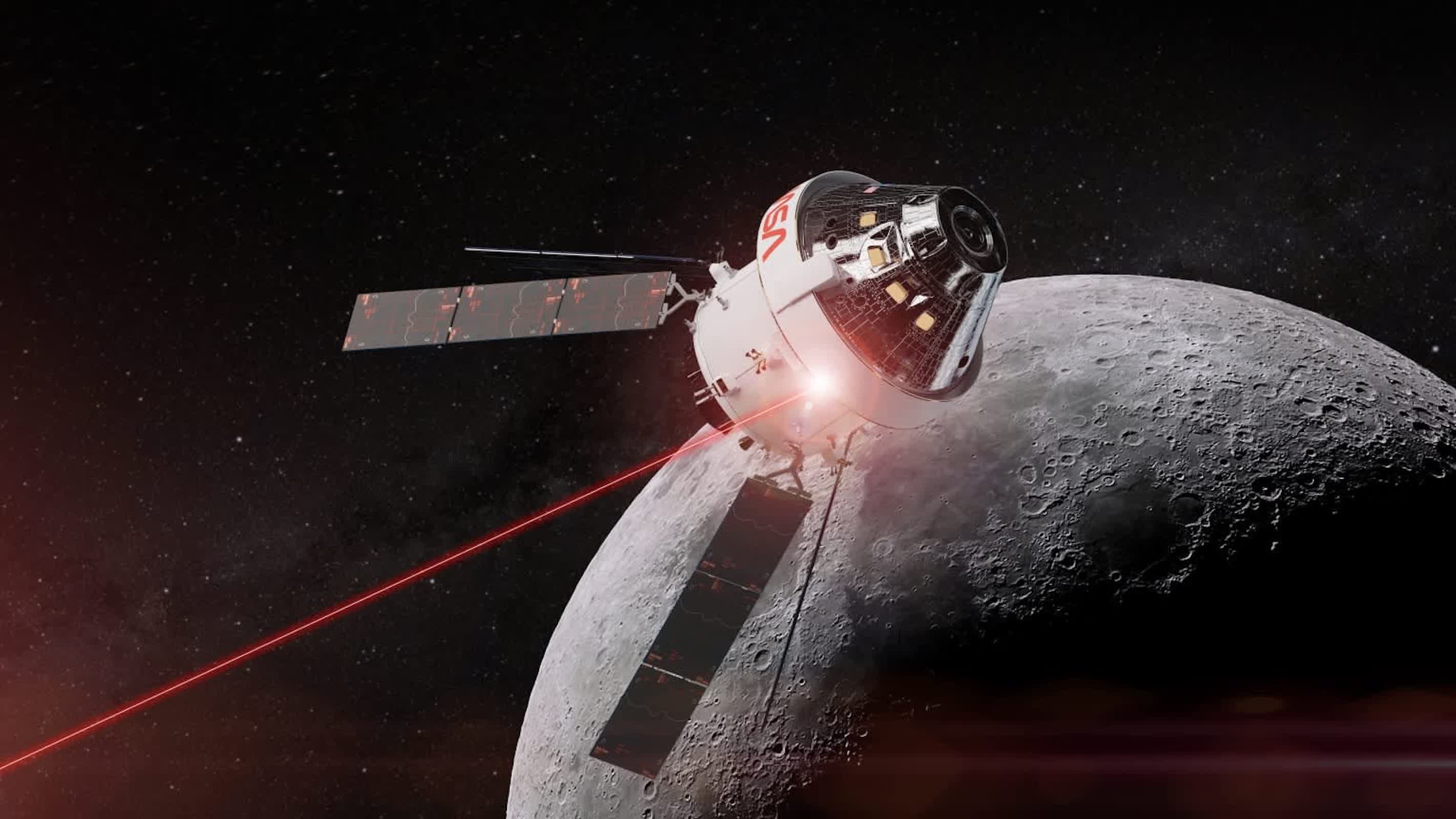
The takeaway: NASA's latest crewed lunar mission promises not only another giant leap in human space travel but a dramatic upgrade in how we experience it from Earth. With Artemis II now underway, the agency is debuting a laser communications system capable of transmitting ultra-high-definition video directly from lunar distance.
The new system, known as the Orion Artemis II Optical Communications system, or O2O, will allow astronauts aboard Orion to send 4K footage from their mission to Earth at speeds up to 260 megabits per second, according to NASA. The capability marks a shift from radio-based transmissions that defined the Apollo era to optical technology designed for higher fidelity and efficiency.
"At 260 megabits per second, O2O is capable of sending down 4K high-definition video from the Moon," says Steve Horowitz, O2O project manager. "In addition to video and pictures, O2O will transmit and receive procedures, pictures, flight plans, and be a link between Orion and mission control on Earth."
– NASA (@NASA) April 3, 2026
To support these high-speed links, laser ground stations have been positioned in Las Cruces, New Mexico, and Table Mountain, California – both chosen for their reliably clear skies, a key requirement for uninterrupted optical communication.
NASA's engineers say the advantage of laser transmission extends beyond image quality: compared to conventional radio systems, optical communications can move far more data at once while taking up less space and weight aboard the spacecraft.
Another bonus of the leaner design is that more room is freed up within the Orion capsule for crew and research equipment. The system represents a long-anticipated evolution of the technologies used decades ago during the Apollo missions. Back then, NASA relied on S-band radio to broadcast the black-and-white video of Neil Armstrong and Buzz Aldrin's first steps on the lunar surface.
For Artemis II, both imaging hardware and communication systems are far more sophisticated than those used during Apollo. The crew will use Nikon digital cameras to capture portions of the lunar landscape, including areas of the Moon's far side that may never have been seen by humans. Those views will be transmitted back via O2O, providing audiences on Earth with a real-time look unlike anything previously possible.
While O2O is a major new element of Artemis II communications, traditional radio networks will remain integral. The spacecraft will maintain radio contact through NASA's Deep Space Network – a global array of antennas in California, Spain, and Australia that has long supported missions from Voyager to the Mars rovers. This network serves as a critical backup to the laser system in the event of interference from atmospheric or optical conditions.
NASA has anticipated one unavoidable gap in coverage during Artemis II: a planned 41-minute communications blackout as the spacecraft travels behind the Moon. The far side's solid mass will block both the laser and DSN signals until Orion reemerges and reconnects with mission control.
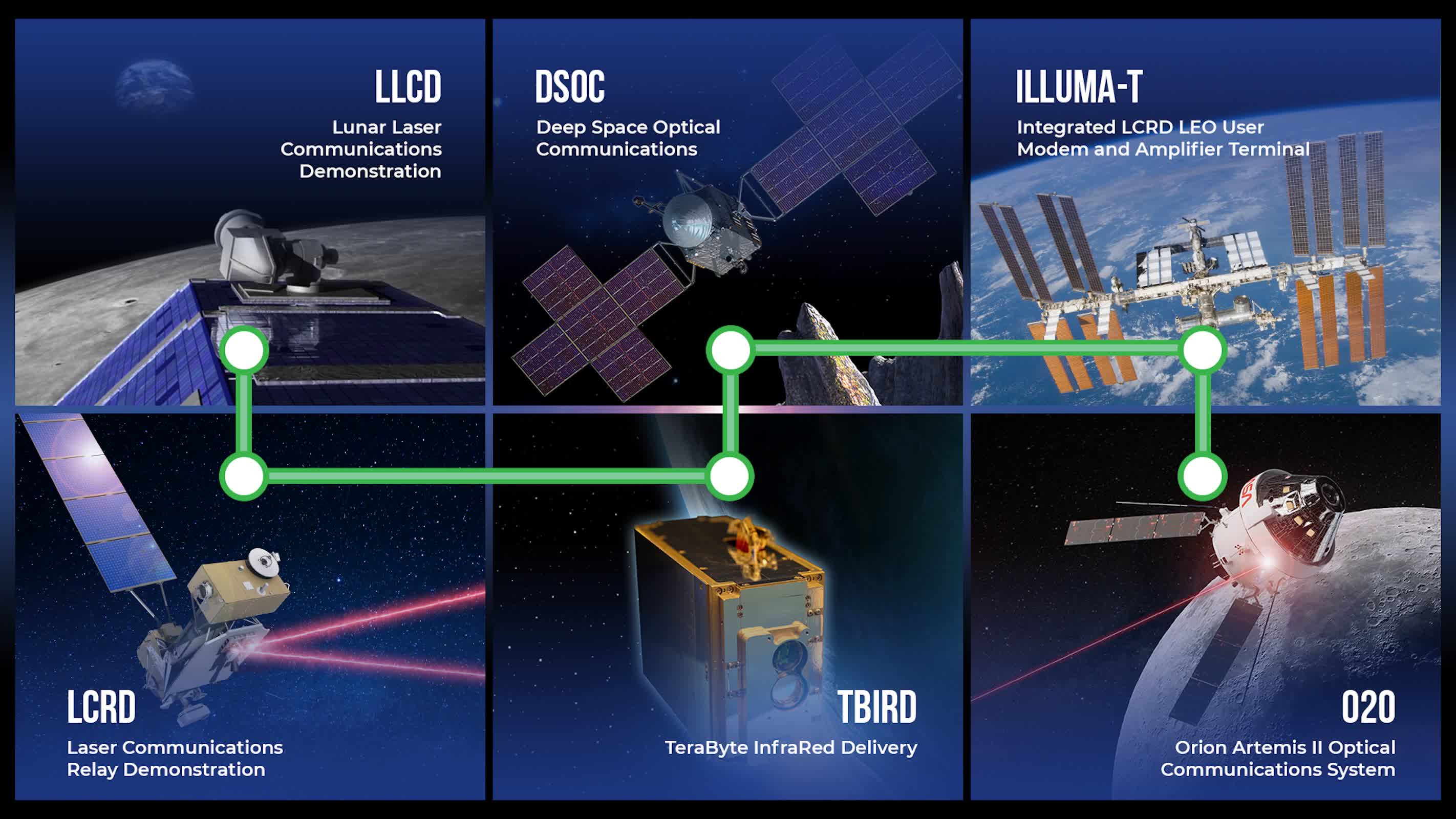
For those impressed by O2O's performance, NASA points out that its previous Laser Communications Demonstration achieved data rates of 622 Mbps – and newer, near-Earth projects have reached speeds of up to 200 gigabits per second. But for a mission covering nearly 240,000 miles, 260 Mbps represents a remarkable leap in the transmission of high-definition lunar imagery back home.