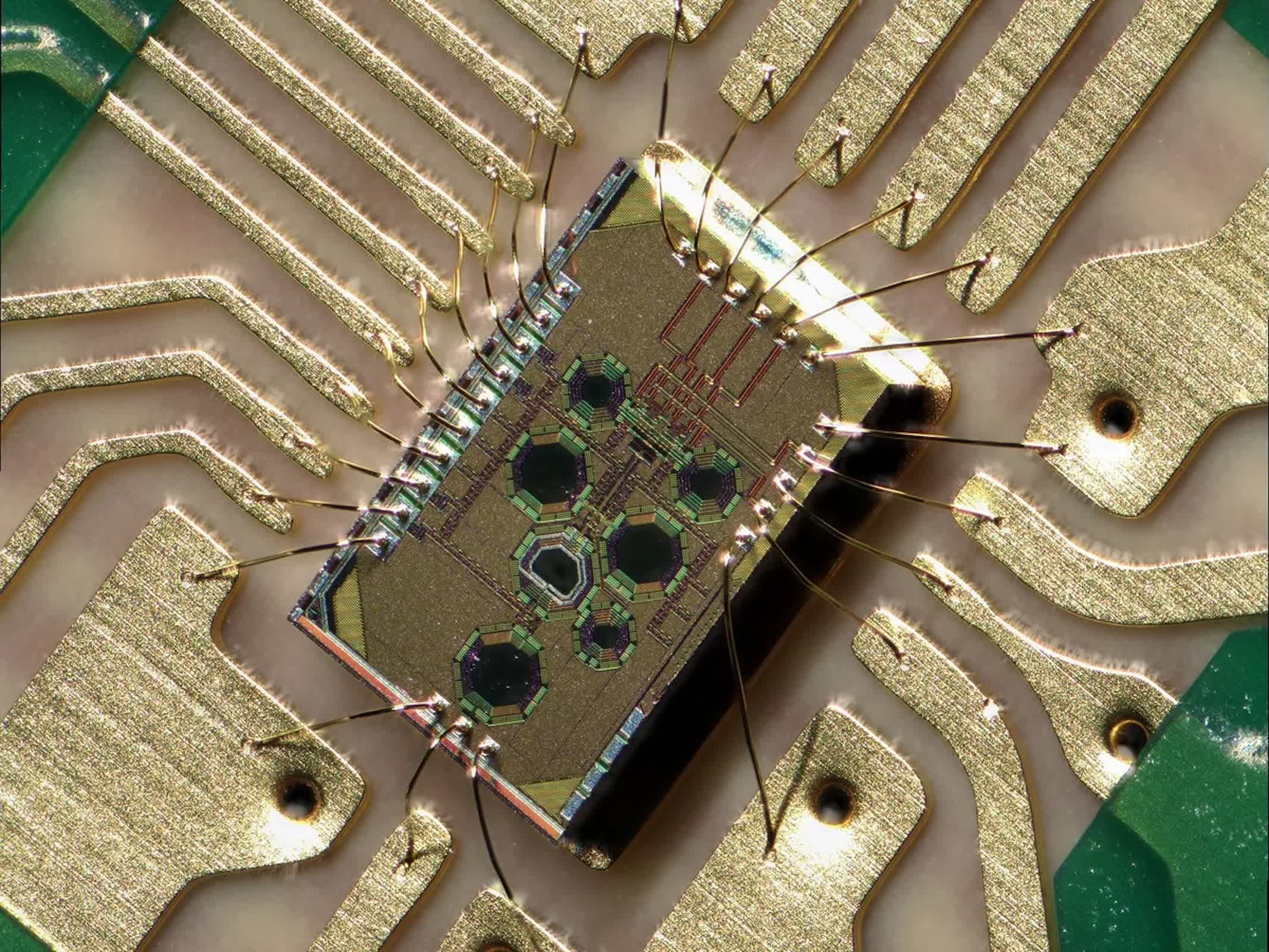
Highly anticipated: A team in Japan has developed a Wi-Fi receiver capable of operating in the extreme radiation inside nuclear reactors, an advance that could help robotics teams safely decommission aging power plants. The receiver, developed at the Institute of Science Tokyo, demonstrated resilience under radiation doses roughly 1,000 times higher than what typical electronics can withstand.
The research, presented at the IEEE International Solid-State Circuits Conference in San Francisco earlier this year, shows the receiver can continue operating after exposure to 500 kilograys of radiation. That level of endurance far exceeds what even space-grade electronics are designed to handle.
A robot working inside a nuclear reactor must endure more than 500 kGy over six months, according to Yasuto Narukiyo, the graduate student leading the project. By comparison, space electronics typically tolerate between 100 and 300 grays over three years.
Narukiyo's team, which includes advisor Atsushi Shirane and Masaya Miyahara of Japan's High Energy Accelerator Research Organization, aims to build a fully wireless control system for robots used in nuclear decommissioning. Robots deployed at sites such as Fukushima Daiichi currently rely on local area network cables that can become entangled, limiting both range and reliability.
The challenge is not only logistical but also technical. Radiation rapidly degrades conventional electronics. When gamma rays strike silicon components, they can trap positive charges in oxide layers surrounding transistors, leading to performance errors.
To counter that, the Tokyo group redesigned its 2.4GHz Wi-Fi receiver with fewer transistors, altered transistor geometry, and replaced vulnerable PMOS transistors with more resilient NMOS types and inductors.
PMOS transistors suffer more radiation damage because radiation causes positive charge to accumulate both in the oxide layer and at the oxide-semiconductor interface, Narukiyo says. To compensate, he says, the new receiver design minimizes the use of PMOS.
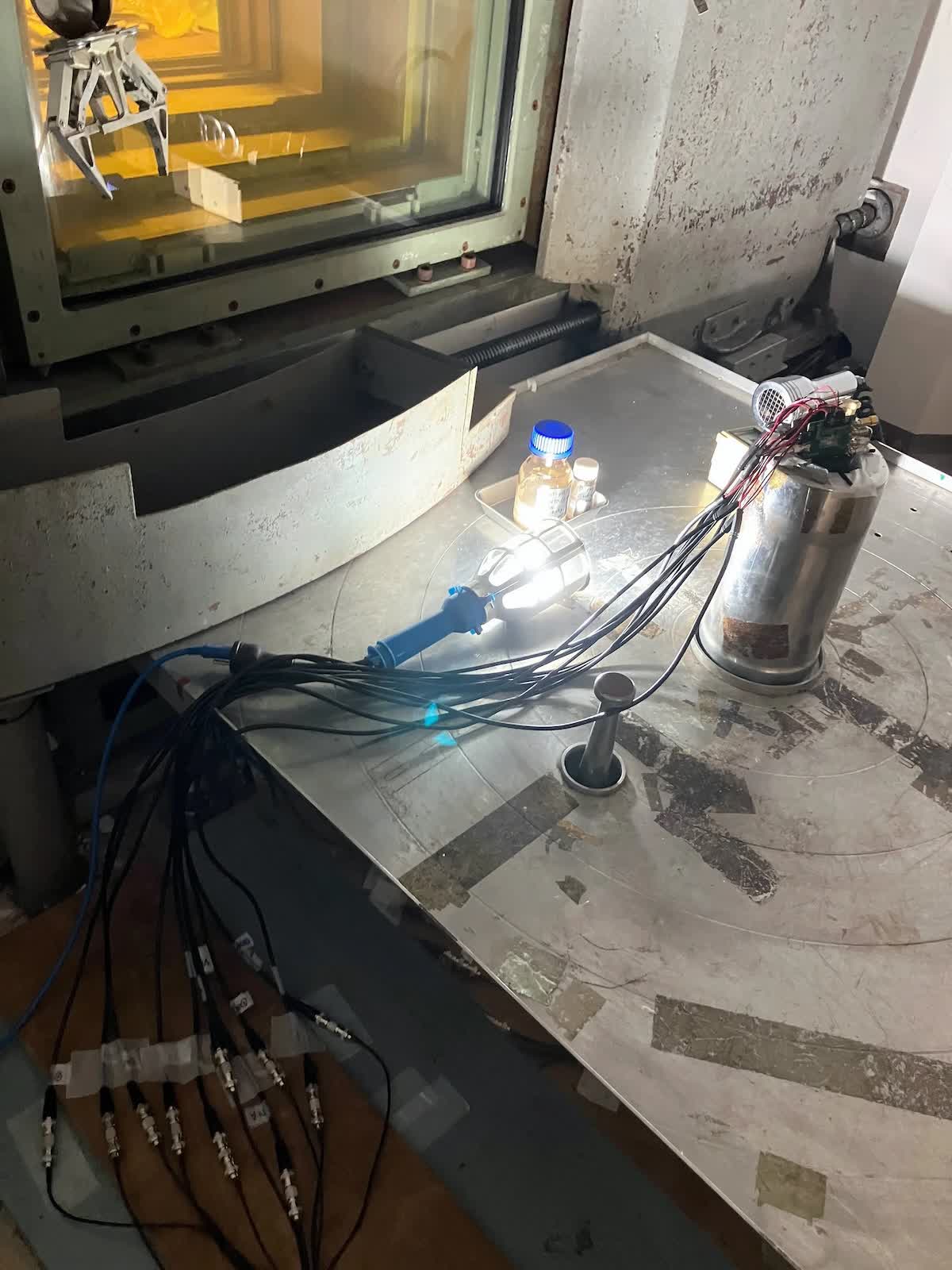
After irradiation tests up to 500 kGy, the receiver's performance degraded only slightly, with gain dropping by about 1.5 decibels, while remaining fully functional. Prior to testing, it performed comparably to standard commercial Wi-Fi receivers.
That durability could make the device highly useful inside reactors, where robots handle inspection, cleanup, and dismantlement tasks too dangerous for humans. Globally, decommissioning efforts are accelerating: of the 204 reactors that have been shut down, only 11 large plants have been fully dismantled, while another 200 are expected to close within the next two decades, according to a 2024 study.
Narukiyo's next goal is to build a transmitter capable of two-way communication, a more difficult challenge because it must generate high currents for Wi-Fi signals. An earlier prototype failed at 300 kGy. The team is exploring new semiconductor materials, including diamond, to make the transmitter as durable as its receiver counterpart.
Image credit: IEEE Spectrum