
The takeaway: Valve appears to be preparing a new feature that could make one of PC gaming's biggest uncertainties – performance – more transparent. Newly uncovered code in the Steam client suggests players may soon see estimated frame rate data for each game derived from real-world gameplay metrics shared by other users.
The feature would represent a significant step toward bridging the gap between official system requirements and actual in-game performance. Even as studios release recommended hardware specs, the experience on diverse PC setups often differs sharply from expectations.
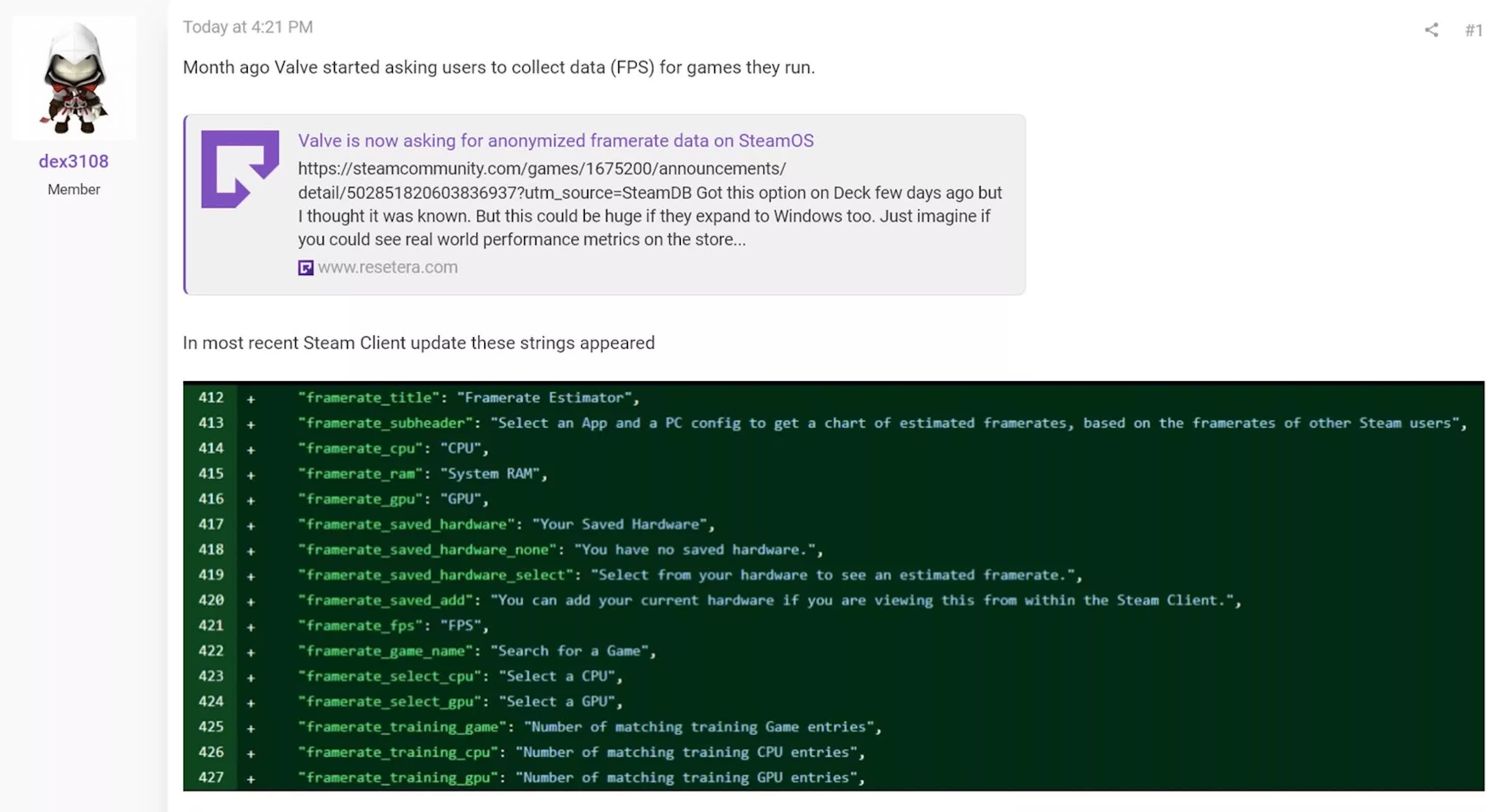
The discovery surfaced on the ResetEra forums, where user Dex3108 spotted a new line in the latest Steam client code: "Select an App and a PC config to get a chart of estimated frame rates, based on the frame rates of other users."
That wording points to a potential Steam Store tool allowing users to input their CPU, GPU, and memory to preview expected performance before buying a game.

The idea builds on Valve's broader push to collect gameplay metrics anonymously. The company previously introduced a beta feature on SteamOS devices that logs frame rates and system configurations in the background. Valve says the effort is meant "to learn about game compatibility and improve Steam," with all collected data remaining detached from user identities.
Valve has also started prompting SteamOS users – such as the Steam Deck and the upcoming Steam Machine – if they are willing to allow anonymous FPS tracking. This data-gathering effort extends the company's push to enhance store information with user-generated insights.
In parallel, Valve recently enabled reviewers to attach their hardware specifications directly to user reviews, removing the need to manually list system details when describing performance.
It's still unclear whether estimated FPS data will extend to the Windows version of Steam. So far, Valve's telemetry efforts have centered on its own ecosystem. For SteamOS users, particularly on the Steam Deck, more granular performance data could complement the existing "Verified" program, which currently offers only broad compatibility labels.

The upcoming Steam Machine, with its higher power envelope, could benefit even more, giving users a clearer sense of how demanding titles scale on compact hardware.
There are challenges, however. PC performance can depend on a wide mix of variables: graphics settings and resolution, mods, and upscaling technologies like DLSS and FSR, which can boost frame rates while affecting image quality. Aggregating data across those conditions will require careful normalization to keep estimates reliable.
Despite those hurdles, many fans appear receptive to Valve's push for more community-sourced performance insights. If implemented, the feature could make the world's largest PC game storefront a more trustworthy guide for buyers navigating an increasingly fragmented hardware landscape.