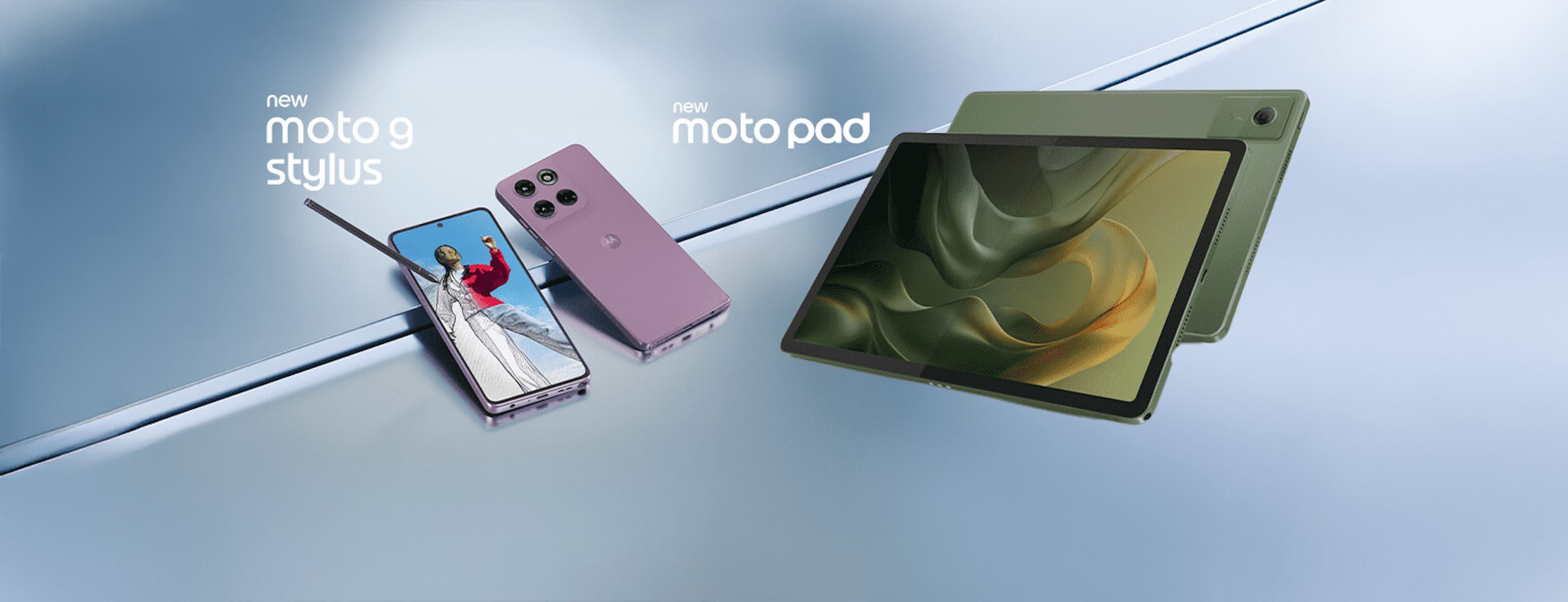
What just happened? Motorola is returning to the carrier tablet market for the first time since Verizon's short-lived Xyboard lineup, pairing its new Moto Pad slate with a refreshed Moto G Stylus that places greater emphasis on pen input, fast charging, and battery life. Together, the devices test whether there is still room in the US market for affordable, pen-driven Android hardware that sits between budget media tablets and the premium phones and tablets that have long dominated stylus-centric workflows.
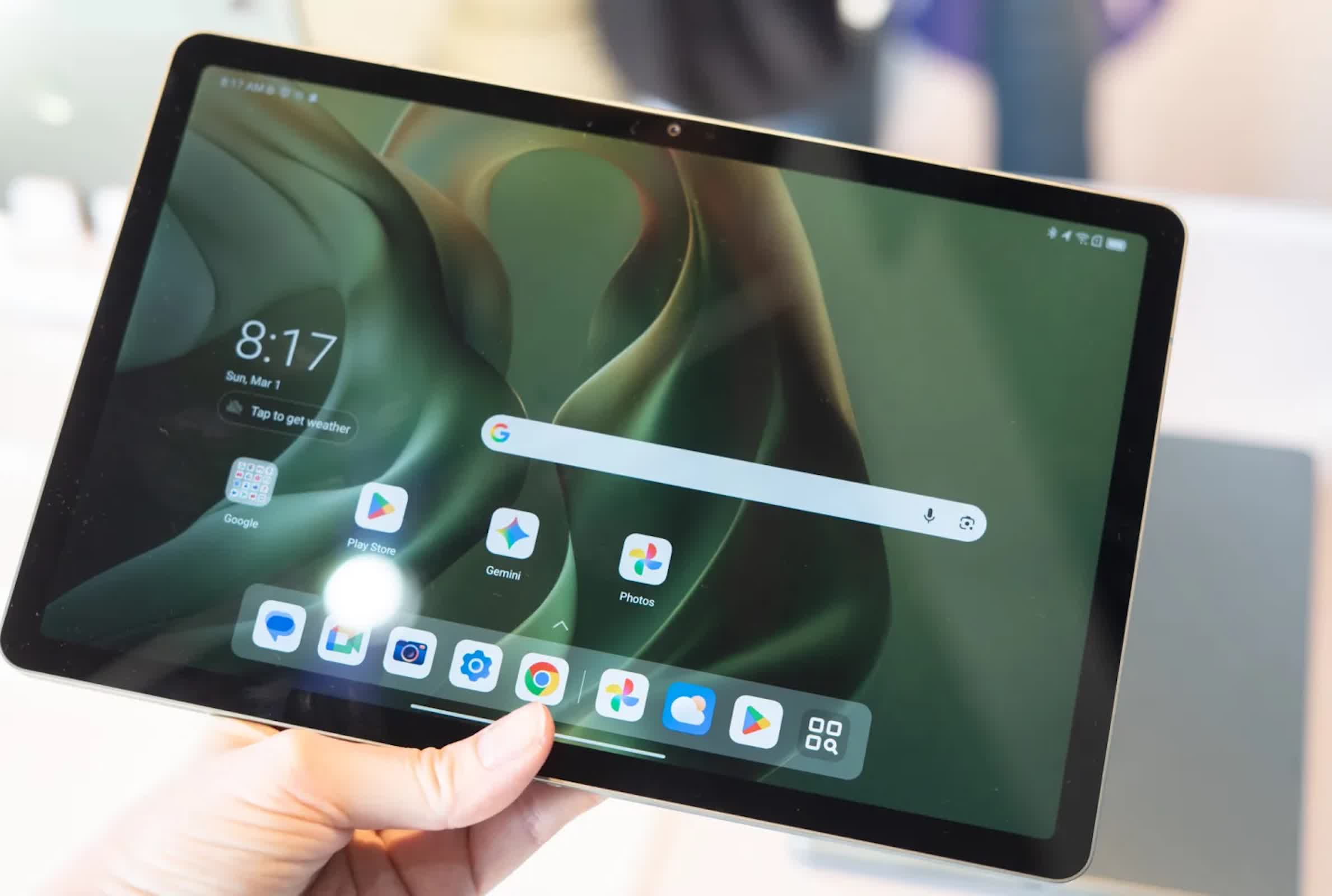
The Moto Pad is an 11-inch 2.5K tablet with a 90Hz display, powered by MediaTek's Dimensity 6300 5G chip and paired with 8GB of RAM and 128GB of storage, along with a microSD slot that supports cards up to 2TB.
Its 7,040mAh battery is rated for up to 12 hours of streaming and supports 20W wired charging. The tablet also features quad speakers with Dolby audio. Motorola has added several quality-of-life hardware touches, including an all-metal chassis with rounded edges, a 3.5mm headphone jack, an IP52-rated water-repellent design, and a body that weighs about 480 grams and measures just under 7mm thick.
In the US, the Moto Pad will be available through T-Mobile and Metro by T-Mobile starting April 30, or it can be purchased by T-Mobile customers through Motorola's online store for $249.99 in a single bronze-green color option.
That makes it one of the first Motorola tablets to return to a US carrier lineup since Verizon's Xyboard family, which attempted a similar LTE-enabled slate strategy in 2011 before quietly disappearing as the Android tablet market cooled.
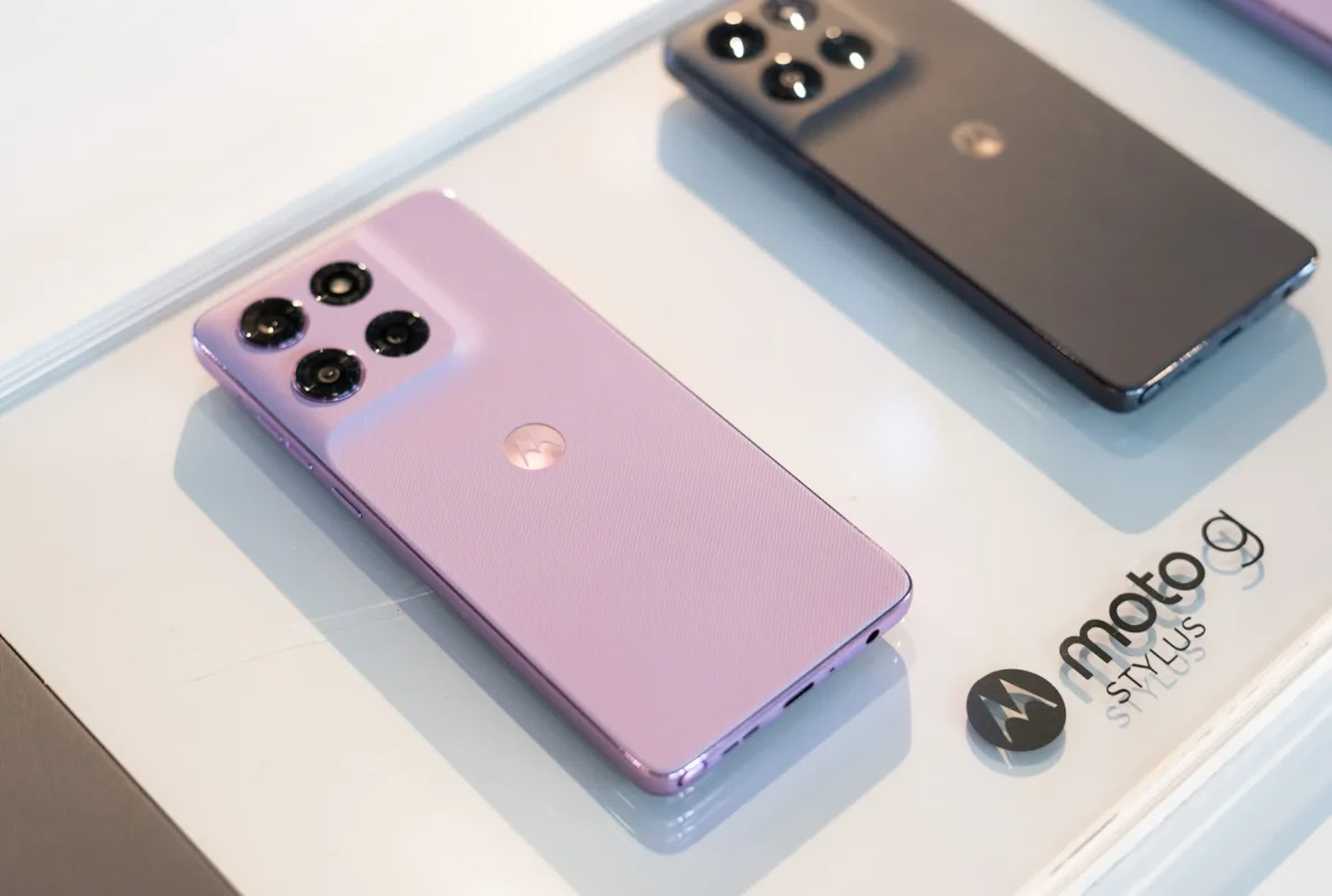
The new Moto G Stylus, meanwhile, pushes Motorola's budget stylus-enabled line closer to premium territory. It features a 6.7-inch AMOLED display with 1.5K resolution and a refresh rate of up to 120Hz, powered by Qualcomm's Snapdragon 6 Gen 3 processor, paired with 8GB of RAM and 128GB of storage, along with microSD expansion.
The phone's 5,200mAh battery is rated for up to 44 hours of use and supports 68W wired charging over USB-C, as well as up to 15W wireless charging. Motorola says it has tuned the battery to retain about 80 percent of its capacity after 1,600 charge cycles.
On the back, there is a 50-megapixel main camera using a Sony Lytia sensor with optical image stabilization, accompanied by a 13-megapixel ultrawide that doubles as a macro camera. A 32-megapixel selfie camera sits up front, and all three cameras can record 4K video.
The stylus is where this year's model makes its biggest push. Motorola's active pen now recognizes tilt and pressure in supported apps, offering finer control than the basic "dumb" styli that have defined much of the Moto G Stylus line so far.
The company rates the pen for up to 100 hours of standby and nearly four hours of continuous writing, and it can fully recharge in about 15 minutes while stowed in the phone. The stylus also includes a shortcut button, and Motorola is adding software features such as Quick Clip and enhanced Moto Notes.
Durability is another area where the new G Stylus steps up. The phone carries IP68 and IP69 ingress protection ratings and, according to Motorola – citing SGS testing – offers "military-grade" toughness. This includes resistance to five-foot drops, temperature extremes, immersion in up to 1.5 meters of fresh water, and high-pressure water spray – claims that, if borne out in real-world use, would make the device more resilient than previous budget Moto phones.
In the US, the Moto G Stylus 2026 will go on sale April 16 for $499.99 through Motorola's online store, Amazon, Best Buy, and carriers including Google Fi Wireless, AT&T, Spectrum Mobile, and Cricket Wireless.
Image credit: The Verge