
The big picture: If you follow tech news, it's impossible to miss how quickly everything is becoming "agentic." AI agents are being folded into major platforms, operating systems, browsers, and just about every category of software. In many ways, the shift is already tangible.
Tools like Claude Cowork, Claude Code, OpenClaw, and NemoClaw are demonstrating capabilities that would have sounded far-fetched even a year ago. They can automate repetitive work, generate polished content, and even enable non-programmers to build functional applications.
Compared to the early vision of digital assistants and what they were supposed to offer now seem like simple childhood daydreams. We are truly at the dawn of a new era of computing power that is, quite frankly, a bit scary to behold.
And yet, we're also still in the early stages. Part of that comes down to the speed of progress. The pace of innovation in agentic AI is remarkable, arguably beyond anything seen in previous waves of computing. What stands out just as much is how little attention is being paid to the broader implications. "Move fast and break things" may work for a single product, but when the potential impact is global, a more measured approach becomes essential. It may be a cliché, but it still applies: with great power comes great responsibility.
Regardless of where you stand philosophically, these changes are happening and will continue for years. The more immediate question is where the biggest impact shows up first. In the near term, I see three areas that deserve the closest attention: how we interact with computing devices, what infrastructure is needed to support these workloads, and how organizations adapt to the resulting workforce and security challenges.

First, on a practical level, the way we interact with our devices. On the user side, the shift is already visible. Interaction is moving away from navigating software toward simply requesting outcomes. Instead of thinking through steps or searching for features, users describe what they want and expect it to be done. That has significant implications for the traditional model of applications and operating systems, and will likely shape which tools remain relevant over time.
Hardware is evolving alongside this change. The idea of leveraging small desktop computers like Nvidia's Spark and its equivalents or Mac Minis as a second personal computer to run tools like OpenClaw and local versions of open source LLMs was unheard of even a few months ago, yet it's now becoming a notable trend – at least for those who can afford to purchase machines with the large amount of RAM necessary to run these workloads.

As these tools become more dependent on cloud services, continuous connectivity becomes more valuable, which could strengthen the case for 5G cellular-connected PCs.
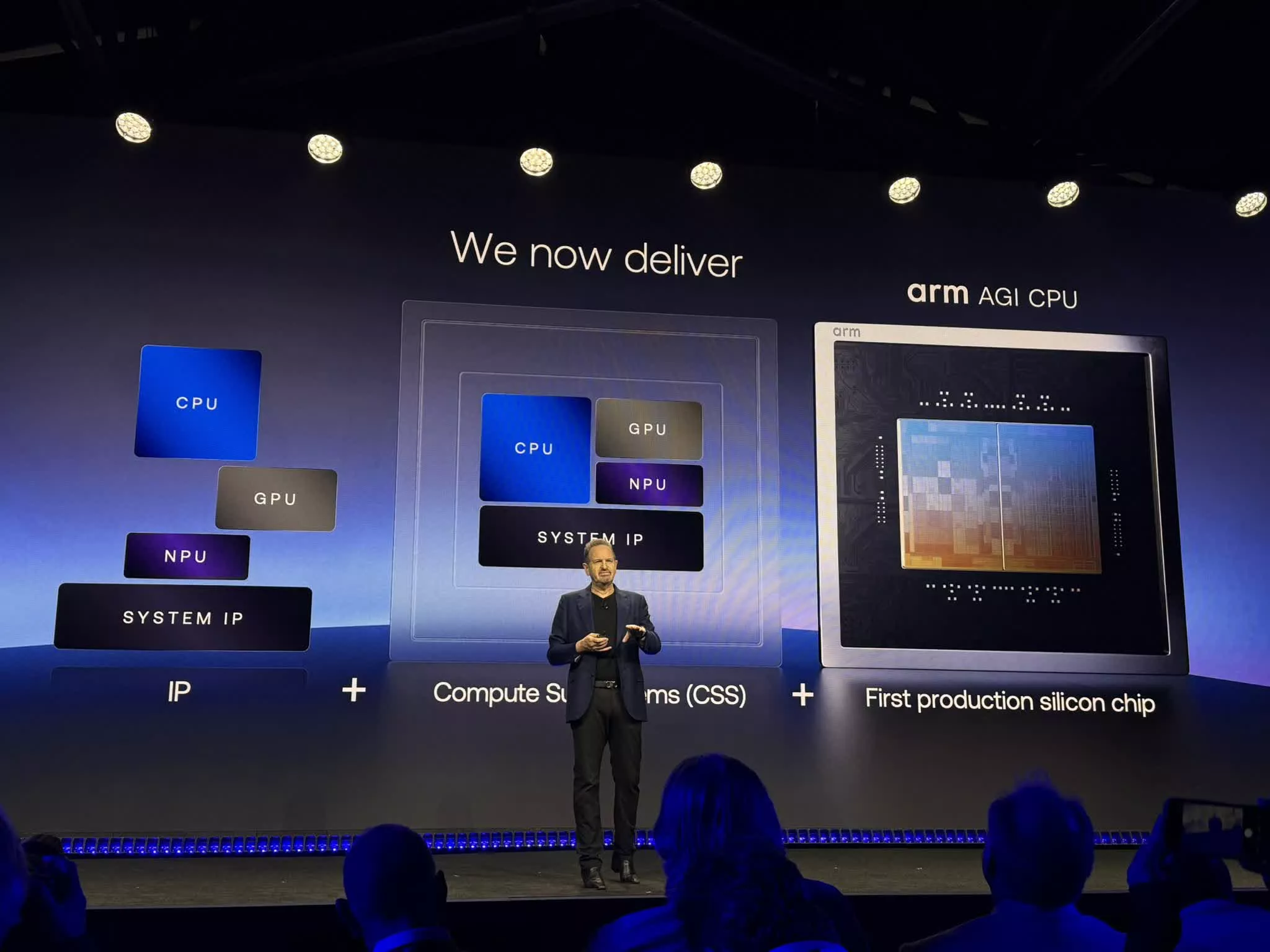
In the data center, the response has been just as rapid. There is a clear shift toward new types of silicon and infrastructure designed for these workloads. From Arm's recent AGI CPU launch to Nvidia's new CPU-only and Grok technology-powered LPU infrastructure, there's been an impressive degree of diversification in data center silicon recently. GPUs remain central, but CPUs, LPUs, and other specialized architectures are gaining ground as the ecosystem broadens to support different parts of the AI pipeline. The bigger point is that agentic AI is widening the range of viable compute architectures.
An important corollary to this, however, is that much of this currently applies to a relatively small – though very vocal – group of people. A widening gap is emerging between those actively experimenting with these tools and those who have little exposure to them. For early adopters, the productivity gains are clear. For most workers, the possibilities remain unclear, and integrating these tools often requires rethinking how work is done.
Think of it as the digital divide on steroids (or should I say peptides?!). People who are closely monitoring and trying out all the latest developments are waxing poetic about how much more they can achieve and even how much more they're being inspired to work because of what they can do with them. Most workers and consumers, on the other hand, have little to no idea what's even possible with these tools, let alone how to use them.

This is partly due to the still limited training that most organizations provide on AI tools. But it's also a trust problem. AI outputs can be inconsistent, prone to hallucinations, and difficult to verify at scale. For many users, the promise of automation is tempered by the reality of oversight, where time saved generating content is often offset by time spent checking and correcting it. The result is a more complicated productivity equation than early narratives suggest.
Enterprises are beginning to feel that tension. Concerns about agentic "bloat," rogue agents and security are quickly rising to the fore. Not surprisingly, traditional enterprise infrastructure and security companies such as Microsoft, Cisco, Palo Alto Networks, IBM and many others are quickly jumping onto what they see as both a huge threat and huge opportunity for them to help businesses.
Established vendors are moving to position themselves as both defenders and enablers in this new environment, but assembling the right mix of tools and policies is becoming a complex task. Also, the "agentic AI divide" is becoming a serious concern within organizations, grappling with an internal divide between enthusiastic adopters and more cautious users, compounded by unease around AI-linked job displacement.

History suggests that transitions like this rarely unfold smoothly. Agentic AI is already delivering on long-promised ideas of more capable, "intelligent" systems, but it is also surfacing new risks.
Ultimately, there isn't necessarily an easy right answer, but there's no doubt that more thought needs to be given to the implications of agentic AI developments by businesses, workers, developers, and societal leaders as they're being built and released.
The opportunity is real, as is the disruption. The companies that benefit most are unlikely to be the ones that simply move fastest, but those that balance experimentation with discipline. But, the question remains: are organizational cultures ready to stop managing tasks and start managing outcomes?
Bob O'Donnell is the founder and chief analyst of TECHnalysis Research, LLC a technology consulting firm that provides strategic consulting and market research services to the technology industry and professional financial community. You can follow him on Twitter @bobodtech