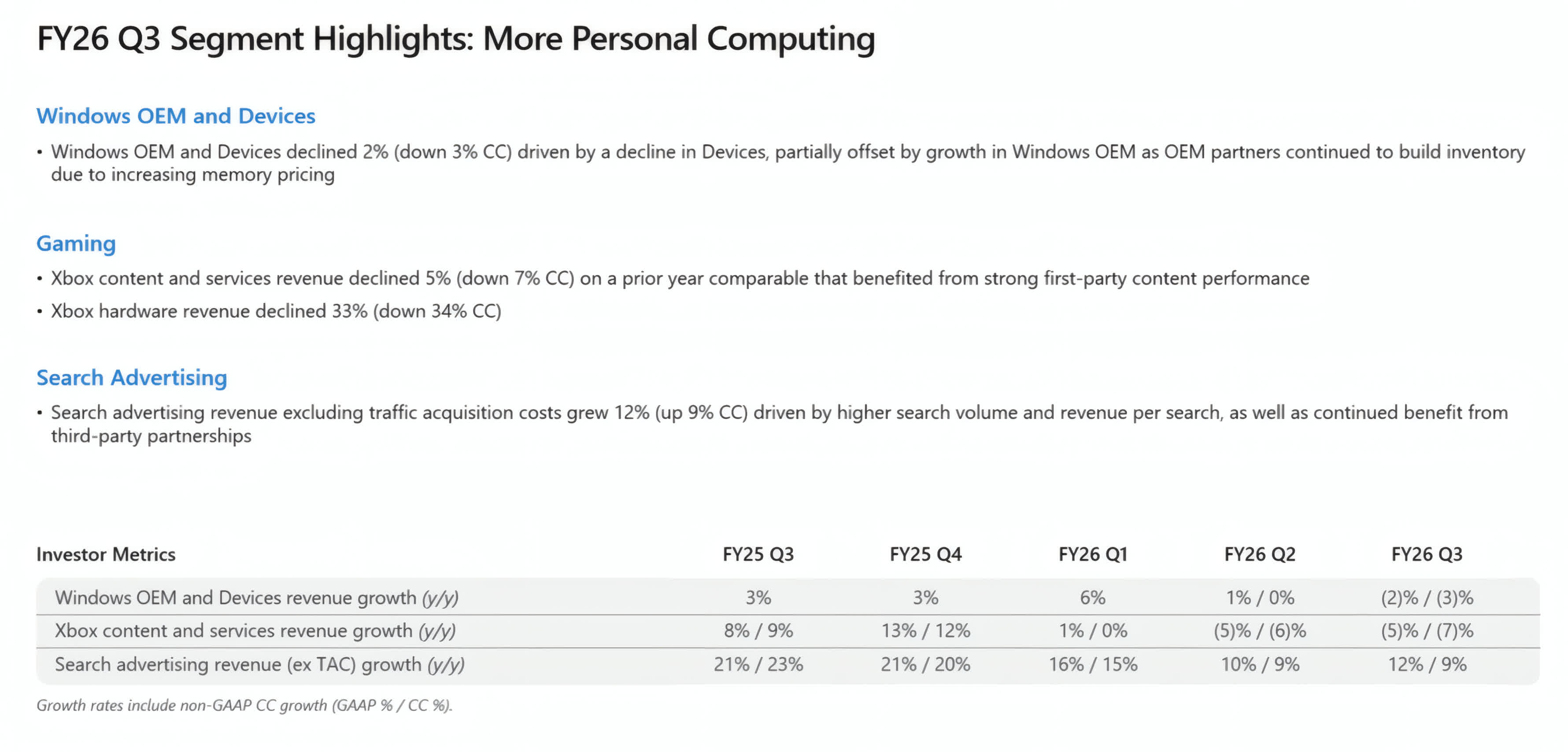
Bottom line: Asha Sharma, the CEO of Xbox, has plenty of work to do when it comes to reversing the division's fortunes. Microsoft has just released its fiscal third-quarter financial results for 2026, which show a 5% YoY decline in content and services revenue and a massive 33% fall in hardware revenue.
The latest quarter marks the third in a row in which Xbox content and services revenue has fallen. Microsoft writes that the 5% YoY fall was partly due to the strong performance of first-party games during the same quarter a year ago. The company is likely referencing the continuing driving force of Call of Duty: Black Ops 6 and Minecraft.
Hardware revenue experienced an especially steep dip, down 33% YoY. The segment has now declined for nine consecutive quarters.
Back in February, long-time Xbox boss Phil Spencer retired and was replaced by Sharma, who had previously been a Microsoft AI executive. She has since lowered the prices of Game Pass Ultimate and PC prices, which had increased in 2025.
Sharma commented on the Q3 FY26 decline following the posting of the results. The CEO said that while progress had been made expanding the business and improving the margins, there was still work to do "to earn every player today and into the future."
– Asha (@asha_shar) April 29, 2026
Sharma will be expecting Xbox's hardware revenue to be boosted by Project Helix, its next-gen console that will support both Xbox and PC games. Development kits are scheduled to reach studios in 2027, but, as with so many products right now, the memory crisis is threatening delays and a significant price hike.
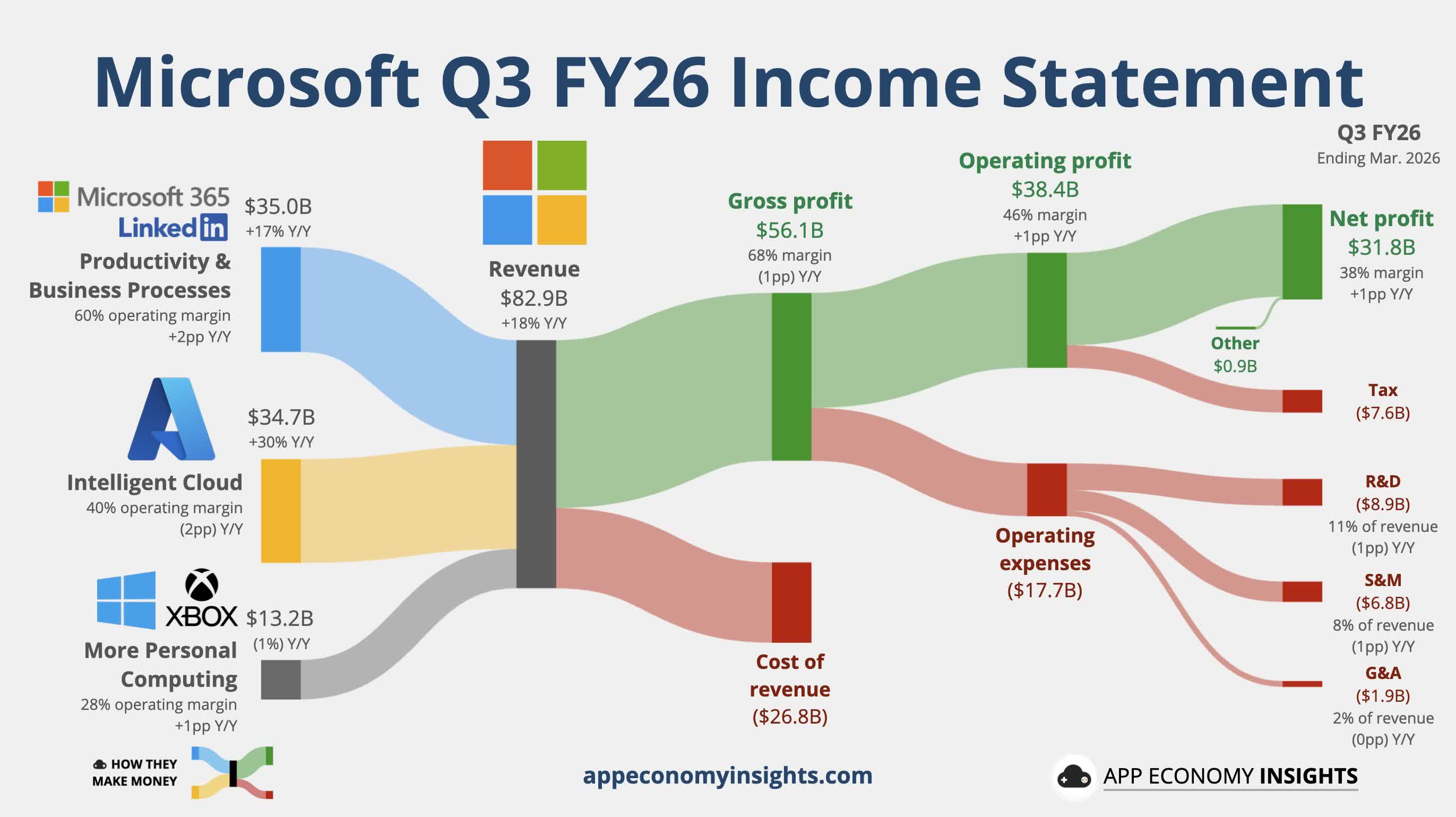
While the Xbox results were disappointing, it was another bumper quarter for Microsoft as a whole. The tech giant saw revenue increase 18% YoY to a massive $82.9 billion. Unsurprisingly, most of it came from its cloud and AI services, further illustrating why so many companies (e.g., Nvidia) are focusing on these areas over anything gaming-related these days.
For Sharma, the challenge is clear: keep feeding Game Pass with enough must-play releases to offset declining console sales, while convincing players that Xbox hardware still has a future beyond being another costly box under the TV that is rarely used.