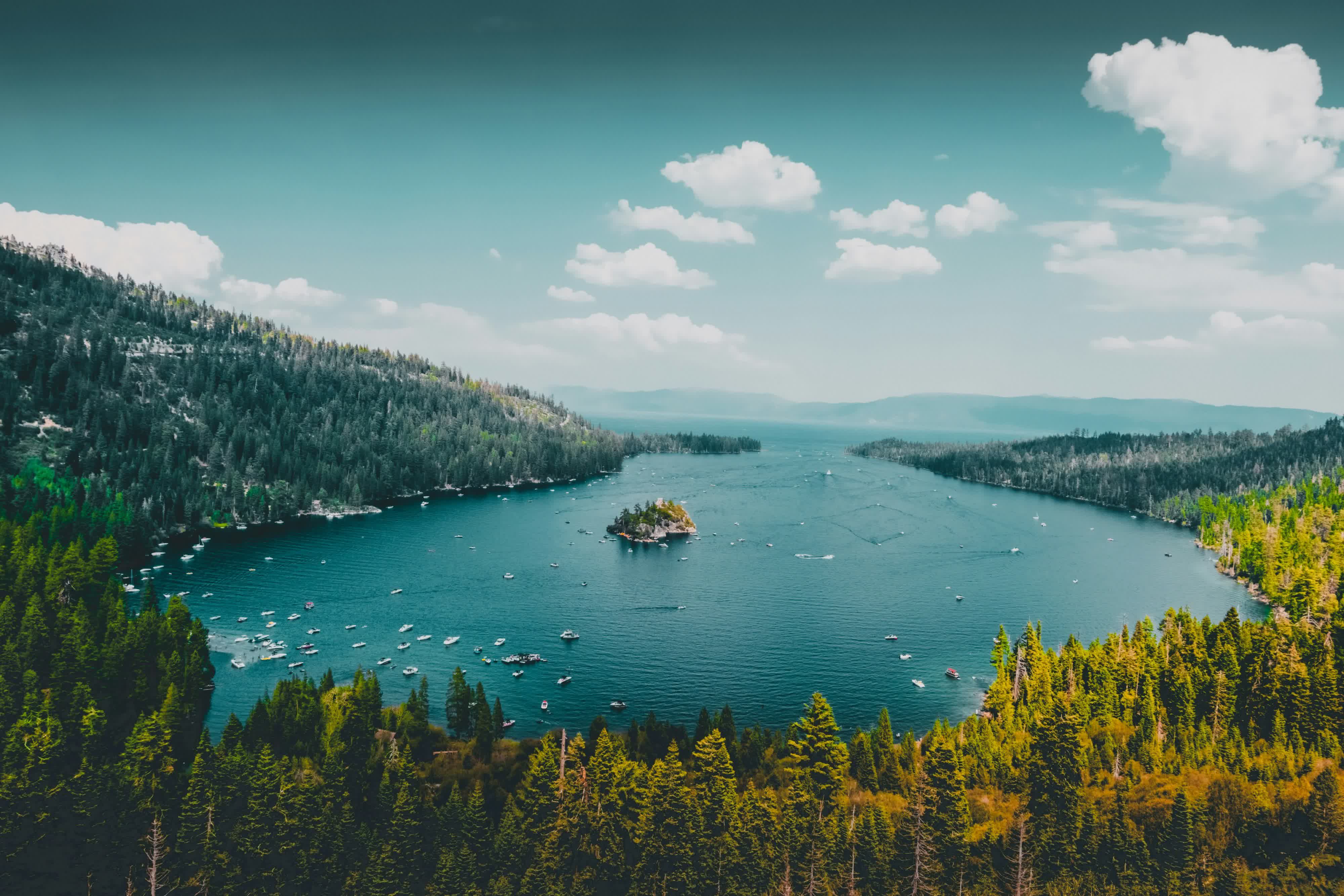
A hot potato: Residents in many US states have reacted angrily as AI data centers spring up across the country, citing environmental impacts and rising utility bills. In one particularly egregious case, around 49,000 people now have one year to find a new power source while their current supplier pivots to data centers.
A Nevada energy company recently informed a nearby California utility provider that it will no longer supply electricity to 49,000 Lake Tahoe customers after May 2027. Although the decision is not tied to a specific AI data center, data centers have grown their footprint in Nevada significantly in recent years.
The affected residents, living near the California-Nevada border, are in a unique predicament: served by California-based Liberty Utilities, which receives 75% of its power from NV Energy across the border. While NV Energy claims the transition has been planned and delayed twice since 2009 – long before the current AI boom – the company also recently hailed "unprecedented" changes that data centers have brought to the state's energy grid.
NV Energy's Director of Business Development Jeff Brigger said the company is excited to serve the load and called the data centers "a huge opportunity" at a panel last September. The Desert Research Institute recently recently reported that data centers consumed 22% of Nevada's energy grid in 2024, and the figure could grow to 35% by 2030. Data center builders want the state to triple its capacity, and 12 data centers across Nevada might request up to 5.9 GW by 2033, 2.8 times what the Hoover Dam generates.
Although Liberty Utilities will likely secure a stopgap supplier in the short term, that power must still travel over NV Energy's lines, forcing the utility to compete with large companies on Nevada's grid. Danielle Hughes, CEO of the non-profit advocacy group Tahoe Spark, told Fortune, "We have no representation. It's resource extraction." Receiving more power from California would require spending hundreds of millions of dollars building new lines across the Sierra Nevada.
Data centers have become increasingly unpopular across the US due to their effects on water supplies and utility bills.
Reports from the past few weeks alone describe a shooting targeting an Indianapolis councilman who supported a data center, a Missouri town removing half its council following a data center approval, Texas data centers diverting electricians from housing projects, and a Georgia data center using 29 million gallons of water for free. Meanwhile, a Utah data center might consume twice the state's energy (with help from an on-site power plant), and a $1 billion Microsoft data center could cause half of Kenya to lose power.