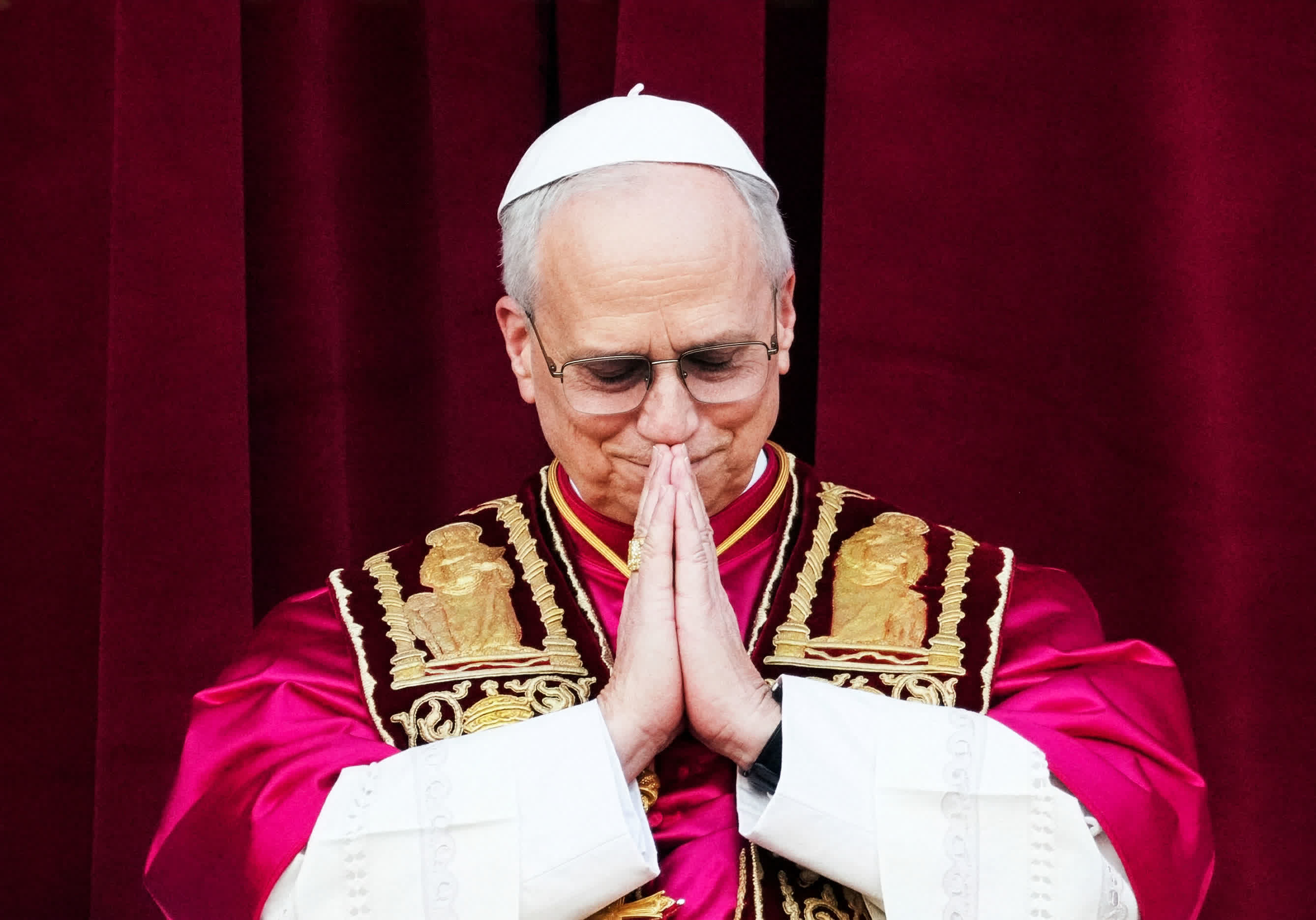
The takeaway: There are plenty of words you could use to describe what should happen with AI right now. Pope Leo XIV chose one typically used in the context of nuclear stockpiles. In his first major teaching document, released on Monday, he says humanity needs to "disarm" AI before things get out of hand.
The remarks come from an 82-page text called Magnifica Humanitas (translated as Magnificent Humanity), the first encyclical of his papacy, released on May 25. An encyclical is a pope's official teaching letter to the Catholic Church, outlining his priorities for the Church's 1.4 billion members. For Leo, the priority appears to be AI.
That said, he admits he chose the word "disarm" because he wanted something punchy enough to grab attention.
"The word is strong, I know, but deliberately chosen," he said.
The actual message is not to abandon the technology entirely. Rather, he wants to remove it from what he described as an "armed" competitive mindset. To that end, a significant portion of the encyclical focuses on AI in warfare, where he argues that some autonomous weapons systems are already slipping beyond meaningful human control. Instead of this direction, he says AI should be human-friendly, accessible, and open to public debate.

One passage reads like it was aimed squarely at Silicon Valley. In it, the pope warned that real control over digital systems no longer rests with governments but with a handful of corporate players. He said that when power is concentrated in so few hands, it tends to become opaque and evade public oversight. That, in turn, opens the door to new dependencies and inequalities.
The encyclical was announced at the Vatican's Synod Hall, with Anthropic co-founder Chris Olah sitting next to the pope. Olah echoed the pope's concerns, saying developers themselves are often pulled by ambition, competition, and financial pressure.
"We need informed critics who will tell the labs when we are failing," Olah said. "We need moral voices that the incentives cannot bend."

Olah also flagged something many researchers have been quietly worried about. He described certain behaviors inside modern AI models as "mysterious, even unsettling," adding that even the people building them do not fully understand what is happening inside.
The document also covers ground beyond AI. Leo apologizes for the Church's long delay in condemning slavery, calling it a wound in Christian memory. He draws a line between that history and what he describes as new forms of slavery emerging from the digital economy.
Theologian Léocadie Lushombo, who spoke at the event, expanded on that point. She highlighted how minerals used for AI infrastructure and data centers are often sourced through extractive mining in the Global South. Because of this, she argues, the technology can quietly take on colonial characteristics – even when it is not explicitly framed that way.
The Vatican's landmark statement on AI is not a cold open, however, as it is not the first time the pope has warned about AI-related risks. Moreover, the Church has been engaging with tech firms for nearly a decade through something called the Minerva Dialogues.