A hot potato: It's no secret that Americans' feelings toward data centers are worsening, but the speed at which the public is turning on these facilities is surprising. There are plenty of reasons why people don't want them built near their homes, with rising electricity costs being one of the main factors.
A survey by Heatmap Pro found that 71% of Americans would oppose a data center being built near where they live, with 55% "strongly" opposing such a project.
What's interesting is the speed at which support for data centers has crashed over the past few months. When Heatmap first conducted its survey in August 2025, just 42% opposed these facilities. Another survey conducted three months ago saw the figure rise, but it was still just 51%.
The report found that across nine months, public support for data centers has declined 49 points.
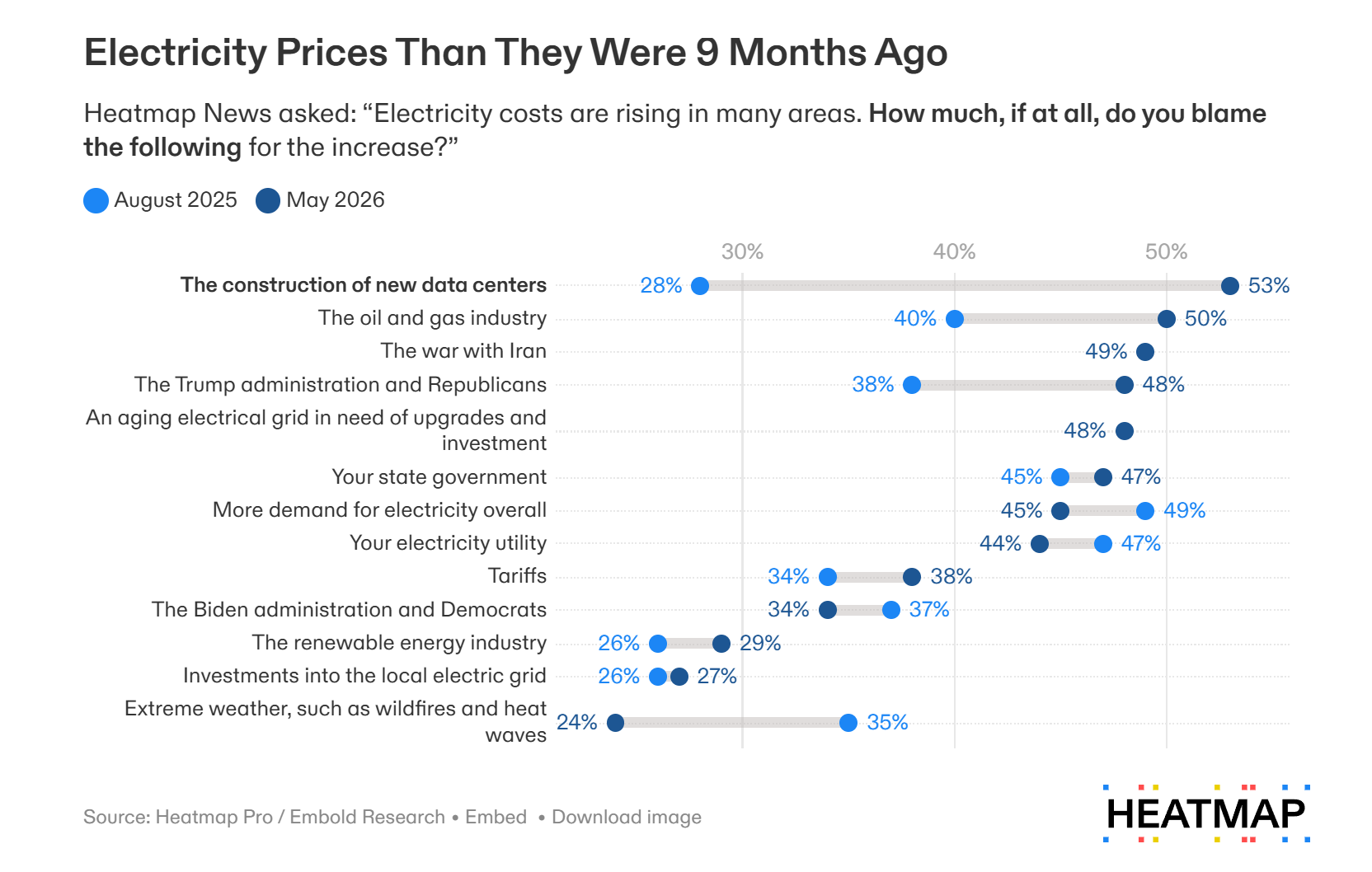
Data centers were the top reason participants named for rising electricity costs. 53% blamed these facilities, up from 28% nine months ago.
Back in March, following a call to do so by President Trump, major tech companies including Google, Microsoft, Meta, Amazon, Oracle, OpenAI, and xAI signed a voluntary "ratepayer protection pledge" at the White House, promising to cover the energy costs of their rapidly expanding AI data centers rather than passing those costs on to local electricity customers.
The pledge remains voluntary and difficult to enforce, but it has pushed the issue into formal regulatory channels. FERC is preparing action on large-load interconnection rules, Congress has seen legislation that would make data centers pay for grid upgrades, and several states and grid operators are moving ahead with tougher requirements. Watchdogs, meanwhile, warn that surging AI data center demand is already helping drive up wholesale power costs in some regions.
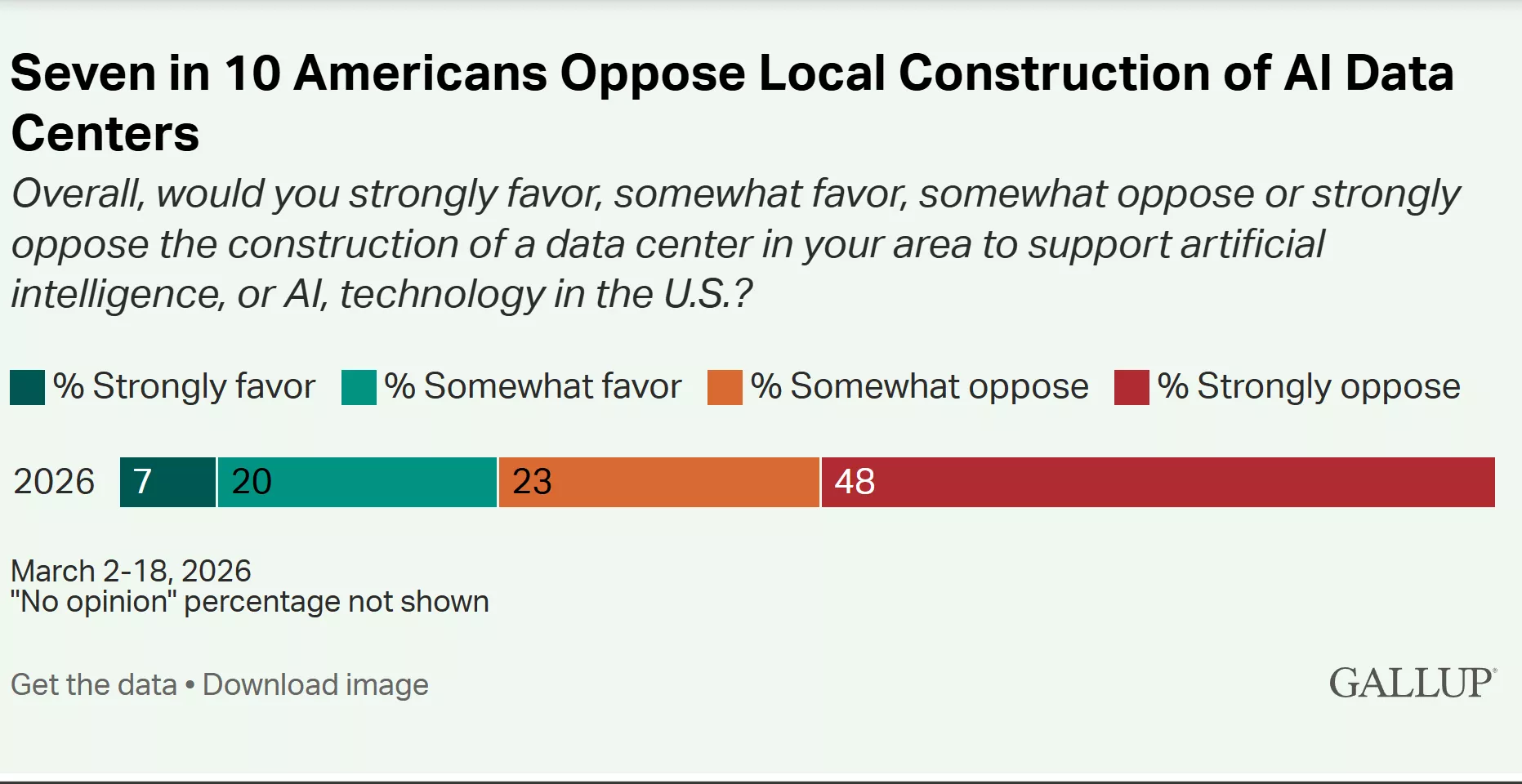
Heatmap isn't the first to reach these conclusions. A Gallup survey in May also found 70% of Americans opposed local construction of data centers, up from 47% in late 2025. Water and energy consumption were the most-mentioned reasons for the pushback in that survey, which also found that people would rather live next to a nuclear power plant than a data center.
Beyond the electricity considerations, there have been numerous reports of data centers affecting nearby water supplies, including a report last year about an Amazon data center that was reportedly linked to rare cancers and miscarriages.
There was also Georgia's data center boom that sparked water worries and resident backlash, similar concerns around facilities in Virginia, and the recent story of a Fayette County construction site that used 29 million gallons of water without a single bill – all while residents complained of low water pressure.
And that's just data centers. AI itself is creating even more tension, from the layoffs it's causing to the slop it is filling the internet with. The outcry has led to a new narrative from the tech world, pushed by figures such as Sam Altman and one top economist, that things aren't really that bad – or even that there is "zero evidence" of AI-related job losses. But then Altman once said water-usage concerns over data centers were "fake," before highlighting the shocking amount of energy it takes to "train a human."