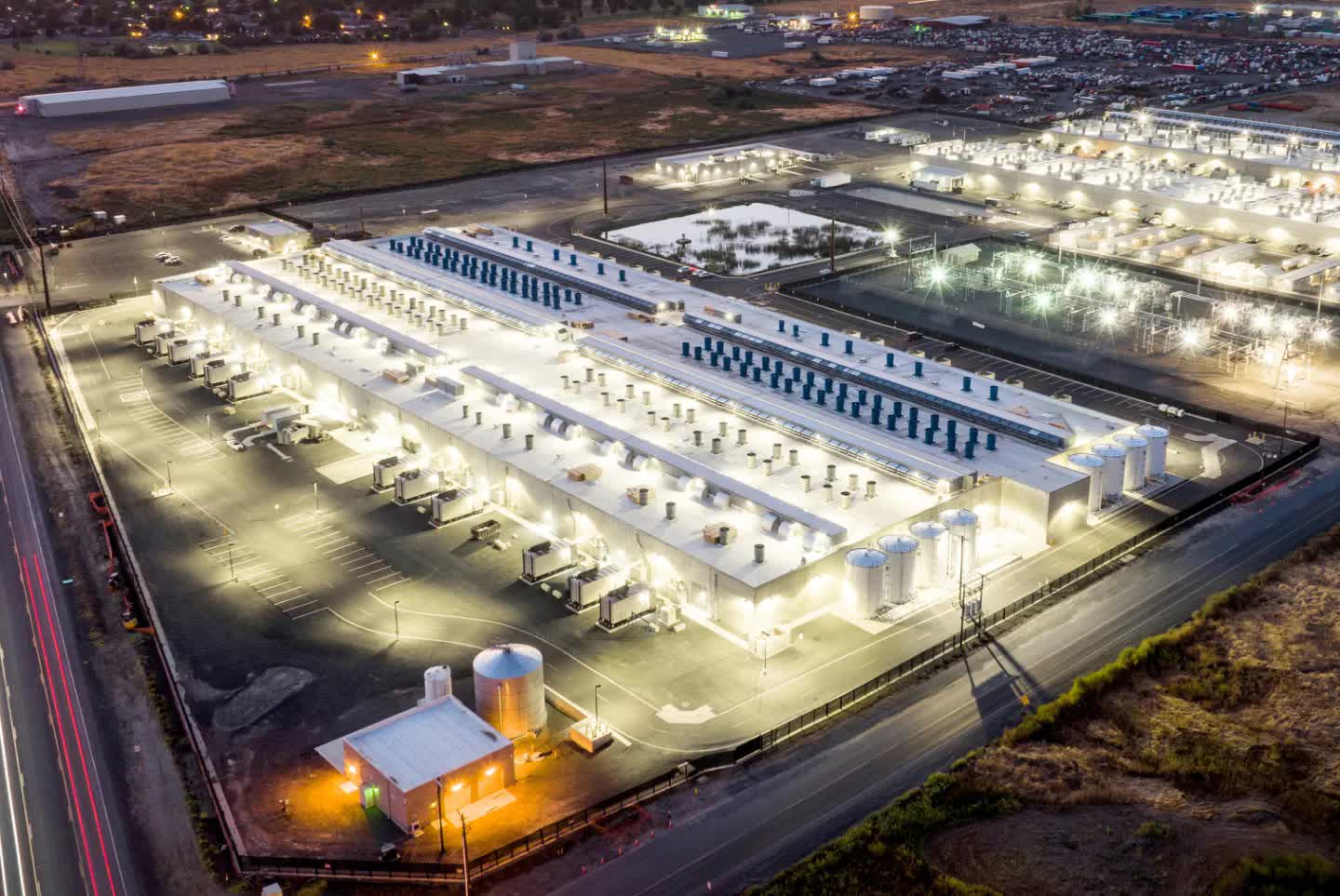
Connecting the dots: The environmental damage caused by data centers could be having a greater impact on people's health than we realized. According to a new report, several of Amazon's facilities in Oregon have contributed to a rise in rare cancers, muscle disorders, and miscarriages among nearby residents.
The Lower Umatilla Basin aquifer in Morrow County, Oregon, is the only source of water for up to 45,000 residents, reports Rolling Stone. But samples from the aquifer show that chemical toxins have increased over the years.
Nitrate concentrations in some wells have been found as high as 73 ppm (parts per million), 10 times the state limit of 7 ppm and seven times the federal limit. It was discovered that 68 of the 70 wells in the area violated the federal limit for nitrates in the drinking water.
Jim Doherty, a cattle rancher and former county commissioner of Morrow County, told the publication that he noticed more people in the area were reporting unexplained medical conditions, including cancers that usually affected the elderly.
Doherty said that of the first 30 homes he visited where residents were reliant on well water, around 25 people had recently had miscarriages, while six had lost kidneys. There was also a 60-year-old who had his voice box taken out because of a smoking-related cancer, but he'd never smoked in his life.

Doherty believed that the rise in these cancers was in part due to several massive farms and food processing plants in Morrow County. But some experts say the arrival of a 10,000-square-foot Amazon data center in 2011 "supercharged" the pollution.
The farms pump out millions of gallons of wastewater loaded with nitrates from the fertilizer, with most of it seeping into the ground.
Amazon's arrival in the region has intensified an already-serious environmental problem. The company's data centers draw tens of millions of gallons of groundwater from the aquifer each year to cool their servers. That water is then discharged into the Port's wastewater system, where it mixes with existing nitrate-laden runoff that's already being pumped onto nearby farmland. Because the soil in the area is highly porous, it quickly becomes oversaturated, allowing even more nitrates to seep downward into the aquifer instead of being absorbed.
The issue compounds when Amazon extracts that same contaminated groundwater – already above federal nitrate limits – for its cooling systems. As the water circulates through the data centers, some of it evaporates, but the nitrates don't, resulting in a higher concentration of pollutants. By the time this used water is routed back into the wastewater system, nitrate levels can spike dramatically, in some cases averaging 56 parts per million – roughly eight times higher than Oregon's safety threshold.
Scientists believe even small amounts of nitrates can cause significant harm to the human body, including debilitating conditions in newborns and certain cancers.
Responding to the report, Amazon spokesperson Lisa Levandowski said that "our data centers draw water from the same supply as other community members; nitrates are not an additive we use in any of our processes, and the volume of water our facilities use and return represents only a very small fraction of the overall water system – not enough to have any meaningful impact on water quality."
Kristin Ostrom, executive director of activist group Oregon Rural Action (ORA), told Rolling Stone that comparisons could be drawn to the water crisis in Flint, Michigan. Ostrom said there were parallels in the slow response and those affected – 40% of the county's residents live below the poverty line.
"How can you live with yourself knowing that the water you put in people's houses is causing miscarriages or cancer, or God only knows how it stunts the growth of a kid?" said local resident Kathy Mendoza.