
A hot potato: The developer behind popular Windows optimization tool Wintoys has uncovered a sophisticated cybercrime operation that mimics dozens of popular Windows apps through duplicate websites built to look uncannily like the real thing. The fraudulent sites reportedly distribute malware capable of compromising user privacy, hijacking account credentials, and draining crypto wallets.
The developer, who goes by the handle Bogdan_X, told Windows Latest that his research began after he spotted a fake website mimicking the official Wintoys page. Tracing the site's registration led him to 72 fraudulent websites built on the same playbook, several of which use URLs deliberately close to the real domains they're impersonating.
Shameless plug: it's exactly this kind of scheme that makes vetted download sources worth the extra click. Every installer in TechSpot's Downloads section is pulled straight from the developer, scanned for malware, and kept free of bundled junk under our clean-downloads policy, so you're not left guessing whether an "official" link actually leads where it says it does.
A broader version of this scheme was mapped in detail last month by cybersecurity firm Check Point Research, which found that the fake sites work to rank highly on Google and other search engines for searches tied to popular Windows software, then use that trust to push malware once traffic starts flowing. It's not yet confirmed whether the same operator is behind both the Wintoys-focused cluster and the wider set Check Point tracked, or whether separate groups are simply running the same playbook.

In the early stages, the sites link to legitimate downloads. Once a site gains traction, though, operators quietly swap those real links out for fraudulent ones. Many of these fraudulent domains are registered to the same owner and even reference genuine upstream resources, like real GitHub repositories, making them harder to tell apart from the legitimate projects they're copying.
Some of the sites load a JavaScript staging layer via Amazon CloudFront that intercepts clicks on Download buttons and reroutes the connection through a Traffic Distribution System (TDS). The TDS then sends users to either malware-hosting infrastructure or legitimate resources, depending on their location, browser type, and other signals.

Apart from Wintoys, other popular Windows programs being impersonated this way include PowerToys, CrystalDiskMark, EasyBCD, Lively Wallpaper, and more. Check Point's own mapping of the wider ecosystem also turned up cloned pages for security and research tools such as Ghidra, dnSpy, and SpiderFoot, a reminder that even power users aren't immune to fraudulent apps and websites.
Check Point's researchers tied the infrastructure to several malware families. SessionGate, an obfuscated multi-stage loader with heavy anti-analysis defenses, was used mainly to quietly install unwanted software. Two other branches of the same TDS led to more damaging payloads: RemusStealer, an infostealer believed to be a variant of the notorious Lumma Stealer family, and AnimateClipper, crypto-stealing malware that reads a device's clipboard to swap copied wallet addresses for attacker-controlled ones.
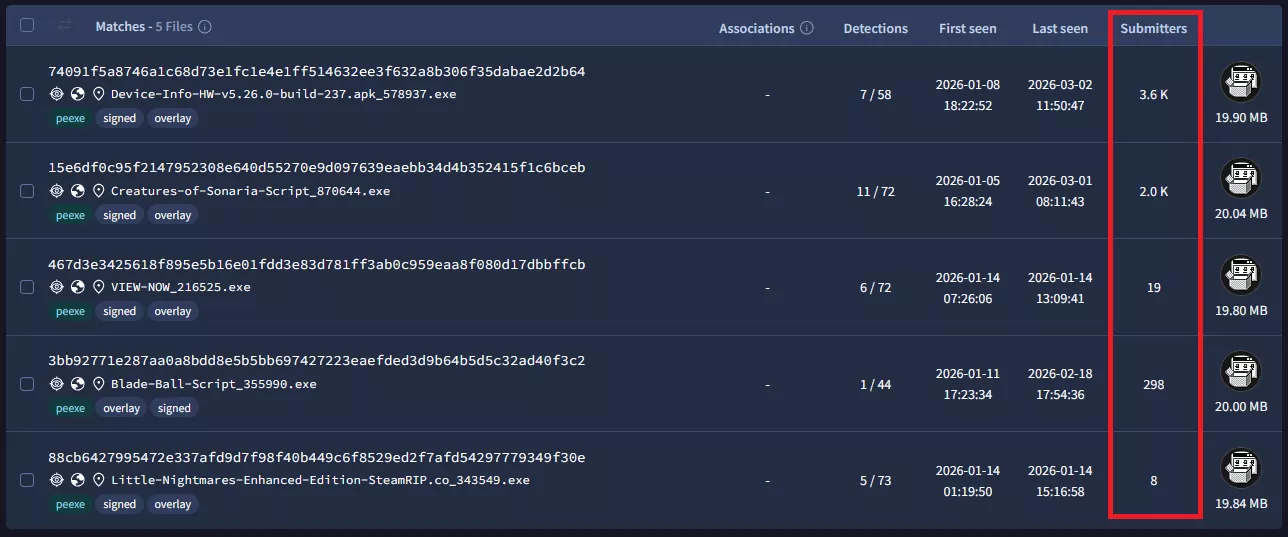
The scale of the operation shows up clearly in VirusTotal telemetry. Researchers logged more than 5,000 total submissions across relevant samples in just the publicly shared subset, and say the real number of infections is likely significantly higher. The earliest samples date back to August 2025, meaning the operation had been running for close to a year before it was uncovered.
With malware becoming a growing problem across every platform, downloading apps from reputable, vetted sources matters more than ever. TechSpot's Downloads section hosts safe, clean, unaltered installers pulled directly from developers, and every file is scanned for malware and rechecked daily, so you can grab what you need with peace of mind.