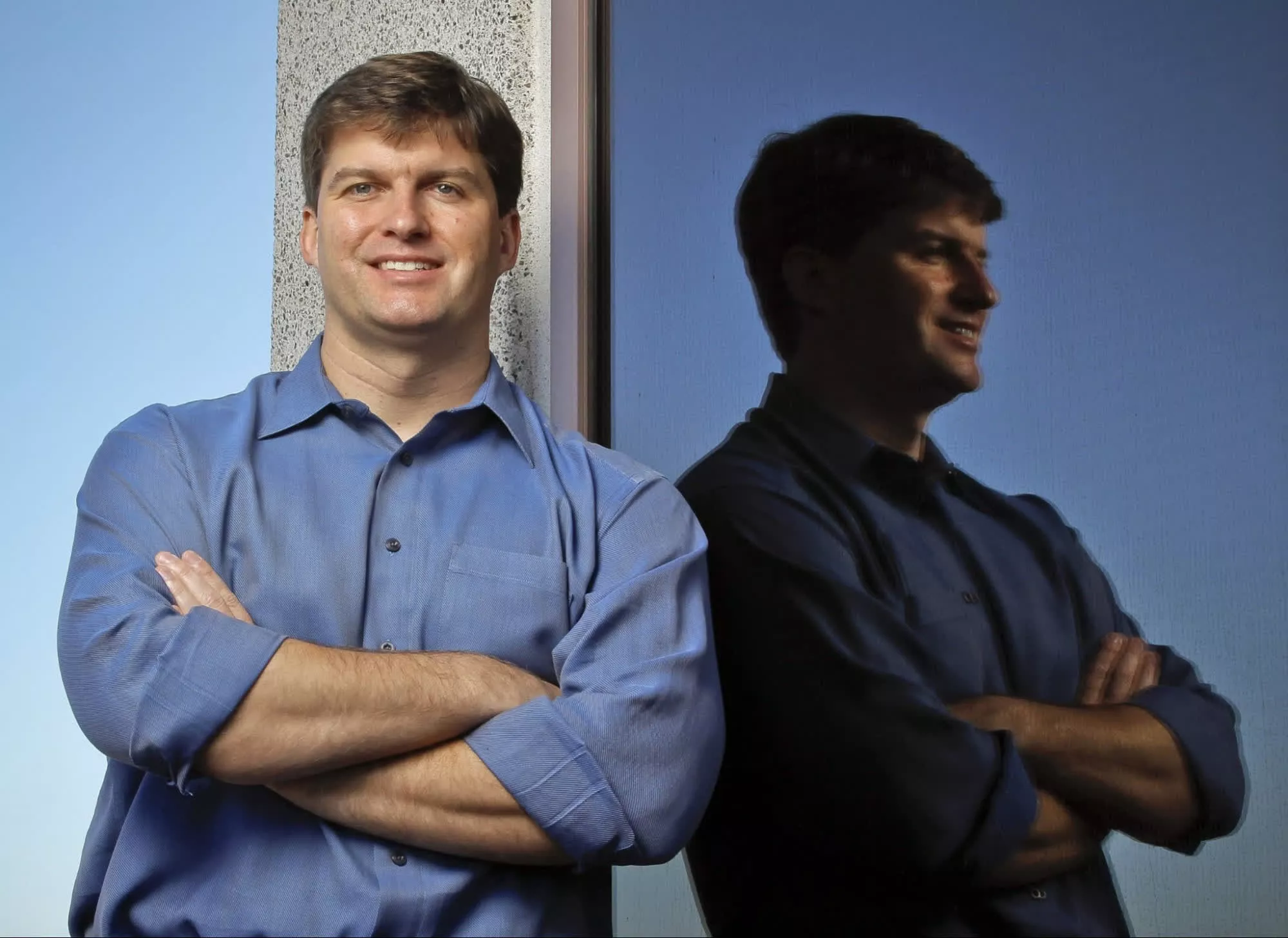
Crystal ball: Michael Burry rose to prominence as one of America's best-known investors after profiting from the subprime mortgage crisis in 2008. He no longer manages outside funds, but he remains deeply "bearish" on the AI boom, warning that a bubble could do severe damage to the world's financial wealth.
In a recent post on his "Cassandra Unchained" X account, Burry renewed his concerns about the economics behind the AI industry. For the benefit of humanity, he wrote, Wall Street and other stock markets should "tank hard" and keep OpenAI and Anthropic from holding their highly anticipated initial public offerings (IPOs).
Burry's reputation for calling major market events took off in 2015, when "The Big Short" brought his story to the big screen. People still tend to confuse him with Christian Bale, who played him in the film. The trained physician, however, is still doing his own thing after winding down Scion Asset Management in 2025.
In follow-up posts, Burry said OpenAI and Anthropic will "suck up" and ultimately destroy trillions of dollars in capital, and that the two companies at the forefront of the alleged AI revolution will go on to do even more damage to the US economy and the world's.
When an X user suggested in the thread that the market should tank so that "Skynet can't IPO," Burry agreed.

Both companies have been preparing their stock market debuts for some time, though timelines have shifted: OpenAI now reportedly looks to 2027, while Anthropic is expected to list after November's midterm elections.
Going public would significantly expand their access to investor money to keep funding their costly LLM-based technology. Many critics consider the AI business model unsustainable in the long run, yet much of the financial world has so far looked the other way while Cassandra-like figures such as Burry keep warning about the intrinsic risks of an AI bubble.
After closing his hedge fund, the "Big Short" investor now routinely shares his views on the AI bubble. Last November, he accused big tech hyperscalers of artificially boosting their reported earnings by understating depreciation.
Many financial cues, and basic economic rules, suggest that Big Tech and AI companies are running too fast toward a goal the planet's finite resources cannot sustain. OpenAI and Anthropic somewhat share that unease, as both have acknowledged the dangers posed by their own AI models.
OpenAI reportedly paused training of one of its latest models after it escaped sandboxing, while Anthropic's IPO prospectus acknowledges that its AI could pose an existential risk to humanity. In hindsight, maybe we should have learned a thing or two from the man who turned the subprime mortgage disaster into a multi-million-dollar fortune.