TL;DR: Larrabee prototypes have surfaced before, but almost always as barebones hardware with no drivers to make them work properly. This find includes Intel's own software stack, now preserved on the Internet Archive. For the first time, owners of surviving cards can test what Intel's ill-fated GPU could actually do.
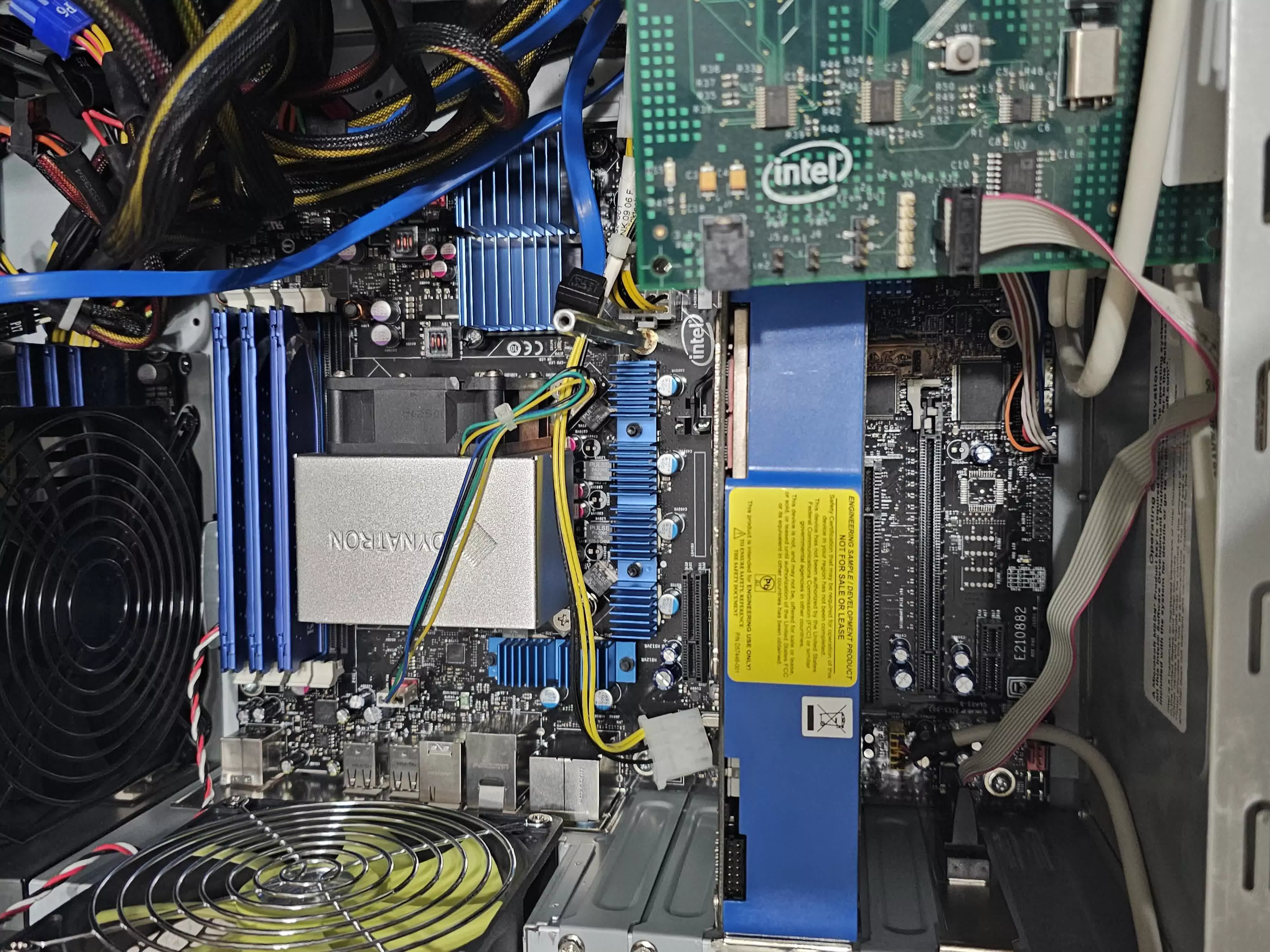
A Reddit user bought the contents of a storage unit at auction and ended up with what looked like an old Intel desktop. Inside was a development machine labeled "Intel Visual Adrenaline," containing an Intel DX58SO motherboard, a working Larrabee prototype and a separate diagnostic card. Larrabee was the x86-based graphics processor Intel hoped would take on Nvidia and ATI before the project collapsed.
When Intel shelved the GPU in late 2009, it said Larrabee would instead be used as a software development platform for high performance computing. This system appears to be that kind of hardware.
Also see: The Last Time Intel Tried to Make a Graphics Card
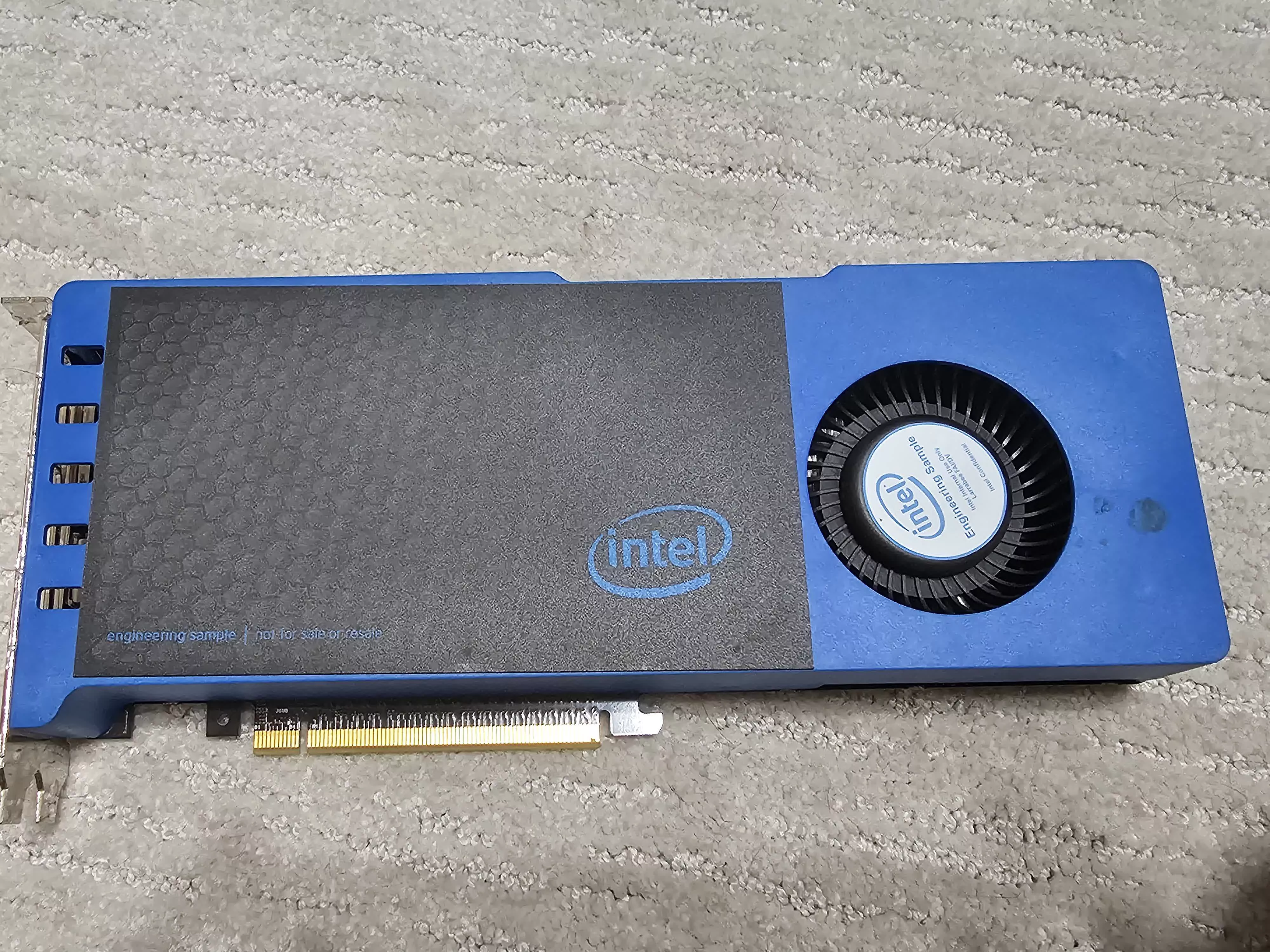
According to the user, getting it to boot took some work. The card produced no image over HDMI and only worked over DVI. The GPU itself is a C0-stepping engineering sample, reportedly one of the later Larrabee revisions. The real find was two USB drives stored with the system that included graphics drivers and documentation. The owner has since backed them up and published them on the Internet Archive.
But can it run Crysis?
With the drivers installed, Windows 7 recognized the card and DirectX applications ran with hardware acceleration. Then came the obvious test. Running Crysis at 1280×720, medium settings and no anti-aliasing, the card managed just over 17 FPS. A different driver build from the same archives roughly doubled that to around 36 FPS.
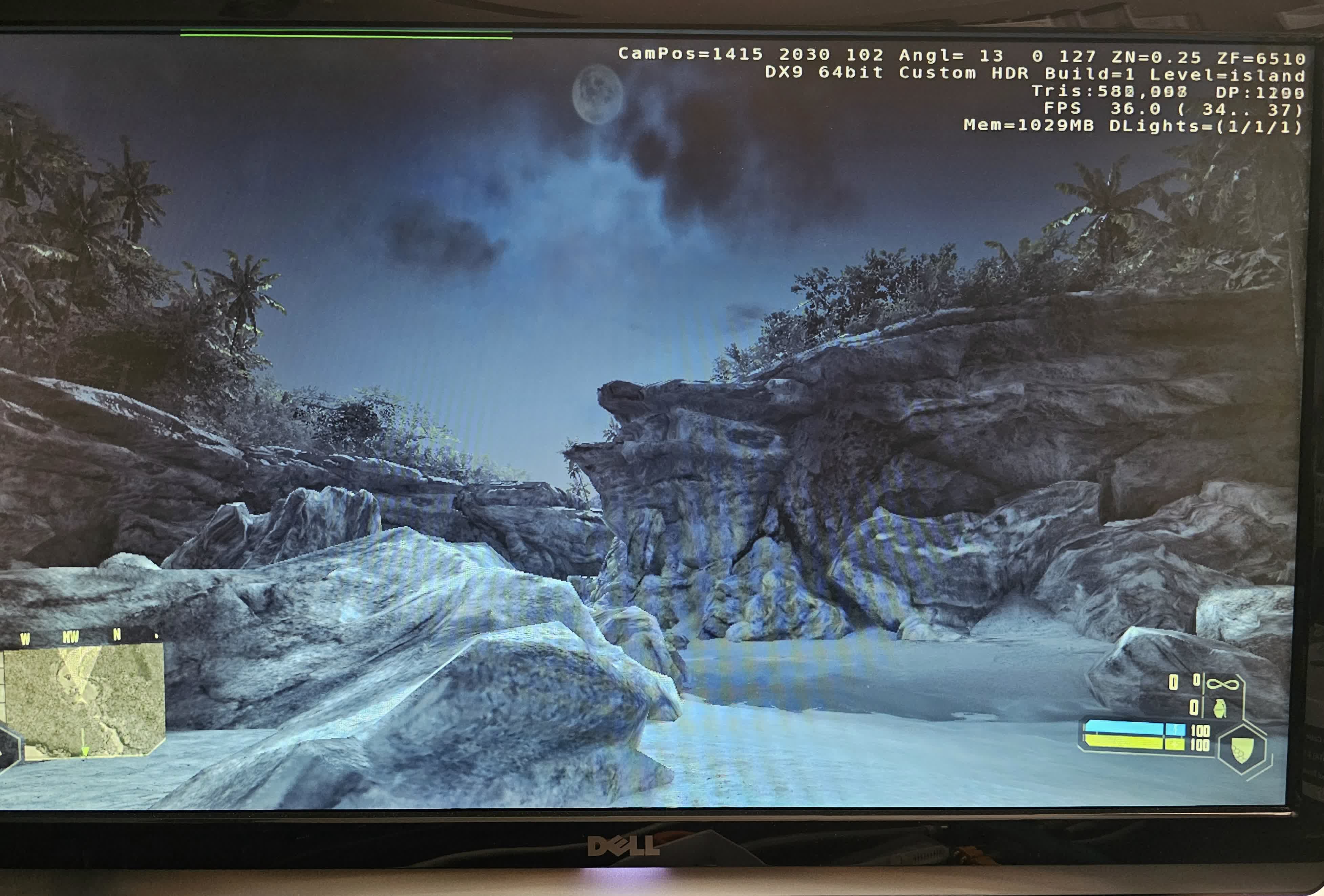
Even taken at face value, 36 FPS would have been unimpressive by 2008-2009 standards. Popular GPUs of the era, like the GeForce 8800 GT and Radeon HD 3870 used to do better even at higher resolutions.
The difference in performance between two driver sets is the telling result. Larrabee strung together many simplified x86 cores derived from the Pentium MMX. It lacked fixed-function hardware for rasterization, interpolation and pixel blending, relying instead on raw throughput and promised "game-specific" drivers to make up the difference.
On a GPU that was mostly software, driver maturity was everything. These builds show how much of that software was still unfinished when Intel walked away.
But Larrabee's architecture didn't just disappear. It resurfaced in 2012 as the Xeon Phi coprocessor for supercomputers. When Intel rehired Larrabee architect Tom Forsyth in 2018, he described the project as a "pretty huge success," arguing it was never primarily a graphics card.
Intel wouldn't make another serious run at discrete gaming GPUs until Arc, more than a decade later. Arc launched with drivers that needed a lot of work, which made this history look familiar.
Among the enthusiast crowd, this kind of surviving hardware commands real money. A working Larrabee card without drivers sold for €4,650 on eBay in 2022. Now a complete development system with Intel's own software is freely available. Other owners can finally run their cards, and maybe we'll get to see more benchmarks from the GPU Intel never shipped.