
What we know so far: Most big websites load a handful of scripts they didn't write themselves, from analytics tags to A/B testing tools. On Monday, one of those tools was turned against them. Attackers slipped malicious code into Optimizely's experimentation platform. For most of the day, it pushed a crypto stealer and card skimmer to visitors of Zoom, CNN, the BBC, and roughly 175 other organizations.
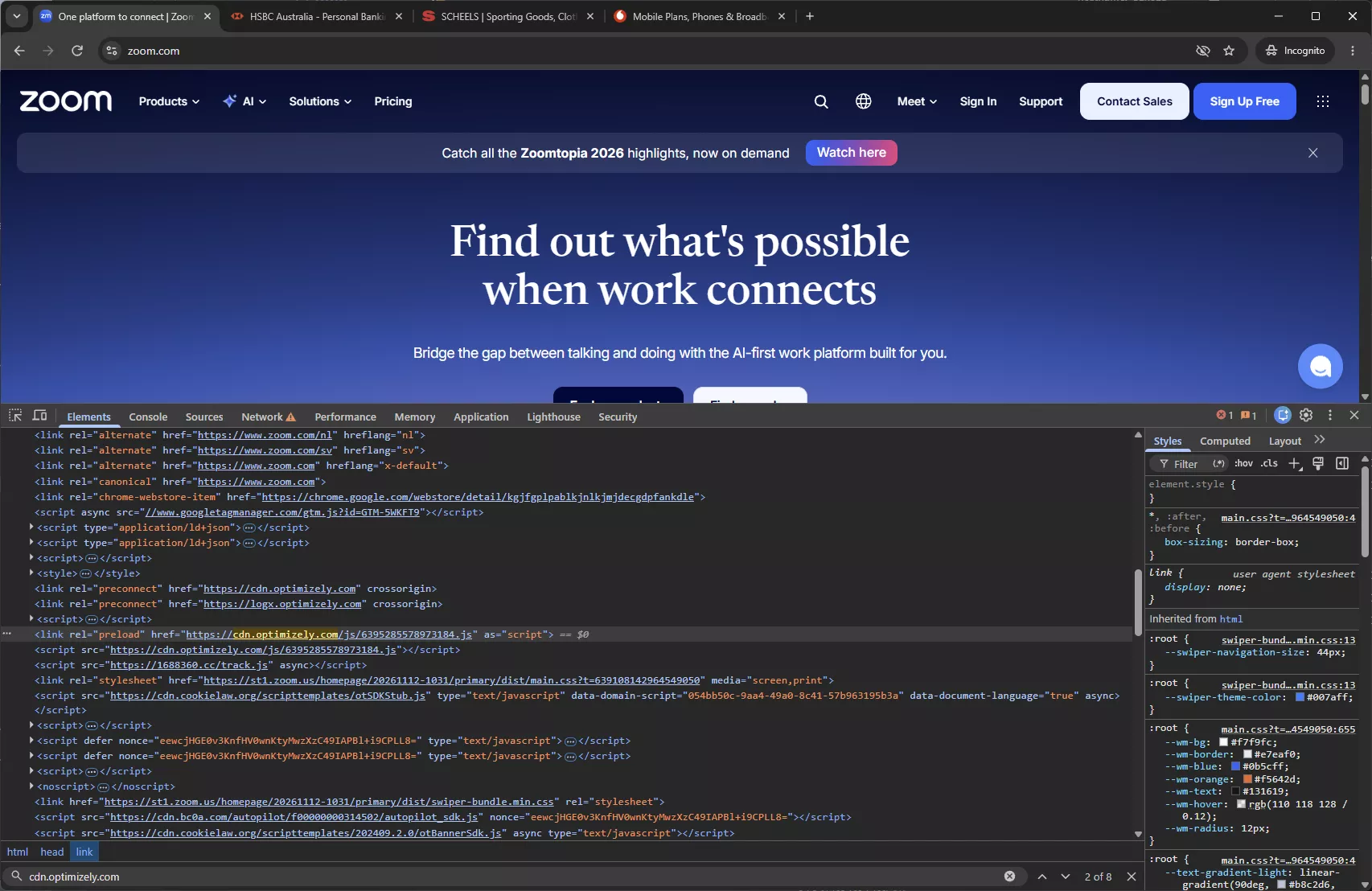
Optimizely is best known for letting companies A/B test their web pages on real visitors. Customers embed a small snippet that pulls each project's code straight from Optimizely's servers. So whoever controls that code effectively decides what runs in every visitor's browser.
That's exactly the kind of power the attacker grabbed. To see how far it reached, Report URI's Scott Helme and his team checked 1,611 Optimizely snippets. The malicious code turned up in 188 of them. Those belonged to 178 organizations, including Salesforce, GitLab, IKEA, HSBC, Equifax, Air France-KLM and even hardware wallet maker Ledger. Embarrassingly, Optimizely's own websites were serving it too.
As for how it happened, Optimizely told Gizmodo that someone exploited a vulnerability in its Experimentation account signup flow. The attacker then wrote code into each customer's "Project JavaScript" field. That setting runs on every page, so Optimizely's servers delivered the malware just like any legitimate experiment.
Strangely, the company hasn't explained how a signup bug let an outsider edit other companies' live projects. Even so, Optimizely says it has blocked the vulnerable path, deployed a fix, and notified affected customers.
Once loaded, the payload hunted for crypto wallet addresses across eight blockchains and replaced them with the attacker's own. It even rewrote addresses copied to the clipboard, so anyone pasting a wallet address from an infected page could end up paying a stranger. A card skimmer joined in partway through the day, lifting card numbers, expiry dates and CVVs from checkout forms.
On iOS 18.6 and earlier, the code also quietly loaded the Coruna and DarkSword exploit kits – the same leaked tools criminals have used to raid iPhones this year.
By that evening, Helme estimated the attacker's wallets had pulled in about $7,040. But in its own analysis, StepSecurity says that figure undersells the damage. Stolen cards and hacked iPhones simply don't show up on the blockchain.
For visitors, Helme recommends updating iPhones to at least iOS 18.7.3 or iOS 26.3. Any card entered on an affected site on November 16 should be treated as exposed, too.
Optimizely's customers aren't the first to get burned this way, either. Just this July, Adform's tracking script was rigged to swap crypto addresses in much the same way. Two years earlier, the Polyfill.io takeover pushed malicious code to more than 100,000 websites.