Studies find up to 50% of companies that replaced workers with AI are rehiring or expressing regret
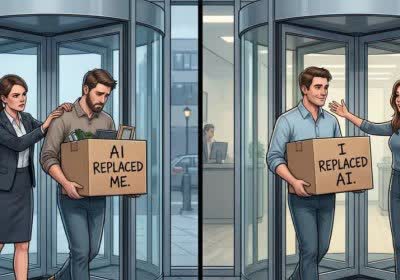
Connecting the dots: Generative AI has been blamed for hundreds of thousands of layoffs over the past year, but evidence that companies moved too quickly to automate white-collar jobs is steadily mounting. Multiple recent studies suggest that many employers are refilling recently eliminated positions after overestimating AI's productivity gains and cost savings.
A hot potato: OpenAI boss Sam Altman says he is delighted that the AI-caused jobs apocalypse he predicted has not come to pass – news that's unlikely to reassure anyone who's lost their job because of AI. It appears that the CEO's taking the view that although things are pretty bad, they're really not as bad as he expected.
Organizers hope AI firms will help fund the program
Recap: One suggestion for helping the many thousands of people laid off or unable to find a job because of AI has long been a basic income program. That plan is no longer a theoretical proposition: it started running this week, though recipient numbers are currently low.
Editor's take: The more money companies spend on AI, the larger fears grow that this is a bubble ready to burst. But for most CEOs, it's more important to be seen spending big on the technology than taking a more cautious approach.
Khosla wants to raise capital gains tax to offset the losses
Winners & losers: As AI becomes increasingly capable of performing human jobs, fears of mass unemployment keep growing. Billionaire investor Vinod Khosla suggests one way to deal with the problem is to scrap taxes for up to 125 million people in the coming decades, and that the government offsets the lost revenue by increasing capital gains taxes and eliminating certain tax breaks.
Suleyman says lawyers, accountants, and marketers could be at risk
A hot potato: Another big name in the AI industry has given an ominous warning about the technology replacing white-collar jobs. This time, the timeline for the automation apocalypse is a lot closer: Mustafa Suleyman, Microsoft's AI chief, thinks AI will replace most white-collar jobs within the next 12 to 18 months.