TL;DR: Automakers on both sides of the Atlantic are racing to redesign electric powertrains to use fewer rare-earth elements after repeated supply shocks from China. Instead of relying on permanent magnets made from neodymium, dysprosium, and terbium, manufacturers and researchers are now testing new motor architectures, alternative magnetic materials, and revamped supply agreements to keep production lines running.
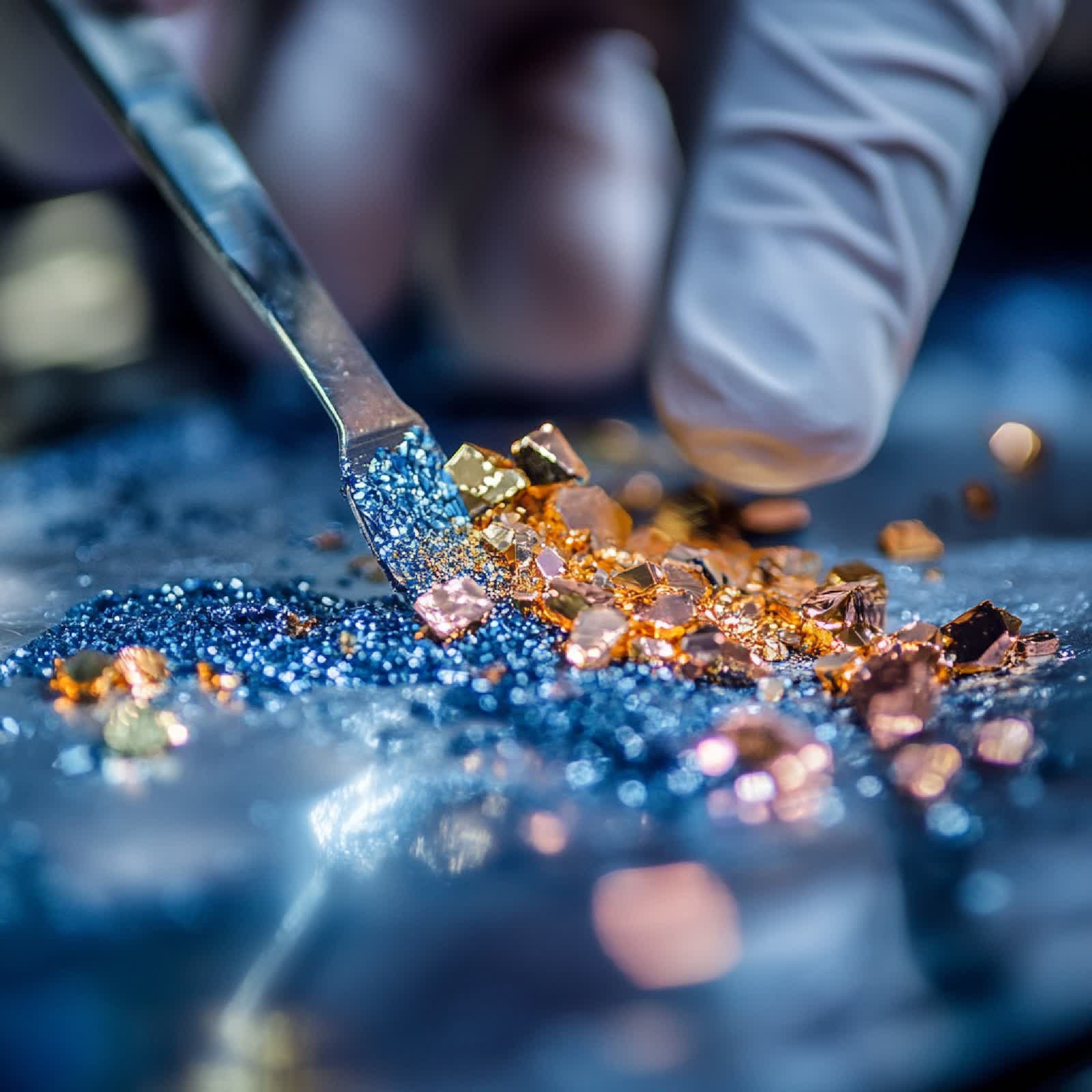
Automakers are pursuing two broad strategies to protect their EV programs. One is to secure rare-earth supply outside China; the other is to eliminate or sharply reduce rare-earth use inside the vehicle by switching to alternative motor and magnet technologies.
General Motors is one of the clearest examples of the first path. It has a long-term agreement with MP Materials, which operates a rare-earth mine in California and is building a refining and magnet-making plant in Texas, to supply magnets for Cadillac and Chevrolet models. The deal effectively gives MP a guaranteed buyer for most of the Texas facility's output – something earlier rare-earth ventures lacked when prices fell and Chinese producers undercut them.
Those contracts lower GM's exposure to Chinese exports but carry their own risks. If global supply loosens and prices drop, the company could find itself locked into higher-cost materials than competitors that buy on the spot market.
GM is therefore also working on the second strategy: designing out rare earths wherever possible. Company president Mark Reuss has framed the goal simply as engineering away dependence on rare-earth-heavy components, including magnets and batteries, although the company has not disclosed detailed technical roadmaps.
BMW has gone further than most large automakers in committing to rare-earth-free traction motors in production vehicles. Models such as the iX sport-utility vehicle use motors that generate their magnetic fields through electric current rather than permanent magnets.
Technically, these are current-excited synchronous machines: the stator produces a rotating magnetic field as in a typical AC motor, while the rotor field is created by feeding current into windings instead of embedding rare-earth magnets. This architecture eliminates neodymium-based rotor magnets and, with them, a major source of geopolitical and price risk.
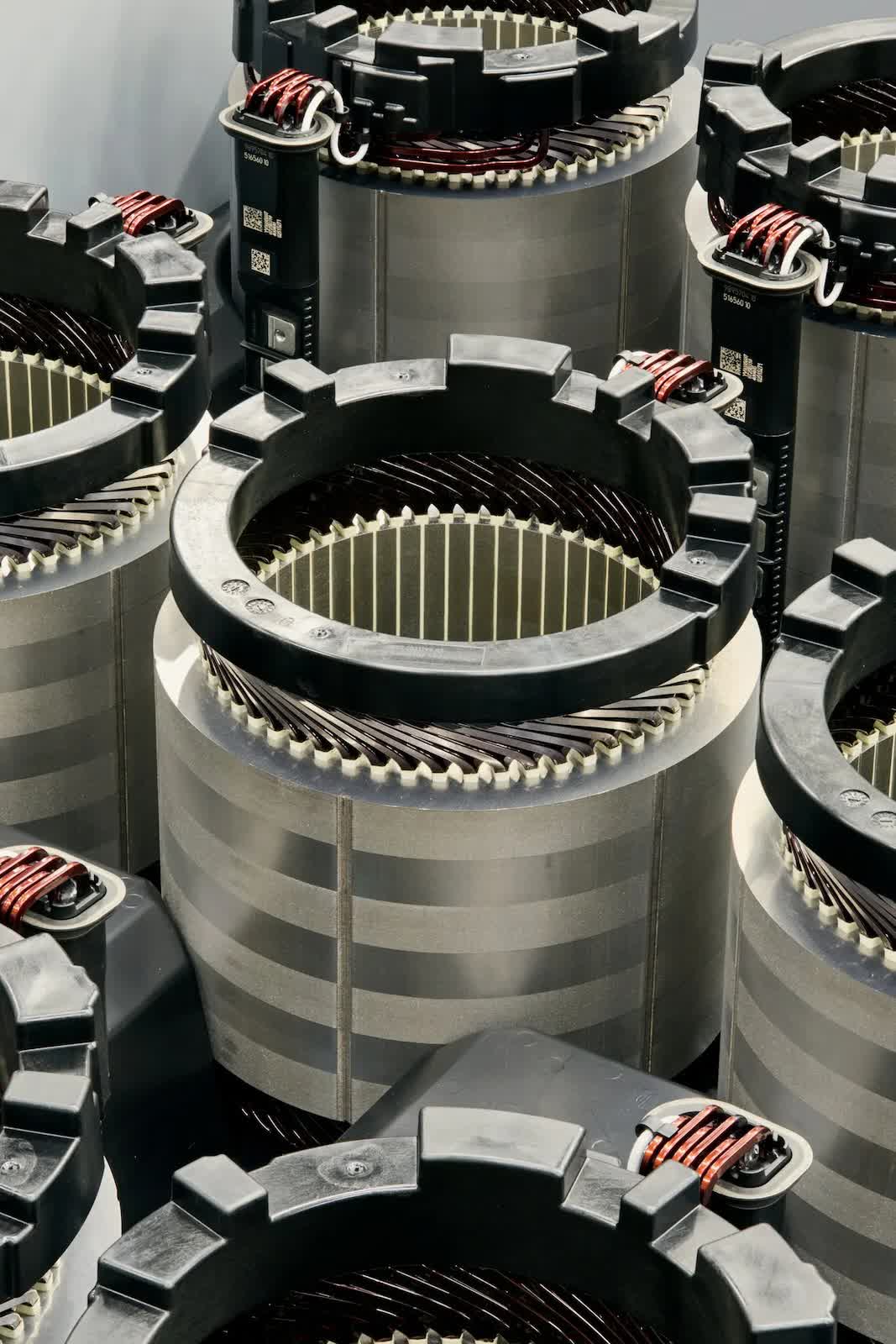
Parts of electric motors at a BMW plant in Dingolfing, Germany.
Historically, motors without permanent magnets have been heavier and bulkier for the same output, and often less efficient at many operating points. BMW began investing in alternatives around 2011, when a spike in neodymium prices highlighted this vulnerability. Engineers say the company has since addressed many of those drawbacks through careful electromagnetic design, optimized copper windings, and improved cooling.
The motors used in the iX fleet are manufactured in plants near BMW's headquarters in Munich and in Austria. BMW reports that these motors can actually outperform rare-earth-based designs in the speed range most relevant to everyday driving. BMW engineer Stefan Ortmann told The New York Times that the ability to precisely tune the rotor field gives these machines high efficiency, a wide and consistent torque band, and easier thermal management compared with designs relying on fixed-strength permanent magnets.
A new iteration of BMW's motor will power the iX3 SUV, scheduled for the US market next summer. The company expects the model to achieve roughly 400 miles of range per charge – a figure that depends not only on the motor but also on battery capacity, vehicle aerodynamics, and software controls.
Meanwhile, in a cluster of rented garages in Sunnyvale, California, startup Conifer is pursuing a different approach to rare-earth reduction: an axial-flux motor optimized for both ferrite and rare-earth magnets. This design uses a compact, disc-like geometry in which magnetic flux travels parallel to the shaft rather than radially outward.
The configuration can deliver high torque density in a short axial length, making it well suited for two-wheeled vehicles and other space-constrained applications. Conifer's initial products target motorcycles and scooters – markets with millions of units globally – while the company aims to scale the technology for full-size cars in the coming years.
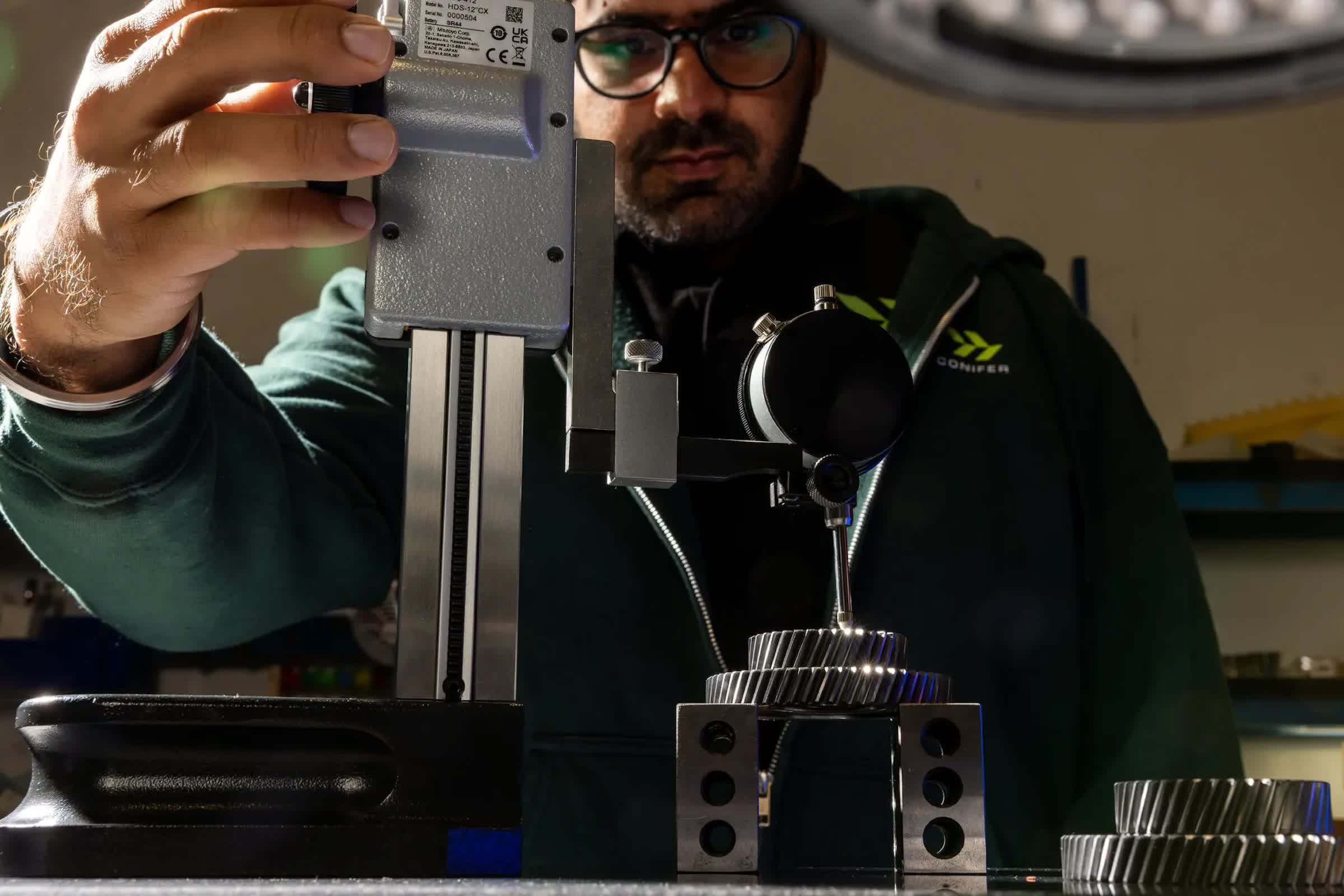
Conifer, a California startup, makes motors that do not use rare-earth materials.
Co-founder Ankit Somani says that concern over rare-earth supply has driven interest in Conifer's approach, with demand currently outstripping the young company's production capacity. The key selling point is flexibility: the motor can operate entirely without rare earths by using ferrite magnets, which are iron-based, abundant, and inexpensive.
Versions incorporating rare-earth magnets can be tuned for even higher power density within the same package. Somani notes that, at present, motors using rare-earth magnets can deliver more power per unit volume. The challenge for Conifer is scaling manufacturing quickly enough while proving reliability and cost-effectiveness over automotive lifetimes.
While motor designers experiment with new architectures, materials scientists are developing or synthesizing magnetic compounds that could rival rare-earth magnets without relying on scarce elements. One of the most closely watched candidates is tetrataenite, an iron-nickel alloy found naturally in some meteorites.
In these extraterrestrial rocks, iron and nickel atoms slowly reorganize over tens or hundreds of millions of years into an ordered crystal structure that exhibits strong permanent magnetism. On Earth, this process does not occur naturally on practical time scales, and early attempts to reproduce tetrataenite in the lab struggled to achieve the same degree of atomic ordering and magnetic performance as meteorite samples.
Laura Lewis, a chemical engineering professor at Northeastern University, leads a team working to accelerate this transformation so tetrataenite-like materials can be produced industrially. Her group has developed a method that reorganizes iron and nickel into the desired structure in weeks rather than geological epochs, dramatically compressing the time required.
Even so, Lewis cautions that the work remains in its early stages. Scaling the process from lab-scale samples to ton-scale production, characterizing long-term stability, and tailoring the material for specific magnet geometries will take years. Even in optimistic scenarios, she expects tetrataenite to complement rather than entirely replace rare-earth magnets, because different devices require distinct combinations of coercivity, remanence, temperature stability, and cost.
Image credit: The New York Times
BMW, GM, and startups are rethinking EV motors to reduce rare-earth dependence


