The US is throwing big money at rare-earth tech, taking on China's dominance with new chemistry

Skye Jacobs

Posts: 1,913   +58
Staff
Looking ahead: The rare-earth sector now sits at the intersection of chemistry, geopolitics, and industrial finance. On one side lies a legacy global system dominated by large solvent-extraction complexes concentrated in China; on the other is an emerging cohort of smaller, chromatography-enabled plants in the US, supported by substantial federal capital and anchored by defense offtake. Whether chromatography can scale economically – and whether public financial support can sufficiently de-risk projects – remains an open question, one that will determine how far and how fast the United States can close its processing gap.
Rare-earth elements are embedded deep within much of today's hardware stack, but the real bottleneck is no longer geological reserves – it is the industrial circuitry that converts ore and scrap into high-purity oxides and finished magnets. Smartphones, high-torque electric-vehicle motors, direct-drive wind turbines, and advanced medical imaging all rely on neodymium-iron-boron (NdFeB) magnets, which are far more power-dense than conventional ferrite or alnico magnets – often three to four times stronger per unit volume.

Demand for these motors and generators is climbing at roughly double-digit annual rates, with production of rare-earth-based traction motors alone growing by about a third per year, pulling the rest of the magnet supply chain along with it.

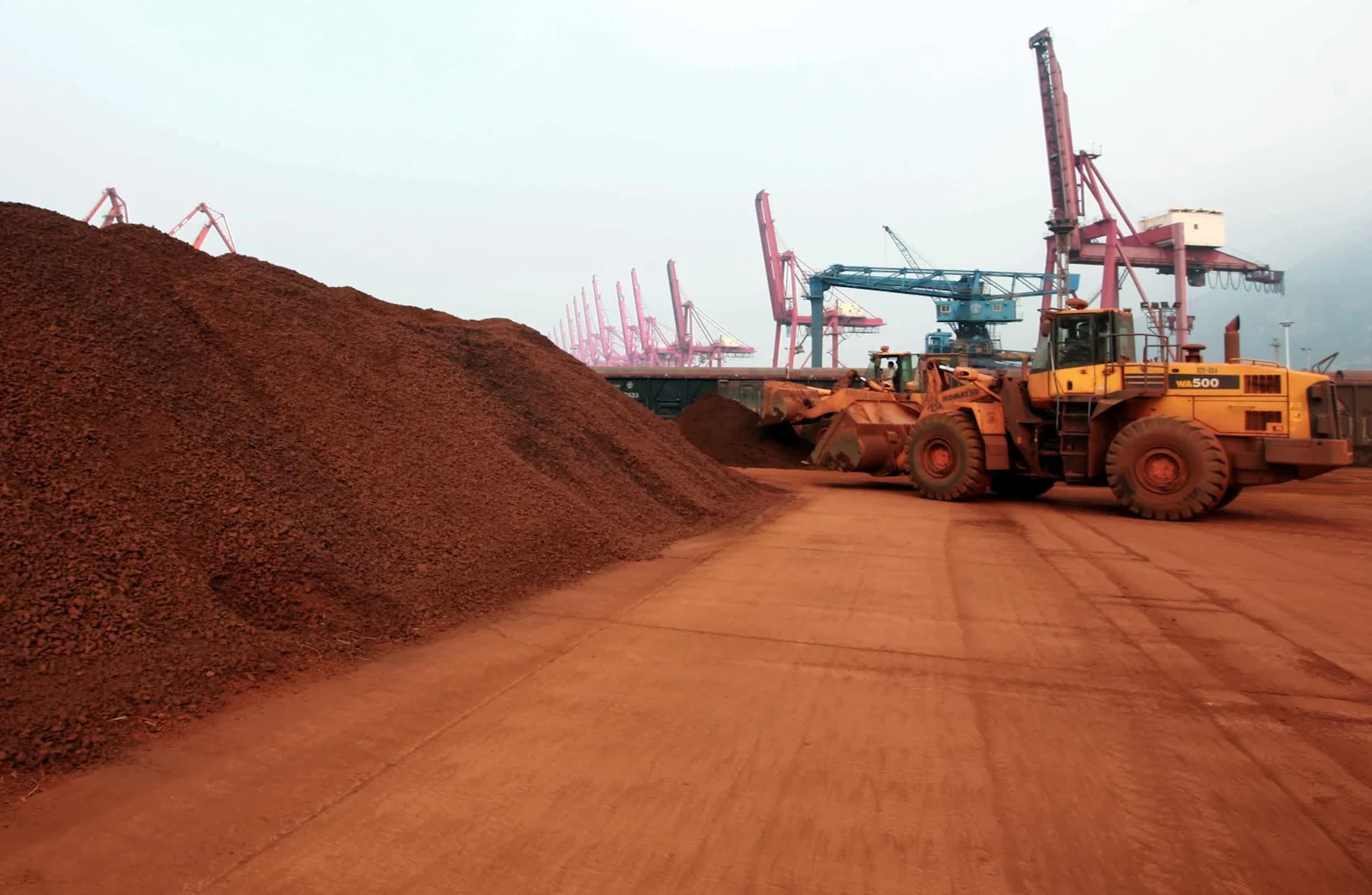
While the term "rare earth" implies scarcity, the more consequential constraint is a refining and processing system dominated by China. Beijing controls nearly 90 percent of global rare-earth separation and oxide output and around 60 percent of finished supply.

The United States once anchored rare-earth production through the Mountain Pass mine in California, which supplied significant global volumes through the 1980s. As environmental scrutiny intensified domestically, China expanded its mining and refining capacity. Today, China not only processes its own ore but also imports concentrates from Southeast Asia and Africa for refinement.

The US, by contrast, still lacks large-scale domestic separation capacity, forcing companies such as MP Materials to ship Mountain Pass concentrates abroad for processing until very recently.
New federal support is now aimed at breaking the loop of US dependence on foreign processing by funding heavy-rare-earth separation capacity and domestic magnet manufacturing tied directly to defense offtake commitments. Analysts note that even moderate domestic production can act as a hedge against politically driven supply disruptions, but only if projects can navigate the technical, environmental, and social hurdles that have stalled previous attempts to build large hydrometallurgical complexes on US soil.

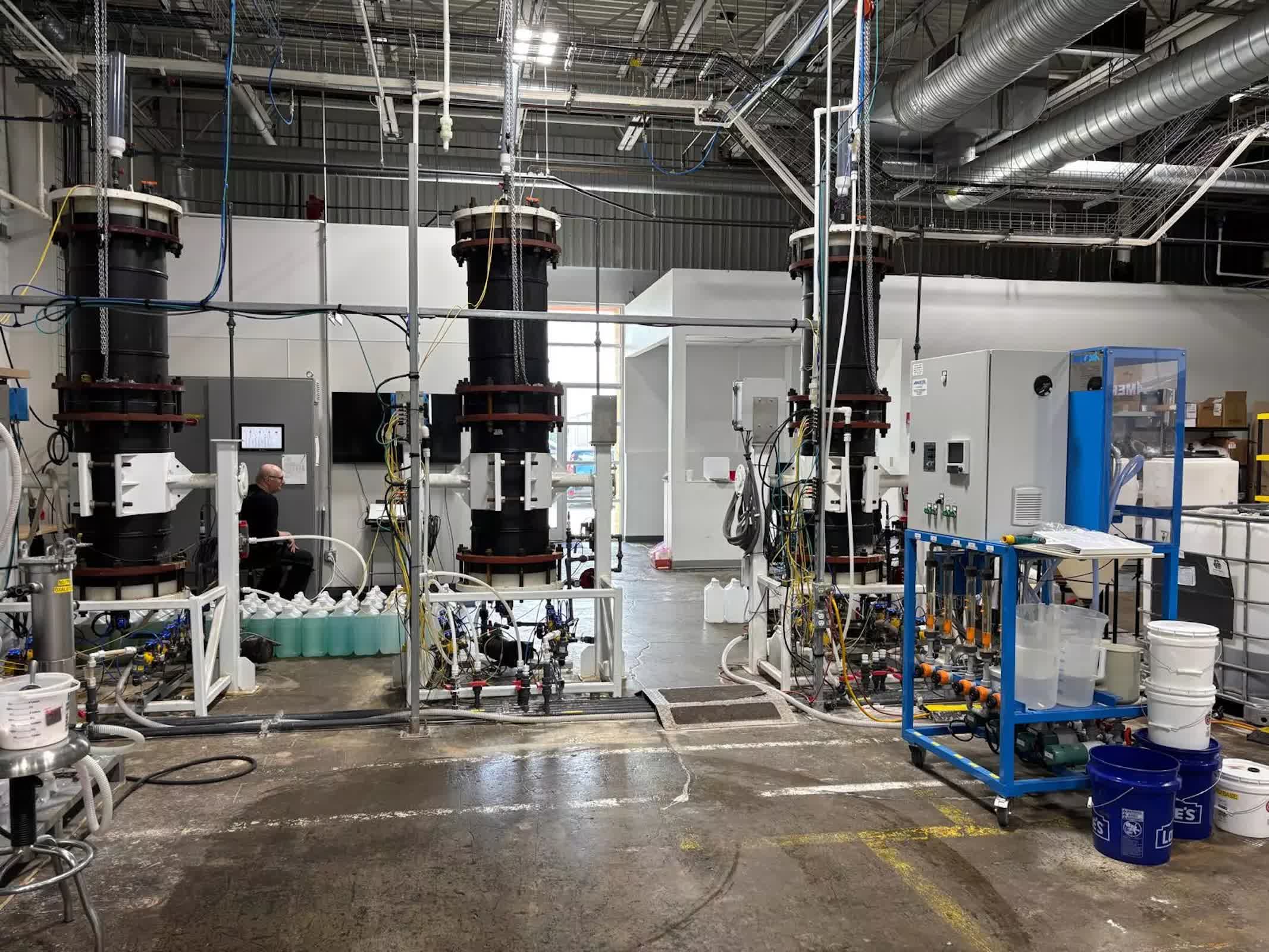
Into this context steps ReElement Technologies, an Indiana-based company founded on a separation technology first developed in the lab of Purdue University chemical engineer Nien-Hwa Linda Wang. The process uses ligand-assisted chromatography in tall, resin-packed columns to separate rare-earth ions from complex feeds, including coal byproducts, ore concentrates, magnet scrap, black mass from batteries, and manufacturing waste.

Purdue and ReElement report higher extraction yields, lower energy and water consumption, and significantly reduced hazardous chemical usage compared with traditional solvent extraction, along with a smaller physical footprint and near-zero solid waste for many feedstocks.

ReElement operates a commercialization facility in Noblesville, Indiana, and is building a larger site in Marion designed to scale up chromatographic separation of rare-earth and battery metals from both mined and recycled inputs. The same platform is intended to handle neodymium, dysprosium, terbium, and other key elements, with the company stating it can already produce high-purity oxides suitable for downstream metallization and magnet manufacturing.

The technical challenge lies in scaling chromatographic trains from pilot scale to multi-thousand-ton levels while preserving separation efficiency, resin lifetimes, and throughput economics. Industry observers note that while chromatography is well understood in pharmaceuticals and specialty chemicals, applying it to bulk rare-earth flows at commodity margins is a very different engineering problem.

The policy environment has shifted sharply in favor of such technologies. In July, Congress passed the One Big Beautiful Bill, appropriating $7.5 billion to support critical minerals projects, including rare earths and battery metals. Those funds give the Pentagon's Office of Strategic Capital and related mechanisms the capacity to extend tens of billions of dollars in loans, guarantees, and credit subsidies into mining, separation, and magnet manufacturing projects.
Within days of the bill's passage, the Department of Defense announced a multibillion-dollar public-private partnership with MP Materials, including a $400 million investment in a new series of preferred equity and an additional $150 million loan to expand heavy-rare-earth separation capacity at Mountain Pass.

In return, the Pentagon secured an equity stake estimated at roughly 15 percent on an as-converted basis, along with long-term rights to purchase 7,000 metric tons per year of rare-earth magnets over a decade. These arrangements support construction of a new "10X" magnet facility and the expansion of MP's existing Independence plant. If executed as planned, MP's combined US magnet capacity would reach around 10,000 metric tons annually, up from about 1,000 metric tons today, closing part of the gap with foreign suppliers.

The strategy also focuses on a vertically integrated magnet pipeline linking ReElement with Vulcan Elements, a rare-earth magnet manufacturer headquartered in North Carolina. Under a $1.4 billion partnership announced in early November, Vulcan will build and operate a NdFeB magnet plant in Benson, North Carolina, with an annual output of 10,000 metric tons for defense and commercial applications.

The facility, expected to span roughly 1 million square feet, will be supported by a $620 million direct loan from the Defense Department's Office of Strategic Capital, $50 million in equity from the Commerce Department under the CHIPS and Science Act, and about $550 million in private capital.

While the 10,000-ton target is ambitious in a US context, it remains small relative to global NdFeB magnet production, which is estimated at over 200,000 metric tons per year. Analysts emphasize that the strategic value of the Vulcan – ReElement chain lies less in volume and more in creating a cradle-to-grave system entirely on US soil, spanning ore and scrap through separation, metal and alloy production, magnet blocks, and finished components.

Image credit: NPR

Permalink to story:

 
Yeah, you start digging!

spawn.png
 
Last edited:
I just love this....between the green new scam and shareholder value, we decided it was cheaper to get EVERYTHING elsewhere. And by the time we discovered we were cutting our own throats, the green movement enshrined regulations so that we could do nothing to fix the problem. It's only now that we've decided to end the blackmail from China and reverse this idiocy. And even then, half the country wants to continue the blackmail.

China is laughing at us while using tic tok to sell the status quo.
 
There's a simple reason America gave up its rare-earth mining and factories. It's because it's extremely dirty, and due to a combination of environmental costs, market price shifts, and China's aggressive government support for its own industry. High environmental and regulatory costs in the U.S. made it difficult to compete with China's lower-cost production, which was supported by Chinese government subsidies, funding, and less stringent environmental regulations. Furthermore, U.S. refining and processing capacity declined, with the main U.S. mine closing in 2002 after a price drop, and China now controlling the majority of the global supply chain for these critical elements.

The resurgeance of interest in Rare Earth is mostly due to the boom in AI, EV and military-uses.

The reality is: we were right to give up REM even though the right wingers in the country hate it. China's population outnumbers us so much that it's easier for them to do these things to scale. Who is America getting to dig for REM? Not these entitled Gen Z and Gen Alpha sitting on video game consoles. China is better at forging partnerships while America's racist attitudes which we currently see in Venezuela, Cuba, Africa and everywhere else are good at dissolving them.

In the end, China is going to win this war without firing a single shot.

"the art of fighting without fighting".

 
There's a simple reason America gave up its rare-earth mining and factories. It's because it's extremely dirty, and due to a combination of environmental costs, market price shifts, and China's aggressive government support for its own industry. High environmental and regulatory costs in the U.S. made it difficult to compete with China's lower-cost production, which was supported by Chinese government subsidies, funding, and less stringent environmental regulations. Furthermore, U.S. refining and processing capacity declined, with the main U.S. mine closing in 2002 after a price drop, and China now controlling the majority of the global supply chain for these critical elements.

The resurgeance of interest in Rare Earth is mostly due to the boom in AI, EV and military-uses.

The reality is: we were right to give up REM even though the right wingers in the country hate it. China's population outnumbers us so much that it's easier for them to do these things to scale. Who is America getting to dig for REM? Not these entitled Gen Z and Gen Alpha sitting on video game consoles. China is better at forging partnerships while America's racist attitudes which we currently see in Venezuela, Cuba, Africa and everywhere else are good at dissolving them.

In the end, China is going to win this war without firing a single shot.

"the art of fighting without fighting".
Totally disagree with you here man. I mean, I understand the story you’re trying to tell, but the idea that the U.S. “can’t compete with China” in rare earths doesn’t line up with what’s actually happening. Sure, China built its position through lower environmental costs and heavy state support. Yes, the U.S. let its own refining and magnet capacity decline. Those parts are obviously true. But that’s history—not destiny.

The U.S. is actively rebuilding that supply chain with massive federal backing. We’re seeing billions in loans, guarantees, equity stakes, and long-term defense offtake commitments. That’s how you treat something as strategic infrastructure rather than letting it depend on market cycles. Competing doesn’t mean matching China ton-for-ton; it means eliminating dependence in the areas where dependence is a security risk. The U.S. is doing exactly that—separation, metal-making, and magnet facilities for defense and high-value manufacturing.

And the narrative that the U.S. “can’t form partnerships” because it supposedly carries “racist attitudes” toward places like Africa, Venezuela, or Cuba just isn’t grounded in reality. Racism exists everywhere dude—China included—and it’s simply not the defining variable of global resource partnerships you claim it to be. The real drivers are investment, technology, governance, and geopolitical alignment. On that front, the U.S. is already working closely with Japan, Australia, South Korea, Canada, the EU, and multiple Indo-Pacific partners to diversify critical-mineral supply chains. That cooperation is happening in the open and has direct policy and industrial consequences.

China’s own export controls on rare-earth-related technologies and materials underline how strategically sensitive this sector has become. Those controls don’t signal complacency; they signal that Beijing sees other players—especially the U.S. and its partners—rebuilding capacity.

So no, I don’t accept the fatalistic narrative line that the U.S. “can’t compete” or that stepping back twenty years ago means accepting permanent dependence today or in the future.

The actual story is more straightforward in my view: the U.S. let capability erode, recognized the vulnerability, and is now rebuilding with serious federal investment and aligned international partners. I think that’s a more factual and stronger picture than the defeatist version being pushed. The world and geopolitics simply aren’t that one-note.
 
20 years too late. But I am glad they are doing something. It does not matter how harmful it is to mine those. We must not rely on China considering the use of REE.
 
I just love this....between the green new scam and shareholder value, we decided it was cheaper to get EVERYTHING elsewhere. And by the time we discovered we were cutting our own throats, the green movement enshrined regulations so that we could do nothing to fix the problem. It's only now that we've decided to end the blackmail from China and reverse this idiocy. And even then, half the country wants to continue the blackmail.

China is laughing at us while using tic tok to sell the status quo.
I can understand cheap stuff that their factories are tuned to produce in giant amounts.
But elements crucial for our survival...
"Hey China, do you want to have monopoly on these products that are crucial for our economy and army? Take it, take it all. It is not like you might decide to subdue us eventually..."

I bet REE are not the last products that we must bring back or at least move closer to home. Oh well, better late than never.
 
Today, China not only processes its own ore but also imports concentrates from Southeast Asia and Africa for refinement.

Can't stress this enough; China has spent a lot of the past 30 years expanding its reach throughout Asia and Africa, where the US has largely retreated. That's opened up a lot of additional supply, and let China basically corner the market.
 
The US is throwing big money at rare-earth tech, taking on China's dominance with new chemistry

US cannot do jackshit...! By the time they master this in 20 or more years, China would long surpass the US as number one world economy and MIC would collapse on its feet...!
 
The US is throwing big money at rare-earth tech, taking on China's dominance with new chemistry
US cannot do jackshit...! By the time they master this in 20 or more years, China would long surpass the US as number one world economy and MIC would collapse on its feet...!

CCP bot has entered the chat...
 
Back