Denuvo removed from Resident Evil Requiem, improving performance over hypervisor-based crack

Alfonso Maruccia

Posts: 2,600   +978
Staff
Denuvo No More: The unknown developer behind the recent, unprecedented Doom crack has done it again. Despite being released less than a couple of months ago, Resident Evil Requiem has already been "freed" from Denuvo, gaining a few FPS as a consequence. Irdeto's controversial anti-tamper and DRM technology is in deep trouble.
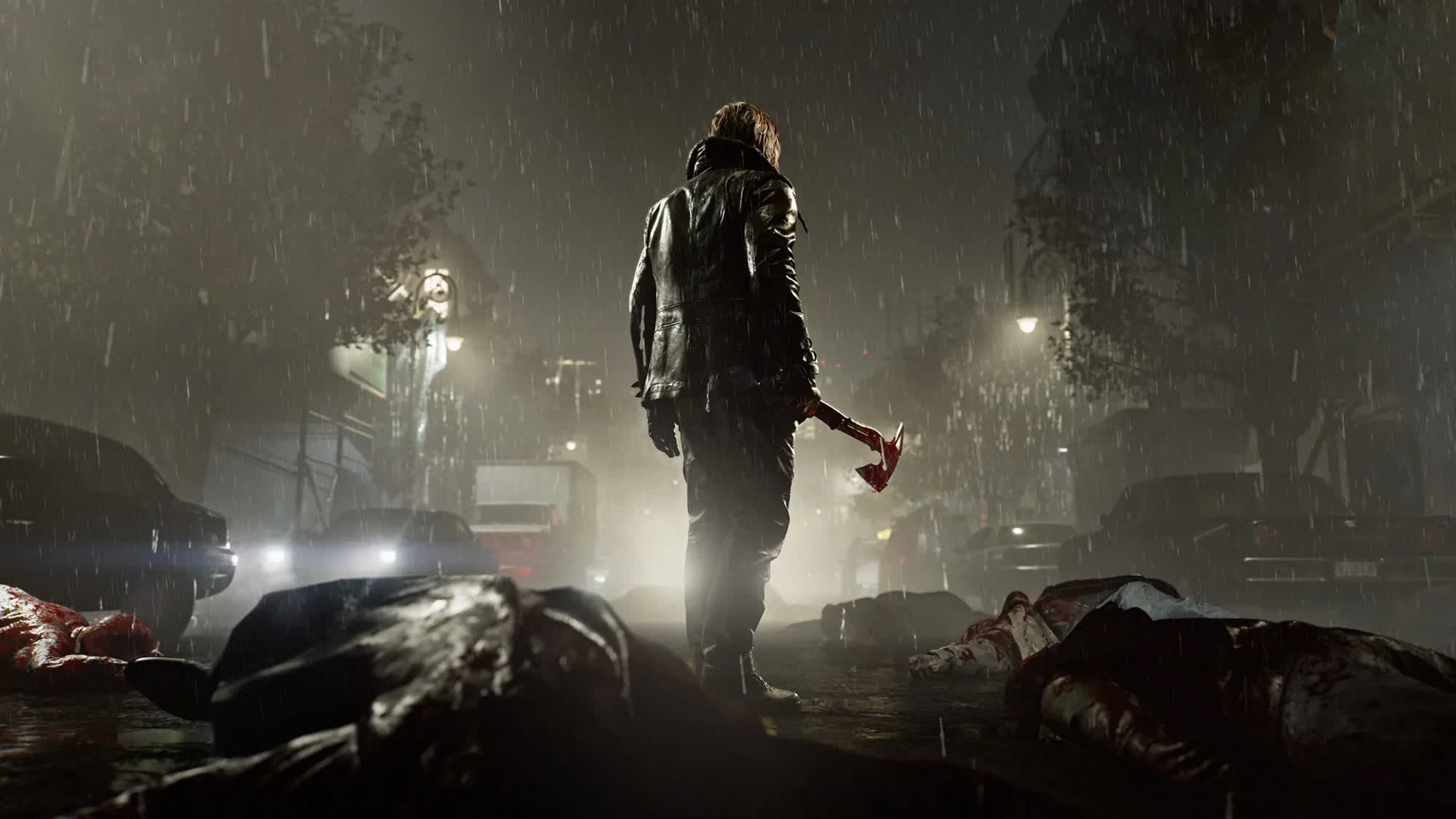
Less than a month after removing Denuvo from Doom: The Dark Ages, Voices38 has now achieved the same feat with Resident Evil Requiem. Capcom's survival horror title is the first game released in 2026 to undergo a full "cracking" process, just as TDA marked the first cracked release of a 2025 game. This also represents another sign that Denuvo owner Irdeto may soon face significant changes in its position within the DRM market.

The Resident.Evil.Requiem-voices38 release is a 74.4GB download that is gradually spreading through P2P networks and direct download services. Voices38 confirmed that removing Denuvo from Capcom's game was its most challenging effort to date, despite it introducing only two new "features" compared to the Denuvo protection found in Doom: The Dark Ages.
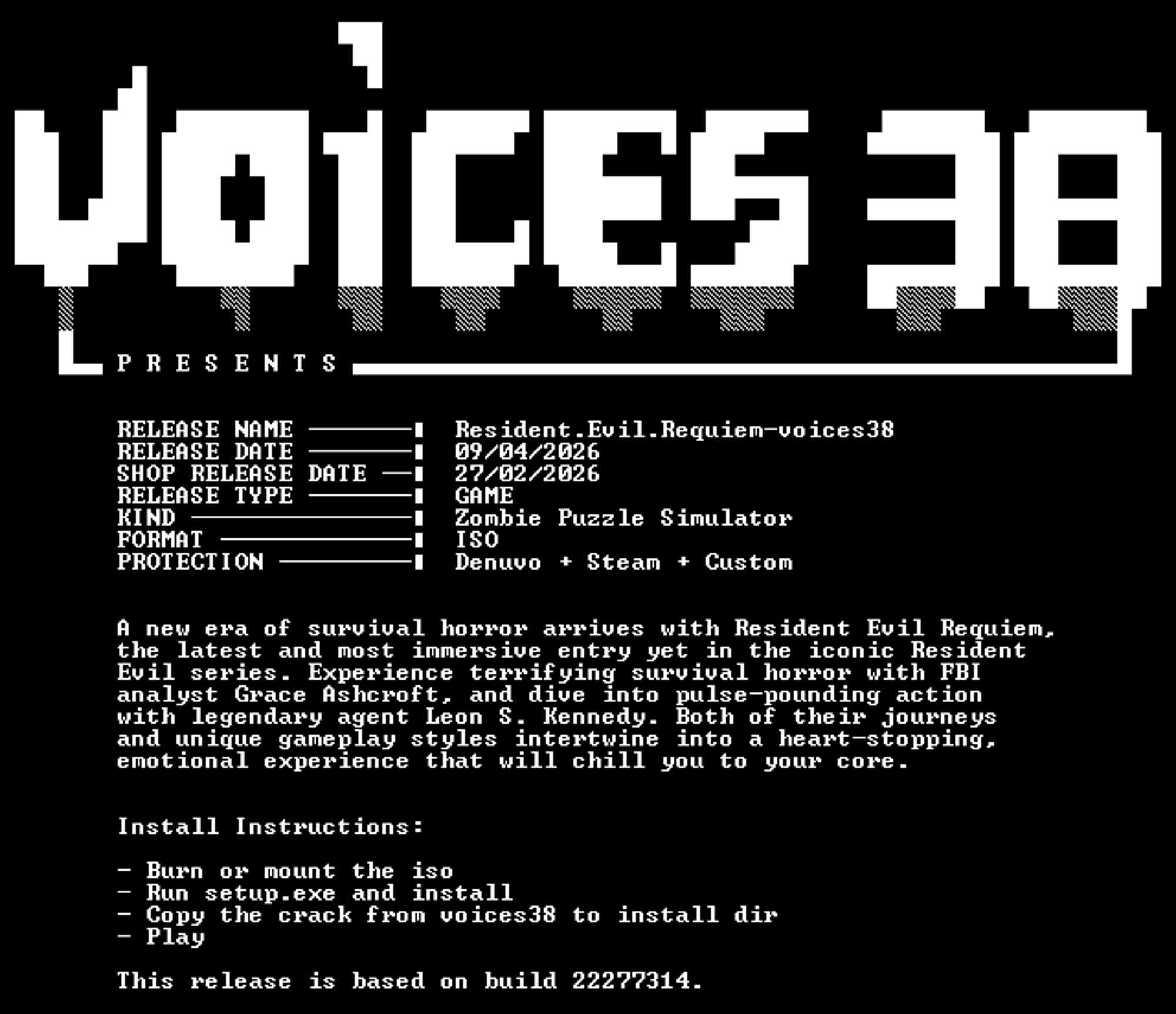
Capcom recently confirmed that Resident Evil Requiem is the fastest-selling title in the Resident Evil series. The game sold five million copies in just five days, with an additional one million units sold by March 16, 2026. The Japanese publisher is now generating around 50% of its total game sales on PC, and is unlikely to suffer any significant financial impact now that Requiem has entered the piracy scene.

In fact, Resident Evil Requiem was already "cracked" within just a few hours by a group using a previously unseen hypervisor-bypass method. Hypervisor-based cracks are increasingly disrupting the DRM landscape, marking a notable shift in PC game piracy techniques.

Running an unsigned hypervisor driver requires several significant changes to Windows security, which is why Voices38 and other groups are still working on their own "proper" releases. A full Denuvo removal requires the anti-tamper system to be fully stripped from the game's executable code, a time-consuming process that very few developers are willing to undertake at this stage.

Furthermore, hypervisor-based cracks can allegedly have a noticeable impact on game performance. Voices38 said that one of their testers observed an average difference of 11 FPS between the properly cracked release and the hypervisor-based version, with the gap potentially widening on older or less powerful hardware. The developer also raised concerns about how the hypervisor driver may affect support for advanced x86-64 extensions such as AVX, as well as the long-term viability of the crack.

Permalink to story:

 
They are getting a lot better at working with Denuvo. If Denuvo does not improve within the next few AAA games, they might go out of business. Not going to lie, I won't miss them.
Eh, I'm not as optimistic as you. Upper management are the ones making the call to use Denuvo. We all know how disconnected such people usually are, and how influential the right sales pitch can be...
 
At this rate, thanks to the hypervisor bypasses and voices38's cracks, Denuvo will be done for. It would be a sight to see the mayhem in their offices.

Even in the absence of this, it is a false sense of security, and a faulty premise, that DRM protects sales. An excellent game will sell well, of which there are many examples. Therefore, companies should invest in better game design.
 
They are getting a lot better at working with Denuvo. If Denuvo does not improve within the next few AAA games, they might go out of business. Not going to lie, I won't miss them.

Its highly likely they using Ai to "trace" the tracks of Denuvo and patch it to have it running without.

The point of Denuvo is to at least guarantee some point of sales before cracked versions are into the wild.

 
Denuvo's entire pitch to publishers was always "we just need to delay piracy long enough to capture day-one sales." Two months was already pushing the definition of "delay." Now we're watching a single anonymous developer crack AAA titles faster than some games receive their first patch. At some point Irdeto has to sit in a boardroom and explain to clients what exactly they're paying for.
 
Let's be honest, unless you have no job, no kids, and no bills, there's practically not enough time to justify the cost.

people like to subscribe to things just to have it without realizing that they barely use it. Millions out there have PSN, Gamepass and backlogs of games without the time to justify it all.

That's the reason why most of us ended up with at least a whole generation worth of gaming backlog still untouched, with no time to play.
 
Let's be honest, unless you have no job, no kids, and no bills, there's practically not enough time to justify the cost.

people like to subscribe to things just to have it without realizing that they barely use it. Millions out there have PSN, Gamepass and backlogs of games without the time to justify it all.

That's the reason why most of us ended up with at least a whole generation worth of gaming backlog still untouched, with no time to play.

As humans, we want. But once possessing, by way of purchase, we forget. And we live in socities predicated on appealing to this impulse.

As for the cost of gaming, and leaving aside Steam discounts, there are countries where a high-profile game can cost, say, a good part of one's monthly salary; piracy opens the door for those gamers.
 
As humans, we want. But once possessing, by way of purchase, we forget. And we live in socities predicated on appealing to this impulse.

As for the cost of gaming, and leaving aside Steam discounts, there are countries where a high-profile game can cost, say, a good part of one's monthly salary; piracy opens the door for those gamers.
You forget that spending $30.00 on a subscription that you may forget to use vs $60.00 in buying it is a big difference...you are not getting those $30.00 back after a month, meanwhile those $60.00 remain with you when you buy it and play it years later if you want to.
 
You forget that spending $30.00 on a subscription that you may forget to use vs $60.00 in buying it is a big difference...you are not getting those $30.00 back after a month, meanwhile those $60.00 remain with you when you buy it and play it years later if you want to.
Agreed. And everywhere we turn today, there's another subscription. Under software, it's often done under the guise of keeping things up to date.
 
Back