Farmers are rejecting massive offers as AI data centers hunt for land

Skye Jacobs

Posts: 1,916   +58
Staff
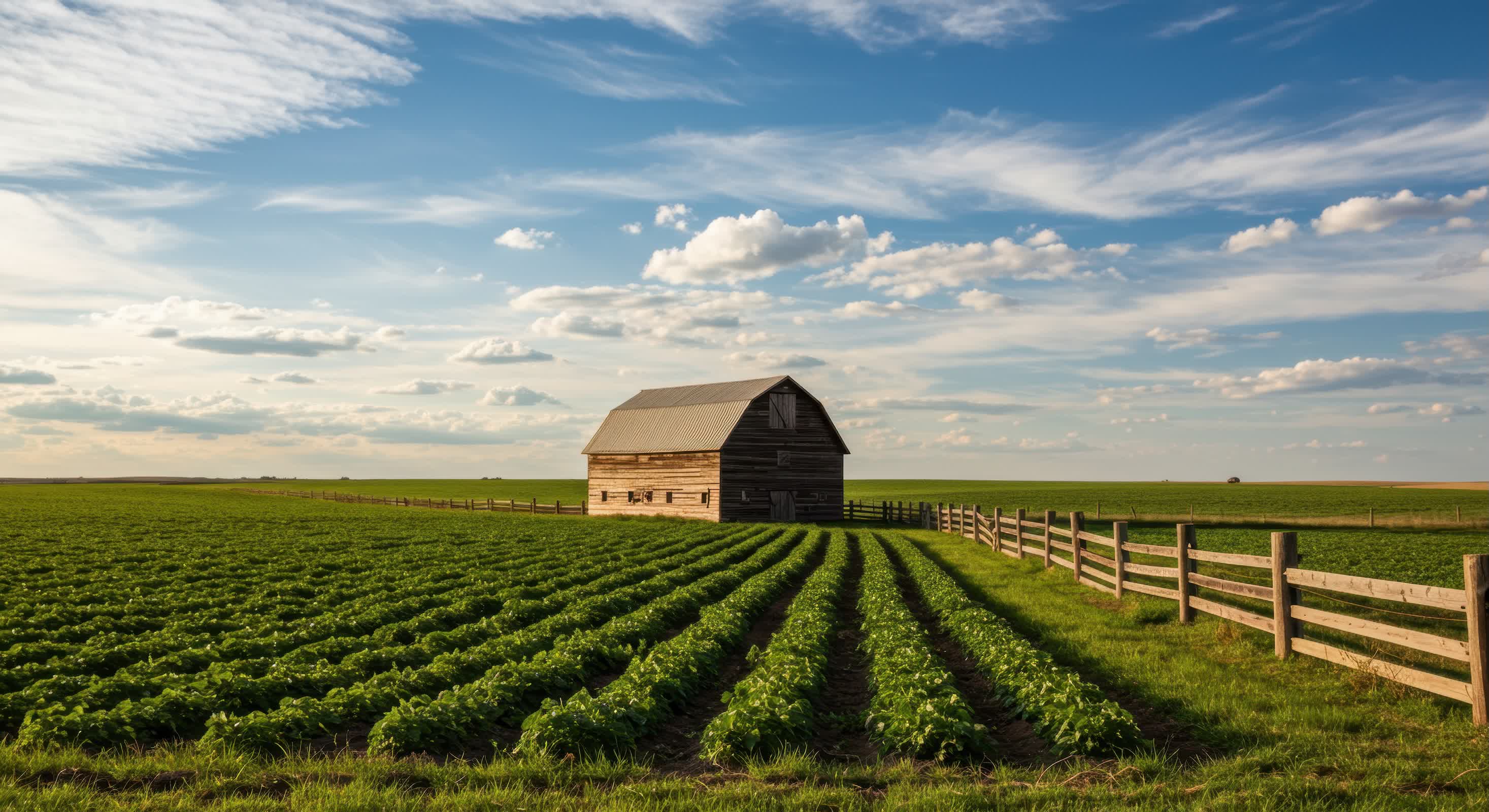
Winners & losers: A surge in demand for land to host artificial intelligence data centers is reshaping parts of rural America, pitting tech companies' need for power-ready acreage against concerns about food production, environmental impacts and the permanence of industrial build-out. Across multiple states, landowners are being offered sums far beyond recent market values, yet an increasing number are refusing to sell, exposing limits to how far AI's physical infrastructure can expand when it collides with agricultural priorities and local identity.
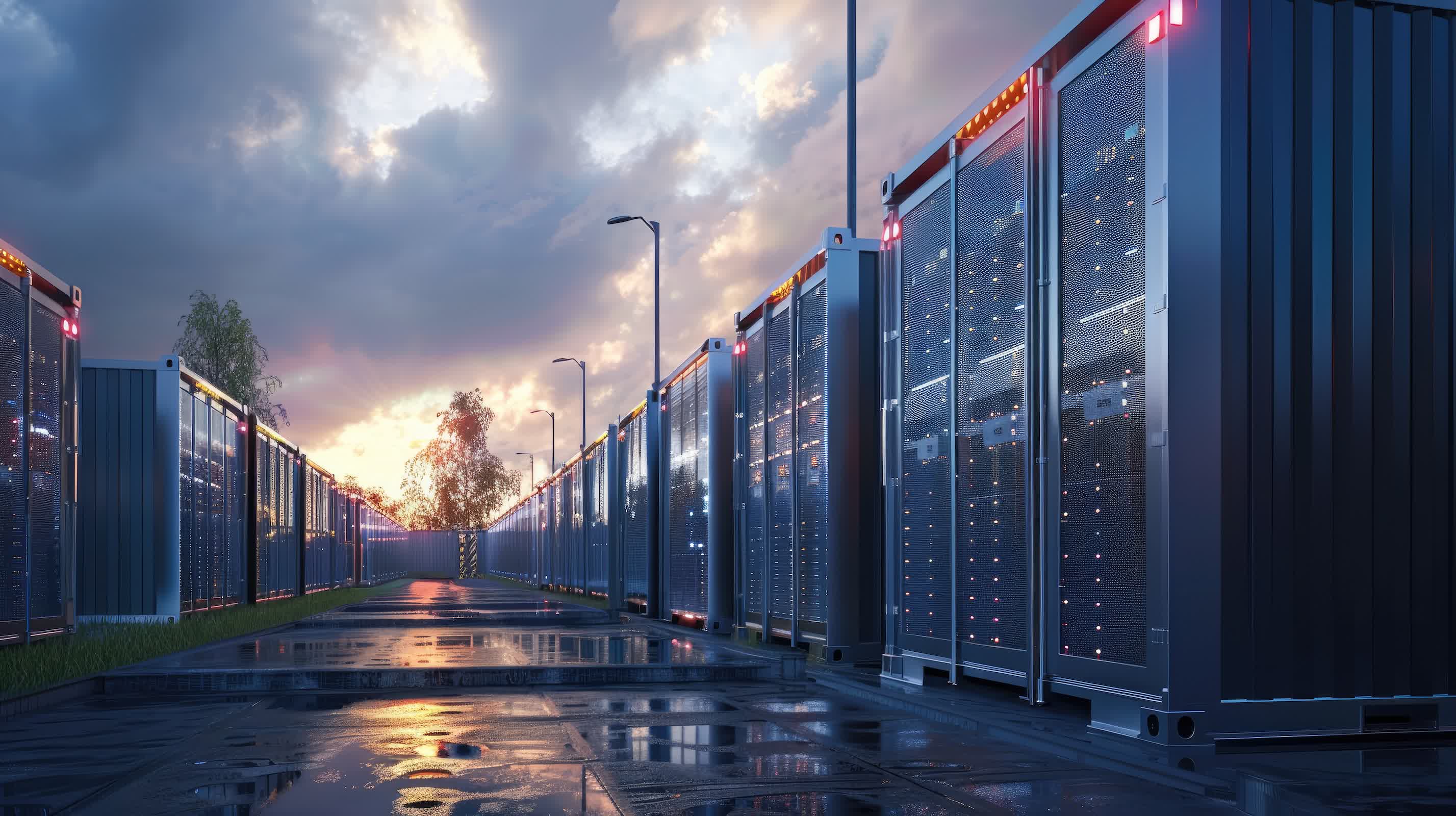
The scale of the new AI-driven demand helps explain the size of the offers. To support rapid growth in AI and cloud computing, tech firms are racing to secure what the industry calls "powered land": large parcels with access to ample electricity, water and favorable zoning.

Globally, about 40,000 acres of such land are projected to be needed for new data center projects over the next five years, roughly double the acreage now in use. The push is especially intense in locations that combine relatively cheap land with weak zoning protections and proximity to existing power plants or high-capacity transmission lines.

Mason County, Kentucky, has become one of the clearest flashpoints. There, an unnamed Fortune 100 company has been pursuing sites for a massive data center project that would occupy an estimated 2,000 acres. Public records show that a new customer has applied for a 2.2 gigawatt project tied to the local power plant – nearly double the plant's annual generation capacity.

Developers have approached multiple landowners in Mason County with multimillion-dollar offers tied to the project, in some cases far exceeding historical valuations for farmland. In at least one instance, a landowner was told to "name your price" after rejecting an initial offer that was already many times higher than what he had paid decades earlier.

Similar patterns are emerging elsewhere. In Pennsylvania, a farmer has turned down a $15 million bid for land he has worked for half a century. In Wisconsin, another has rejected an $80 million offer. Other owners have declined bids above $120,000 per acre, a level that would have been almost unimaginable not long ago.
In northern Virginia, which hosts one of the world's densest concentrations of facilities, recent deals illustrate how rapidly values are being redefined. An investor there paid $615 million for fewer than 100 acres of data center-zoned land last November, a parcel that sold for $57 million just four years earlier.

Days later, Amazon spent $700 million on nearby farmland that had previously sold for a fraction of that. In Georgia, a developer bought land for $4 million and sold it to Amazon a year later for $270 million. For intermediaries who assemble, entitle, and flip these properties, returns can exceed 1,000%.

The Mason County project shows how this new asset class intersects with long-term questions about rural economies. Local officials argue that the data center could help sustain future generations by bringing tax revenue and jobs to a region that has seen its population fall by about 10% since 1980, largely due to the loss of manufacturing.

A frequently cited comparison is Loudoun County, Virginia, where roughly a fifth of the world's internet traffic is said to pass. Tax revenue from data centers in the county nearly equals its entire operating budget. For proponents in places like Mason County, this model offers a blueprint for reversing decline: trade land for an industrial-scale digital complex, then use the proceeds to fund schools, services and infrastructure.

Opponents focus on what they see as irreversible trade-offs. Data centers require enormous amounts of electricity, and concentrating such demand in rural areas can strain power grids that were not built for multi-gigawatt loads. Critics worry that utilities may prioritize these large industrial customers over residential or agricultural needs, affecting reliability and future planning.

Also read: Sam Altman compares AI energy use to the cost of "training" humans, says water-usage concerns are "fake"

Water use is another point of tension. Many data centers rely on water-intensive cooling systems, which can strain local water supplies. Large campuses can also alter runoff patterns and increase the risk of soil contamination. For communities whose economies still depend on agriculture, these environmental impacts are closely tied to worries about long-term food production and land health.

Legal mechanisms add another layer of unease. In Mason County, landowners who declined offers say the local utility has raised the possibility of using eminent domain – the power of government to seize private property for public use – to obtain critical parcels for the project. That threat is backed by precedent: Dominion Energy used eminent domain against a farmer in Virginia last April.

Advocates for family farmers point to a tradition of stewardship that resists purely financial logic. Rural sociologist Mary Hendrickson notes that many view keeping a farm intact as a birthright and a duty to past and future generations. The trauma of the 1980s farm crisis, when more than 900 male farmers in the Midwest died by suicide amid bankruptcies and land loss, remains part of that collective memory.

In this context, the data center land rush amounts to a new test of how the US balances its technological ambitions with the physical realities that underpin them. The standoffs emerging in places like Mason County suggest that, even in the face of extraordinary offers, there are limits to what some communities are willing to trade for a share of the digital economy.

Permalink to story:

 
..., pitting tech companies' need for power-ready acreage against concerns about food production...
This is rather blatant fearmongering. In the US today, we grow enough food to to feed our current 350M population on less land than we used for agriculture in the year 1900, to feed only 100 million. Total acreage under cultivation in the US has been decreasing for over a century, thanks to agricultural science that has vastly increased the food output per acre. In 1900, average corn production was about 15 bushels/acre. Today, it's over 160 bushels/acre -- ten times higher.
 
The article is attempting to imply there's something like a trend, based on a couple of anecdotes.

Rejecting an offer in order to get a better one is the most normal thing in the world, it probably happens zillion times a day - and that doesn't mean final rejection, of course.
Data centers are pretty compact things actually. No matter how many are planned, the necessary land will be microscopic in comparison to what's available.
 
Last edited:
This is rather blatant fearmongering. In the US today, we grow enough food to to feed our current 350M population on less land than we used for agriculture in the year 1900, to feed only 100 million. Total acreage under cultivation in the US has been decreasing for over a century, thanks to agricultural science that has vastly increased the food output per acre. In 1900, average corn production was about 15 bushels/acre. Today, it's over 160 bushels/acre -- ten times higher.
and look up what that does to the soil... im not aruguing we can grow more now, but those crops need to be rotated better. and that doesnt mean we should just give up good farmland. same thing for solar panels. plenty of other places to put them first unless you do the vertical row idea and grow crops between them.
 
Makes way more sense to build AI data centers on water. Virtually endless space there. Communicate with them using undersea cables and satellite.
 
and look up what that does to the soil...
We've been doing this for well over a century now, and crop fertility still just continues to rise. The soil's doing just fine, and the sky isn't falling, Chicken Little.

...and that doesnt mean we should just give up good farmland.
We "give up good farmland" every time we build a new home. Are you suggesting we should deport every person who's emigrated to the US in the last century, so we can demolish their homes and return the land to cultivation? And who's going to farm it? Farmland hasn't been decreasing because of a shortage of land, but because there's no demand for the farmland we already have ... thanks to that massively increased productivity I mentioned.
 
This is rather blatant fearmongering. In the US today, we grow enough food to to feed our current 350M population on less land than we used for agriculture in the year 1900, to feed only 100 million. Total acreage under cultivation in the US has been decreasing for over a century, thanks to agricultural science that has vastly increased the food output per acre. In 1900, average corn production was about 15 bushels/acre. Today, it's over 160 bushels/acre -- ten times higher.
Let's put it this way, if all the farmers decided it's time to retire and sell the land to big techs for AI data centers, do you think there will be enough food? Food can be produced in US for export to other countries that needs it. Just focusing within US is a very narrow point of view. In everything, there needs to be a balance. At the rate that data centers are growing and causing all sorts of shortages, it's a no go for me.
 
Let's put it this way, if all the farmers decided it's time to retire and sell the land to big techs for AI data centers, do you think there will be enough food?
Data centers currently occupy about 0.01% of the US. Over the last 30 years, a thousand times as much farmland has been converted into residential homes and office space as has been used for datacenters. This is happening because the demand for farmland is very low, because every year farmers continue to grow more food on less soil.

You're also ignoring the flip side of the equation. If a large corporation replaces a large portion of its workforce with AI, that effectively means it's replaced millions of square feet of office space with perhaps 1/1,000 the space in a datacenter. When a logistics firm uses an AI model to optimize operations, it can fill more orders with less warehouse space, again resulting in less overall land use.

Food can be produced in US for export to other countries that needs it.
The US is already the world's largest exporter of food. We'd grow and export even more than we already do -- if there was demand for it, which there isn't.
 
Last edited:
We've been doing this for well over a century now, and crop fertility still just continues to rise. The soil's doing just fine, and the sky isn't falling, Chicken Little.


We "give up good farmland" every time we build a new home. Are you suggesting we should deport every person who's emigrated to the US in the last century, so we can demolish their homes and return the land to cultivation? And who's going to farm it? Farmland hasn't been decreasing because of a shortage of land, but because there's no demand for the farmland we already have ... thanks to that massively increased productivity I mentioned.
well in my example a home is better than just throwing solar panels there... you can put panels on the home as well. all im saying is be smart.
as for we have been doing this for awhile? yeah and the runoff from non natural fertilizer is causing problems. they are just problems you dont care about. like a ton of algae in lakes and streams from the access nitrogen that washes away when it rains.
 
Last edited:
...yeah and the runoff from non natural fertilizer is causing problems. they are just problems you dont care about. like a ton of algae in lakes and streams from the access nitrogen that washes away when it rains.
So you've moved the goalposts from "we're harming the soil" now to "we're harming the oceans"? Hypoxic dead zones existed long before man came along, and in fact effluent from sewage is as much a factor in recent hypoxic increases as are artificial fertilizers ... the excrement of eight billion people contains enormous quantities of nitrogen and phosphorus.

Despite the scare stories revolving around this phenomena, studies have shown that total pelagic biomass (the sum of all plant and animal life in the world's oceans) is actually increasing, not decreasing.
 
So you've moved the goalposts from "we're harming the soil" now to "we're harming the oceans"? Hypoxic dead zones existed long before man came along, and in fact effluent from sewage is as much a factor in recent hypoxic increases as are artificial fertilizers ... the excrement of eight billion people contains enormous quantities of nitrogen and phosphorus.

Despite the scare stories revolving around this phenomena, studies have shown that total pelagic biomass (the sum of all plant and animal life in the world's oceans) is actually increasing, not decreasing.
Jeez..............you really should get out more. All this googling and ChatGPT usage is going to wear you out...all in order to sound smart..............LOL.........
 
Jeez..............you really should get out more. All this googling and ChatGPT usage is going to wear you out...all in order to sound smart..............LOL.........
I appreciate the compliment, but there was no Googling nor AI intervention involved in my post. In the days before the Internet, humans gained knowledge through perusing objects known as "books" and storing the resultant data directly into the synaptic patterns of their brain. When queried for information, these antediluvian humans (a few of us still exist today) were able to answer queries directly, without the intervention of a web search.
 
Last edited:
So you've moved the goalposts from "we're harming the soil" now to "we're harming the oceans"? Hypoxic dead zones existed long before man came along, and in fact effluent from sewage is as much a factor in recent hypoxic increases as are artificial fertilizers ... the excrement of eight billion people contains enormous quantities of nitrogen and phosphorus.

Despite the scare stories revolving around this phenomena, studies have shown that total pelagic biomass (the sum of all plant and animal life in the world's oceans) is actually increasing, not decreasing.
I didnt move any goalpost. you tried to pivot what we were talking about by bringing up housing.. nice try. there is less point putting solar panels on good famrland when you can put them on shitty land instead
 
I didnt move any goalpost.
You certainly did. You claimed modern agriculture was "harming the soil"; I asked for an example, and you instead chose to talk about ocean algae blooms.

there is less point putting solar panels on good famrland when you can put them on shitty land instead
There is no shortage of farmland in the US; quite the opposite, in fact. In the last 100 years alone, many millions of acres of farmland have reverted back to forested terrain, for the sheer reason that modern agriculture has made those acres unnecessary.
 
You certainly did. You claimed modern agriculture was "harming the soil"; I asked for an example, and you instead chose to talk about ocean algae blooms.


There is no shortage of farmland in the US; quite the opposite, in fact. In the last 100 years alone, many millions of acres of farmland have reverted back to forested terrain, for the sheer reason that modern agriculture has made those acres unnecessary.
can you build homes or anything else on top of solar? no you cant. its not just about farmland.
harming the soil is is intertwined with harming lakes. its not a goalpost move bud
 
Back