Something to look forward to: Intel has long faced criticism for frequently changing CPU sockets, making desktop upgrades more expensive and complicated. That trend could be about to change, however, as rumors suggest the company may follow AMD's approach and support its next-generation LGA 1954 socket across multiple CPU generations.
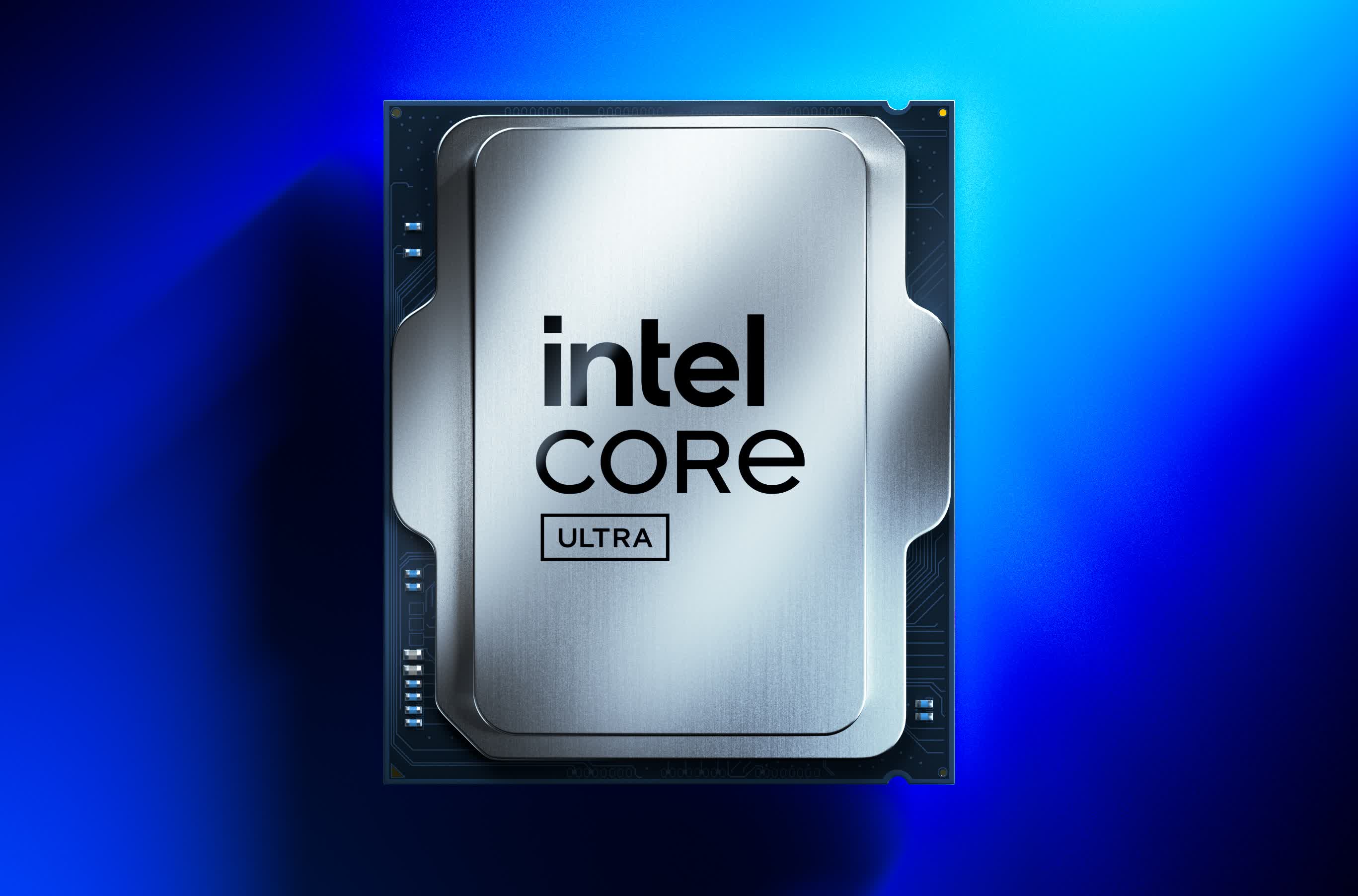
Intel's Nova Lake processors will use the new LGA 1954 socket, replacing the current LGA 1851 platform used by the Arrow Lake-S family. According to the YouTube channel Moore's Law is Dead, the LGA 1954 socket will support four generations of CPUs, including Razer Lake, Titan Lake, and Hammer Lake, which are expected to follow Nova Lake over the coming years.
If accurate, this move would align Intel with AMD's long-standing strategy of supporting multiple CPU generations on a single socket, helping users reduce upgrade costs. For example, AMD's previous AM4 socket accommodated four generations of CPUs based on the Zen, Zen+, Zen 3, and Zen 4 architectures.
AMD is following a similar strategy with its latest AM5 (LGA 1718) socket, which supports all mainstream desktop CPUs released in the past three years, including the Ryzen 7000, 8000, and 9000 families. AMD has confirmed that AM5 will remain supported into 2026 and beyond.
By contrast, the last Intel mainstream desktop socket to support multiple CPU generations was LGA 775, used by Pentium 4, Pentium D, Pentium Dual-Core, Celeron, Celeron D, Core 2 Duo, Core 2 Quad, and Core 2 Extreme processors. LGA 775 remained in use for seven years before being replaced by the LGA 1156 and LGA 1366 platforms.
If the recent report is accurate and Intel supports its next-gen socket for several years, CPU upgrades could become significantly more affordable. The move could also help Intel compete with AMD, whose market share has grown thanks to popular processors like the Ryzen 9 9950X3D and 9900X3D.
Although upgrading to Nova Lake will require a new motherboard, Intel reportedly plans to ease the transition. The LGA 1954 socket is expected to have the same physical dimensions as LGA 1851 and LGA 1700, meaning most CPU coolers designed for Arrow Lake processors should remain compatible with Nova Lake and future chips.
Intel's LGA 1954 socket could support four CPU generations starting with Nova Lake in 2026


