Investors continue to sound the alarm on the inevitable burst of the AI bubble

Alfonso Maruccia

Posts: 2,515   +935
Staff
Bottom line: Despite Big Tech pouring trillions into AI initiatives and building massive new data centers, the expected returns may never materialize. Analysts warn that the hype far outpaces reality, creating a precarious financial bubble that could have ripple effects across the broader economy.
Lauren Taylor Wolfe is exploring new investment opportunities in a bullish market, but told CNBC she plans to steer clear of anything tied to artificial intelligence. As co-founder of activist investment firm Impactive Capital, Wolfe recently voiced concern over Wall Street's near-total fixation on AI among major technology corporations.

Like many analysts and executives before her, Wolfe said we are "absolutely" living in an AI bubble that will eventually burst. She offered no timeframe or prediction of its magnitude, only warning that many stakeholders stand to lose money, echoing OpenAI CEO Sam Altman's prediction earlier this year.

"Are we in a phase where investors as a whole are overexcited about AI? My opinion is yes," Altman said in August. "That's not rational behavior. Someone's gonna get burned … Someone is going to lose a phenomenal amount of money."
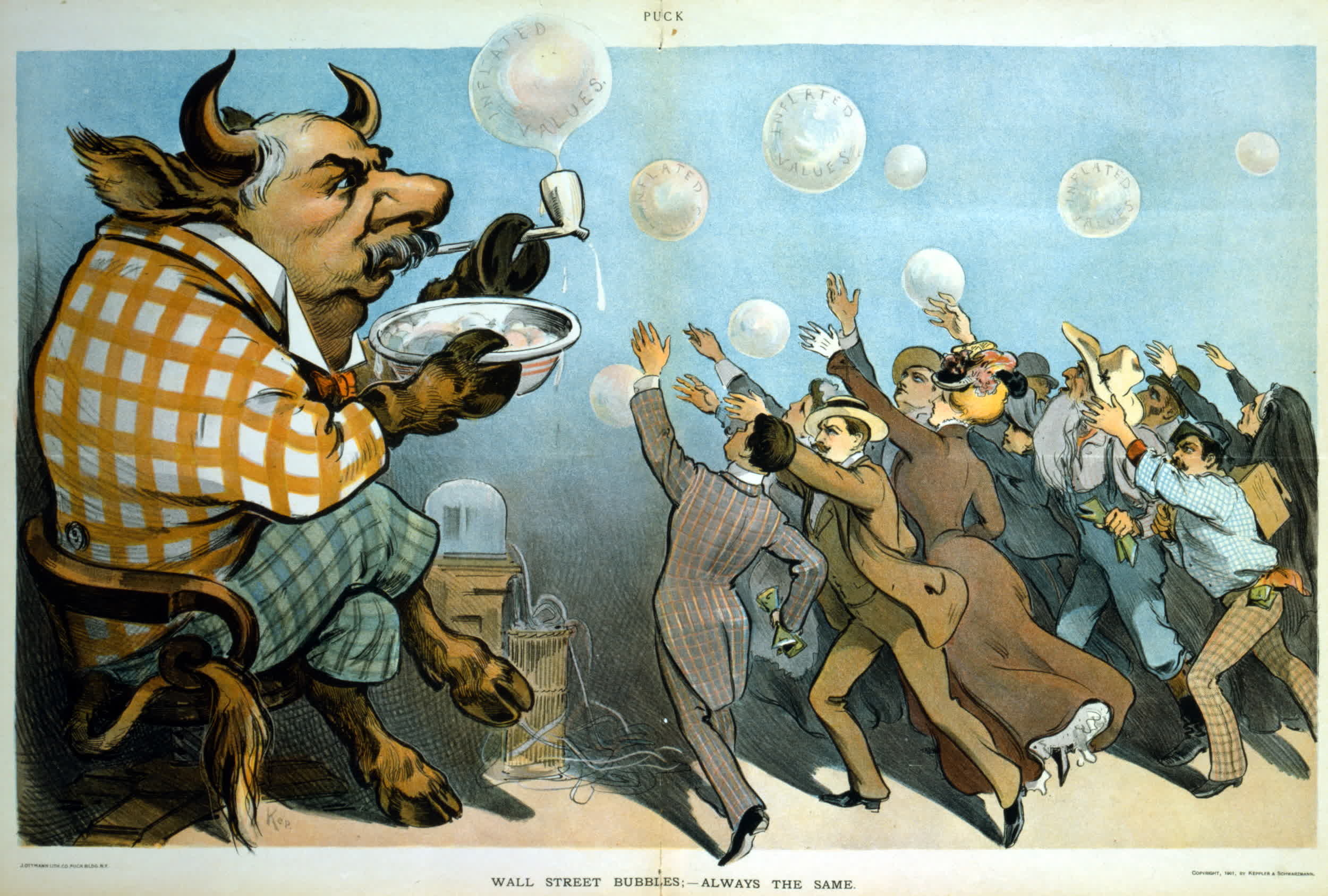
Investment firms, Big Tech, and Wall Street continue betting big on the promise of unparalleled productivity gains from AI. Wolfe said an unprecedented amount of capital is currently earmarked for future AI initiatives, while the "Mag 7" are generating massive cash flow from their products and services – but still showing little return on investment.

The Magnificent Seven refers to the market's most influential tech-driven companies – Apple, Microsoft, Alphabet, Amazon, Meta, Nvidia, and Tesla – which together make up a dominant portion of the S&P 500's total value.

"There are trillions of dollars that are being earmarked to be spent relative to hundreds of billions of dollars of free cash flow generated by the Mag 7," she said. "They're going to have to borrow to invest in all this CapEx, and we have yet to see the returns on investment."

Even worse, Big Tech's AI initiatives are unlikely to generate trillions in profits over the next five years. Simply put, the math does not support that kind of exponential return.

Analysts have also warned that when the AI bubble finally bursts, the broader US economy could suffer as a result. That is why Wolfe and Impactive Capital are focusing on alternative investments to shield clients from another dot-com – style collapse. The firm is currently eyeing Advanced Drainage Systems, an "AI-proof" company specializing in stormwater and residential septic solutions.

Permalink to story:

 
"Analysts have also warned that when the AI bubble finally bursts, the broader US economy could suffer as a result."

Considering like 40% of GDP and ~80% of stock market gains have been tied to AI...yeah, it's going to suffer. Because that's Depression levels of collapse.
 
There's always someone sounding some alarm.
If investors were really worried, they would behave as worried - something we do not observe. In fact, we observe the exact opposite.

The doom and gloom prophecies come mainly from troll farms, and from 'journalists' trying to grab attention with gloomy predictions.
AI is still in its infancy, Although corrections are inevitable, the general trend will not change. AI is not a bubble, just like the so-called "internet bubble" wasn't a bubble.
 
There's always someone sounding some alarm.
If investors were really worried, they would behave as worried - something we do not observe. In fact, we observe the exact opposite.

The doom and gloom prophecies come mainly from troll farms, and from 'journalists' trying to grab attention with gloomy predictions.
AI is still in its infancy, Although corrections are inevitable, the general trend will not change. AI is not a bubble, just like the so-called "internet bubble" wasn't a bubble.
Because investors are absolutely not sheep who make well informed decisions and avoid bubbles before they pop. History clearly shows this.

If you couldn't tell, I was being sarcastic. It's really simple: More money is going into AI then it is creating. That's the definition of a bubble, because it's not sustainable. Investors are "in" because of the expectation of future profit. If that profit fails to materialize (and in 95% of all use cases, it will), investors will pull their money, and those companies will fail, leading to more money being pulled.
 
Anyway, right now, I'm ready to grab one or two of your pathetic and useless AI accelerators, like 5090 or A6000, and even pay twice the price they're gonna have after the KrAsH. And hurry up, I won't be this generous when AI bubble bursts.
 
There's also the fact the law was changed this year, to allow private equity to offer 401ks the ability to buy in, so you can bail out the finance bros with your retirement!

Then there's the circular financing of the AI bubble, the obvious warning signs of liquidity issues, and the pricing issues in the mortgage sector back in 2019 that everyone forgot about because of the Red Lung.

The whole system is built on spit and tape. We never really recovered from 2008.
If your firm is not in the upper billions to trillions, then there is something to be worried about. The top 5 investment firms are in all the big tech. companies. So if the bubble bursts, you know who won't loose.
If its in the upper billions to trillions, its still something to worry about. The biggest investment firms LOVED CDOs in 2007.

If the market drops out, all those investors are gonna want their money, and with so much debt riding on the company's value a significant downturn is gonna spill blood like Vlad the Impaler after a bender.
 
Because investors are absolutely not sheep who make well informed decisions and avoid bubbles before they pop. History clearly shows this.

If you couldn't tell, I was being sarcastic. It's really simple: More money is going into AI then it is creating. That's the definition of a bubble, because it's not sustainable. Investors are "in" because of the expectation of future profit. If that profit fails to materialize (and in 95% of all use cases, it will), investors will pull their money, and those companies will fail, leading to more money being pulled.
Investors are often irrational for sure, I don't remember disputing that - I said claims they're worried were nonsense.
The fact investors can't foretell bubble bursts does not mean every hysterical article about a pending bubble burst is true - 99.9% of them are not. There are claims about a bubble since 2012 or so.

Of course currently more money is going into AI then it is creating. That's not "the definition of a bubble", that's how everything starts. It's literally impossible to create anything without going through a period of investments without returns, then investments exceeding returns etc.
 
How many time I heard all these analysts claiming about a market crash for the last 10 years? Almost EVERYDAY...

Everyone is citing them even if they have been wrong all the time. Hell, one day one is going to be right because a broken clock is right twice a day.
 
This is a new change from analysts, certainly no more than a few months. Only people I ever saw predicting a crash until recently was us armchair critics.
 
Just FYI, for context the returns in the Nasdaq were mental in the 1990s bubble:

1995: +42%
1996: +42%
1997: +20%
1998: +85% (mental)
1999: +101% (doubly mental)
2000: -36% (the "crash" continued into 2001)

We have not seen returns anywhere near that in the past few years:

2020: +47% (Covid stay at tech home world)
2021: +26%
2022: -32% (negative: 2022 bear market)
2023: +53%
2024: +24%
2025: +20%

So it's a huge difference in terms of "bubble". My guess is these people talking about a bubble are shorting the AI names and just want to profit.
 
Back