Microsoft is rethinking Windows 11 after months of complaints

Skye Jacobs

Posts: 2,030   +59
Staff
Highly anticipated: Microsoft is taking a closer look at Windows 11 after months of criticism over the operating system's uneven performance and intrusive AI features. The company has begun outlining a series of engineering fixes and user experience overhauls aimed at rebuilding confidence in its flagship product, with the first phase arriving in preview builds this spring and broader improvements planned throughout 2026.
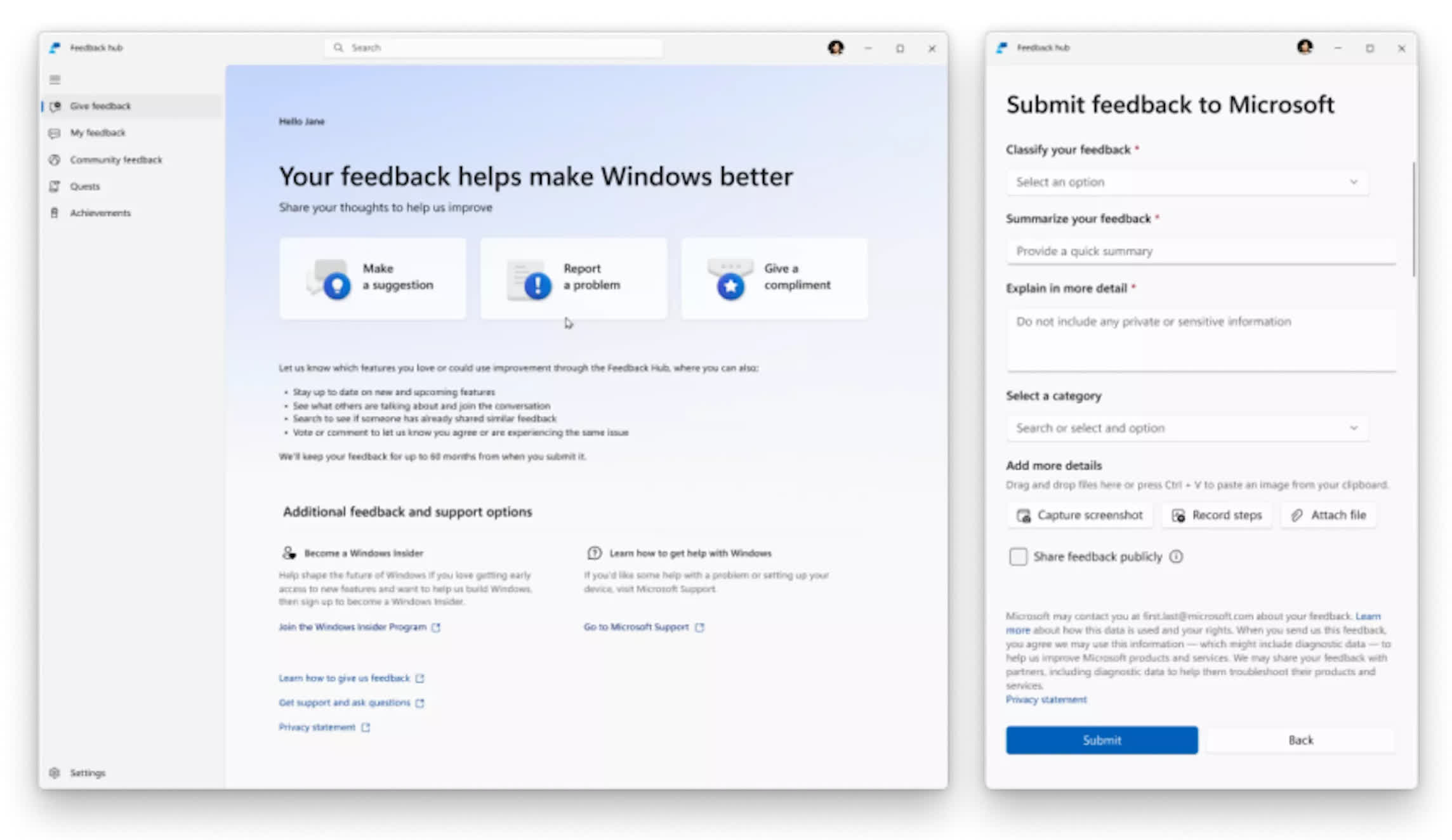
The effort is being led by Windows chief Pavan Davuluri, who has publicly acknowledged the extent of user frustration with Windows 11. In a recent company blog post, he said the Windows team had spent months analyzing user feedback to identify what he described as "the voice of people who care deeply about Windows and want it to be better." The message from that community was clear: make the operating system faster, more reliable, and less intrusive.

Performance and stability are at the top of Microsoft's priority list. The company is promising faster app launches, smoother navigation in File Explorer, and improved system responsiveness. Part of that effort involves reducing Windows' resource consumption and lowering its memory footprint – a critical step as the PC industry continues to grapple with tight memory supply and rising hardware costs.

Windows OEMs have been pushing for leaner builds that can run efficiently on systems with 8GB of RAM, especially as Apple's 8GB MacBook Neo has challenged long-standing assumptions about baseline performance.
File Explorer, which has drawn persistent complaints since Windows 11's launch, is receiving particular attention. Microsoft says the updates will make copying and moving large files faster and more reliable, while also improving overall responsiveness. Search and navigation will be refined to reduce lag and flicker, with more core interface elements transitioning to WinUI 3 to streamline the software's aging interface layer.

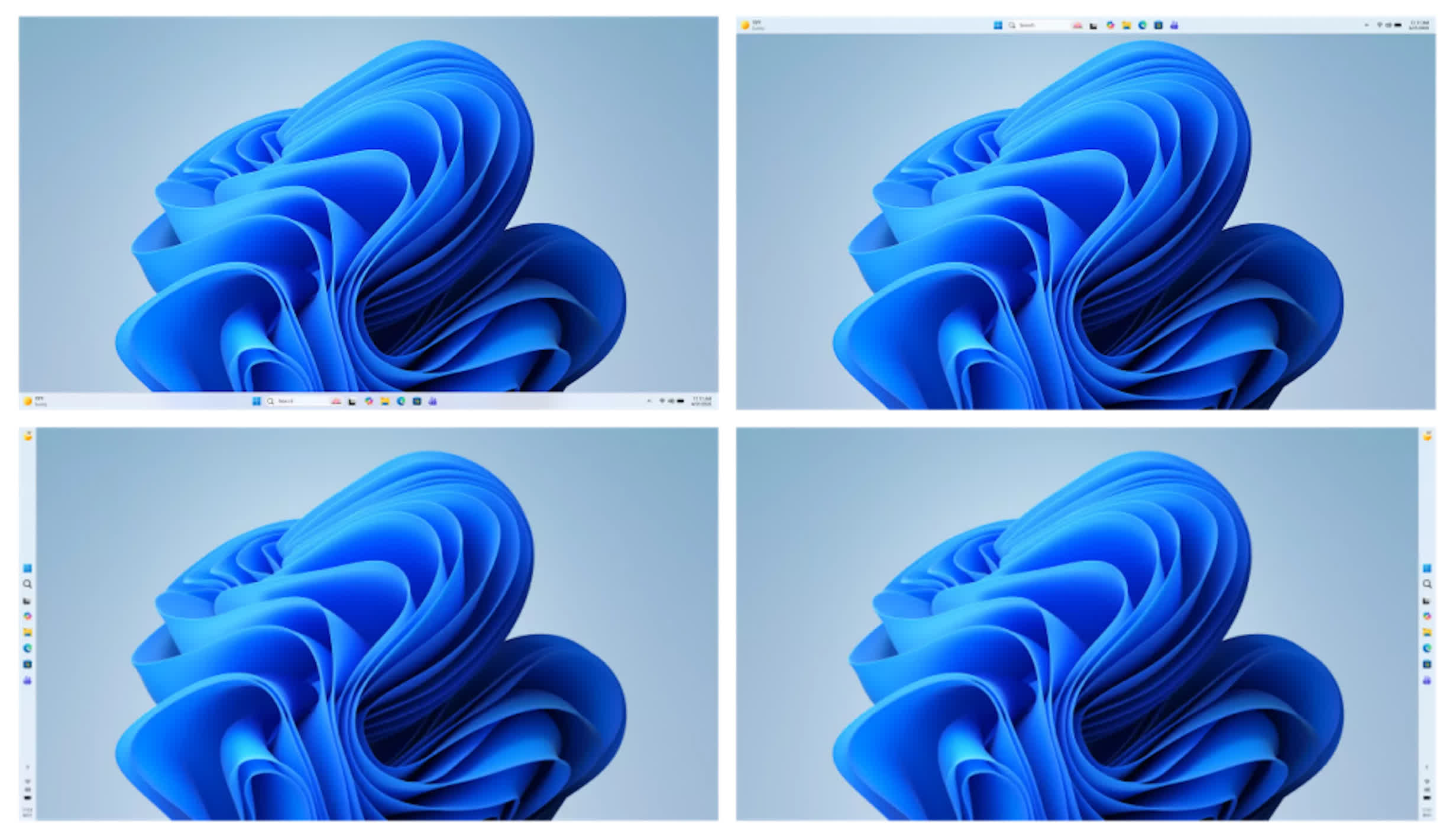
User convenience is another area where Microsoft has promised visible improvements. The taskbar – long locked to the bottom of the screen – will once again be repositionable, allowing it to be placed at the top or along the sides.

Users will also gain access to a smaller taskbar option and improved consistency between the Start menu and search interfaces, with clearer distinctions between local and web results. A quieter widget feed and reduced Microsoft Copilot integration in core apps, including Notepad and Photos, are part of the same push to cut unnecessary noise.
Windows Update, a longstanding source of user frustration, is also being reworked. Microsoft plans to limit reboots to a single monthly occurrence and allow users to postpone updates indefinitely. Devices will also be able to restart or shut down without forced patch installations.

The company aims to make setup less disruptive by giving users the option to skip update downloads during initial configuration. These changes, Davuluri said, stem directly from feedback calling for fewer interruptions and greater control over system behavior.

Under the hood, Microsoft says it is focusing on "baseline reliability." That includes reducing OS-level crashes and addressing longstanding pain points, such as inconsistent device wake behavior across laptops and handheld PCs. The company also plans to improve the stability of the Windows Insider Program, expand driver reliability testing, and enhance Windows Hello integration.

One issue Redmond has yet to resolve is the controversial requirement for a Microsoft account during system setup. Many users prefer to configure Windows offline with a local account, but the current onboarding process blocks that option without workarounds.

Scott Hanselman, a Microsoft vice president involved in Windows development, echoed that frustration in a public post on X, saying he "hates" the restriction and is "working on it." While any reversal of the policy remains under consideration, the comment signals a growing willingness among Microsoft engineers to engage publicly with community concerns.

For now, users can expect incremental Windows 11 preview updates through April, with broader refinements continuing throughout the year. The company's broader goal is to make Windows feel more consistent and predictable – less experimental and more dependable. Whether that will be enough to repair eroding trust among its most loyal customers will depend on how quickly these promises translate into tangible improvements.

Permalink to story:

 
They are finally getting the message about the parlous state of their OS. Whether they really do remove all the confrontational computing and dark patterns only time will tell but at least this acknowledgment of how bad it has become is a start.

Not sure how using WinUI 3 for explorer is going to make it faster than the current native C++ application. The XAML based UI mechanics in WinUI are super-inefficient compared to the direct calls to windows API's made currently, but I guess we'll see.

Edit: Oh and please do something about the awful new categories system on the start menu. It needs to make way better decisions about what categories items go into by default and needs to be fully user-customisable. At the moment it's completely unfit for purpose.
 
Not sure how using WinUI 3 for explorer is going to make it faster than the current native C++ application. The XAML based UI mechanics in WinUI are super-inefficient compared to the direct calls to windows API's made currently, but I guess we'll see.
I don't think there's anyone left there, at least outside of the core kernel team, that understands much about the internal Windows APIs. Most of the people who actually knew what the hell they were doing were let go years ago by Slopya.
 
I don't think there's anyone left there, at least outside of the core kernel team, that understands much about the internal Windows APIs. Most of the people who actually knew what the hell they were doing were let go years ago by Slopya.
They wouldn't know their WinMain from their WndProc. (Sorry very nerdy oldskool native windows application joke).
 
Correction, people have been complaining for years about the terrible state of the OS. But MS clearly did not bother and tripled down the path that most dislikes. Will they course correct? I highly doubt it. The Xbox UI is a good example of how they will address these issues, ie, by hiding them.
 
Correction, people have been complaining for years about the terrible state of the OS. But MS clearly did not bother and tripled down the path that most dislikes.
What gets me about this whole damn situation is that, as you've stated, people have been complaining about the state of Windows ever since Windows 10 was released. If you ask me, the last actually good version of Windows was Windows 7. Windows 7 was the GOAT!

With that being said, this whole situation feels like Microslop is only reacting because Apple came out with the MacBook Neo. Why did it take Apple to do this for Microslop to finally wake up and smell the coffee?
 
I will believe actions and results, when I'm experiencing these improvements IN Windows 11!! These promises are worthless, since a Microsoft promise has all the honesty of Bagdad Bob's updates!!
 
The Neo lit a fire, it seems. I can't think of another reason for the timing being what it is, though it's possible they were planning this before the Neo came out. Either way, as others have said, I'll believe it when I see it, too.
 
What gets me about this whole damn situation is that, as you've stated, people have been complaining about the state of Windows ever since Windows 10 was released. If you ask me, the last actually good version of Windows was Windows 7. Windows 7 was the GOAT!

With that being said, this whole situation feels like Microslop is only reacting because Apple came out with the MacBook Neo. Why did it take Apple to do this for Microslop to finally wake up and smell the coffee?

Real competition is better for everyone.

Apple put MS and the OEMs on notice. Just being cheaper than the MacBook Air won’t cut it anymore.
 
I sure hope they don't waste time trying to get it to run well on 8GB PCs. Make the core functionality run well on a mainstream CPU from the last 10 years with 16GB of RAM and an SSD.

Broken file explorer and search is embarrassing. Critical bugs should ship less than once year.

Next look at any of the anti-bloat tools and anti-consumer workarounds and pick the 50% of dark patterns you can deal with rolling back.

Then you probably stop the bleeding to mac and linux. Not great but "good enough" like Win 10.
 
Critical bugs should ship less than once year.
Exactly. The fact that damn near every Patch Tuesday results in sites like Bleeping Computer and, of course, this site publishing an article about something yet again breaking because of Microslop's stupidity is getting really old already.
Then you probably stop the bleeding to mac and linux. Not great but "good enough" like Win 10.
If you ask me, the damage has already been done. Slopya took what was once the computing juggernaut and destroyed any and all trust in them. It's going to take more than a few attaboy's to cover up for all the "oh shits" that they've been pulling in the last decade.
 
I sure hope they don't waste time trying to get it to run well on 8GB PCs. Make the core functionality run well on a mainstream CPU from the last 10 years with 16GB of RAM and an SSD.

Broken file explorer and search is embarrassing. Critical bugs should ship less than once year.

Next look at any of the anti-bloat tools and anti-consumer workarounds and pick the 50% of dark patterns you can deal with rolling back.

Then you probably stop the bleeding to mac and linux. Not great but "good enough" like Win 10.
So.....why dont you want them to optimize windows so it can run on 8GB PCs? Why limit optimizations?
What gets me about this whole damn situation is that, as you've stated, people have been complaining about the state of Windows ever since Windows 10 was released. If you ask me, the last actually good version of Windows was Windows 7. Windows 7 was the GOAT!

With that being said, this whole situation feels like Microslop is only reacting because Apple came out with the MacBook Neo. Why did it take Apple to do this for Microslop to finally wake up and smell the coffee?
Because $$$? Macbooks have always been niche products as has mac OS. People complain about everything, even when google brought shared purchases between android and PC platforms people whined about it. People have cried and gnashed their teeth at windows 8, then 10, then 11, but never stopped using it, or buying office, so there was 0 motivation for MS to change.

The Neo is a low cost threat that could make inroads into the consumer space that MS has a chokehold on and they now realize they might have to change their tactics.
 
It's good that Microsoft started to recognize that there is a problem with Windows, but I don't think this is the right approach.

Microsoft should start by going back to hiring and using internal QA / testing teams, which Nadella fired as soon as he took over.

At the moment, they shouldn't concern about making the OS faster. This could break things further, and Windows 11 is broken enough already. Just less intrusive, giving more freedom and customization to users (which are mostly usability issues), and more stable and reliable - especially the updates, since now every Windows update (even the ones that don't add new features and are just supposed to be focused on bugfixing and polishing), is always one step forward, two (or three) steps back.
 
It's good that Microsoft started to recognize that there is a problem with Windows, but I don't think this is the right approach.

Microsoft should start by going back to hiring and using internal QA / testing teams, which Nadella fired as soon as he took over.

At the moment, they shouldn't concern about making the OS faster. This could break things further, and Windows 11 is broken enough already. Just less intrusive, giving more freedom and customization to users (which are mostly usability issues), and more stable and reliable - especially the updates, since now every Windows update (even the ones that don't add new features and are just supposed to be focused on bugfixing and polishing), is always one step forward, two (or three) steps back.

This is an important point. A proper QA department should catch most of the problems the recent updates have had. A slower cadence too, apart from security fixes.

Also, sunk cost: the best strategy could be resetting the codebase, perhaps to 10, and porting what's necessary. From there, have a strict protocol about what gets committed, and work towards removing feature creep.
 
Since the end of October, 2025... I'm OK with using WinBloZe 10, both Pro and Enterprise. No more Terrible Tuesdays to muck things up, waiting forever on fixes or looking for workarounds. After using it for 7 years, it finally starts, executes and even shuts down like it's supposed to... most of the time.
 
If you are too dumb to not at least see online tools to reshape and alter win11 behavior you should stick to windows 10 or get a mac...

There are tons of registry tweaks and guides and offline tools to alter win11 to work better ... this is ""windows 10 sux" all over again when window 7 got two in the back of the head in a dark alley
 
There are tons of registry tweaks and guides and offline tools to alter win11 to work better
And the counter argument to that is that one shouldn't have to do all of that. We never had to remove such absolute garbage from a generic clean install of Windows back in the good old days of Windows 7.

The Windows of today is nothing more than an advertising vehicle for Microslop's services.
 
Back