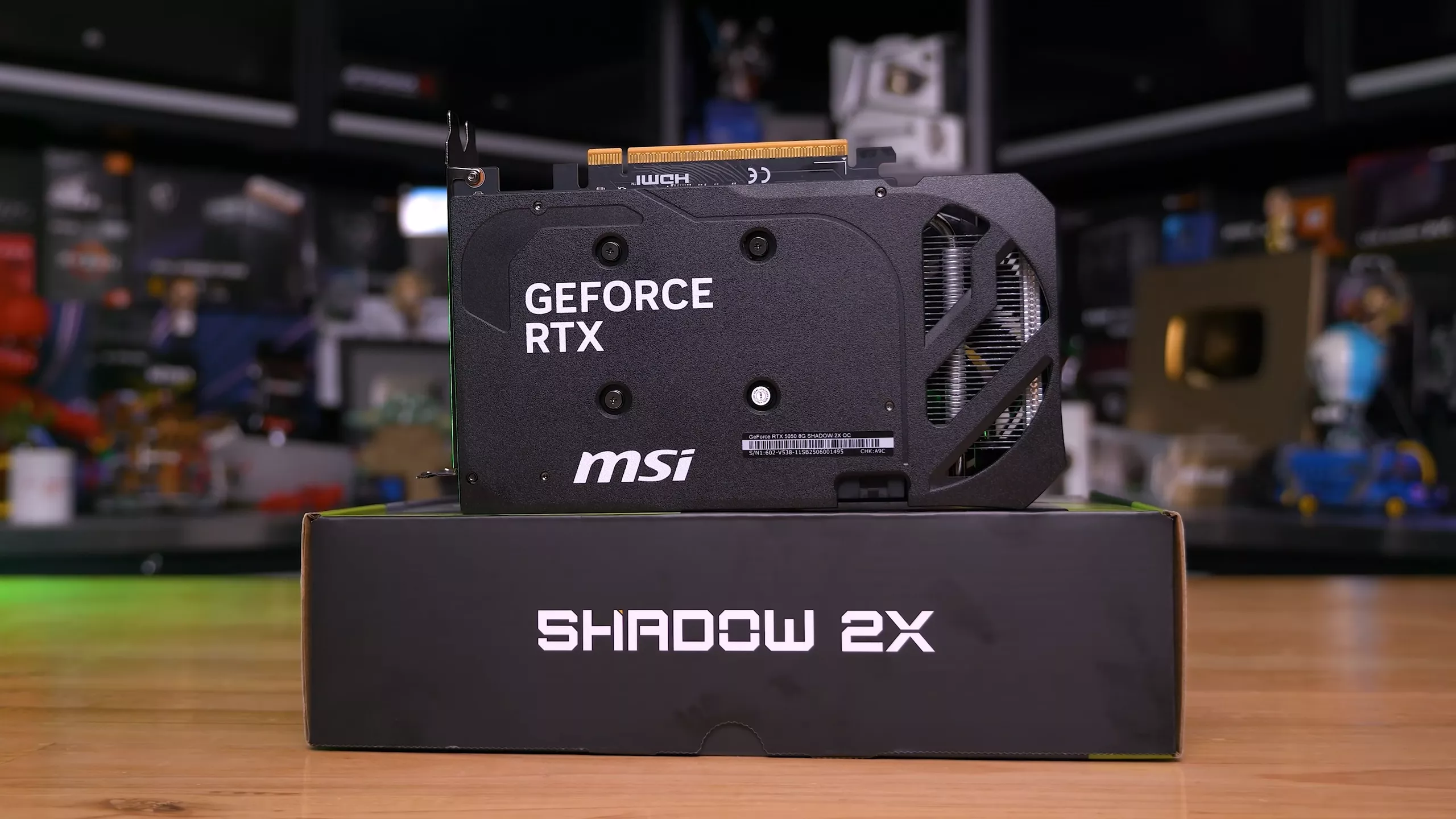
Nvidia RTX 5050 vs Intel Arc B580: Budget GPU Battle

The main problem continues to be drivers and the fact that very little games support XeSS.

Intel is always a few years behind as well. They need to be able to compete with 5060 and 9060 minimum. Not 5050 and 9050, which is mainly low-end OEM crap.

When Intel finally release B770/780 they might able to compete with 5060 and 9060 but shortly after, Nvidia and AMD probably will release their next gen products.

The best scenario would be Intel could compete with 70 series from Nvidia/AMD. Then we would have 3 major players and most GPU sales are done in this segment, and below.

DirectSR could be good for Intel. We need a standard really, or Nvidia will keep dominating upscaling support in games. XeSS support is really lacking behind FSR and FSR is already far behind DLSS, in terms of actual game support, which is massive on the RTX side. Also, DLSS 4 works in pretty much all DLSS 2+ games.

FSR Redstone will hopefully be good for AMD here. One dll with support for both FSR 3/4, meaning game developers will only have to implement one dll for supporting tons of GPUs. FSR 4 support also needs the help. Sadly RDNA 3 and older users, still fall back to FSR 3.1 which is far behind FSR 4 in terms of image quality.

Intel tho, left behind. Don't have the money to pay game developers and game developers cares very little as Intel has like 1% GPU marketshare.
 
Last edited:
Another factor could be power and size. 5050 exists as low profile, b580 does not, and the nvidia is considerably more efficient aside from the 130w vs 200w total. On the intel pro side is their continued driver work assuring better performance in the future for all kinds of titles whereas nvidia won't really get much more out of their hardware.
 
Another factor could be power and size. 5050 exists as low profile, b580 does not, and the nvidia is considerably more efficient aside from the 130w vs 200w total. On the intel pro side is their continued driver work assuring better performance in the future for all kinds of titles whereas nvidia won't really get much more out of their hardware.

Maybe, you don't really know if Intel can tweak drivers much further. Seems like they accepted the lacking performance in DX11 and older now. Focus is on DX12 and Vulkan, meaning forward looking (makes sense). However this can be a problem for people playing older games.

The varying performance in newer games is worring tho. Beats 5050 soundly in one, loses in another etc.

Besides, the increasing price for RAM is a huge problem for Intel, as they can't just smack 12-16GB VRAM on their GPUs anymore. Then MSRP will be too high for people to bother.

I think low-end GPUs will be the ones to suffer the most from the lack of RAM. They did not make much sense to begin with, now with expensive RAM, they make almost no point and they might as well use the RAM for higher end SKUs.
 
Maybe the a VRAM shortage will force developers to optimize? Bring on the 4GB GPUs.
 
So the best Intel has to offer is on par with the worst Nvidia has to offer?

I wish Intel could become a real competitor in this space but I wonder if they're doing their brand long term damage with this low budget strategy. If people start to develop a perception that Intel is basically low performance, it's going to be hard to sell them on the higher tier cards later on. If they keep this up that is.
 
Testing at ultra settings around the $250 price point feels like forcing a VRAM bottleneck to beat a drum on the recurring TR obsession with VRAM. Especially when Intel support and drivers are so hit and miss.

My laptop is older with 6GB VRAM and does surprisingly well when properly tuned for newer games (power draw and heat seem to be the sustained performance bottlenecks for this 3060, even after a repaste). No real consumer turns everything up to ultra on a weaker GPU and then throws out their device.

I miss the type of testing that HardOCP used to do where they figured out the best experience that a GPU could support in a given game instead of forcing bottlenecks.
 
I miss the type of testing that HardOCP used to do where they figured out the best experience that a GPU could support in a given game instead of forcing bottlenecks.

I miss HardOCP as well, but not for that. I found the testing you referenced to be very subjective - what they like to have turned on/off vs. what I prefer in a game. But if someone's preferences matched up, I see where it could have been nice.
 
I miss HardOCP as well, but not for that. I found the testing you referenced to be very subjective - what they like to have turned on/off vs. what I prefer in a game. But if someone's preferences matched up, I see where it could have been nice.
I thought that they did a pretty objective job of targeting a real-world gaming experience, and it's useful to understand what hardware can do at curated settings vs. maxed out. Because often we are making trade-offs and want to see what is possible, not just how say a budget card performs when all the sliders are turned up.
 
@Techspot

Thanks for showing us in detail what we already knew, the ARC B580 is a solid alternative to the RTX5060 and is better than the RTX5050.
 
I have seen so many people rag on the 5050, but my nephew told me that it is a few percentage points faster than a vanilla 2080. Surprised the hell out of me, honestly.

 
I have seen so many people rag on the 5050, but my nephew told me that it is a few percentage points faster than a vanilla 2080. Surprised the hell out of me, honestly.
The 5050 isn't bad when compared to previous generation cards. Once it's compared to other current market cards, it doesn't look so good anymore.
 
$250 10 years ago was about $160. That would have been about what a 1050 Ti was going for and nobody was happy with that. A 5050 is about 4X as fast and faster than a 1080 Ti with RTX shaders. Street prices have been falling a bit; I think they're pretty much inline for historic entry level graphics.
 
Back