Sundar Pichai says Google will deploy solar-powered data centers in space by 2027

DragonSlayer101

Posts: 992   +14
Staff
Looking ahead: Google may not be taking as many audacious moonshots as it did in its early years, but it remains at the forefront of global technological transformation, shaping how people work, communicate, and live. The company is now planning to revolutionize cloud computing services by deploying solar-powered data centers in space by 2027.
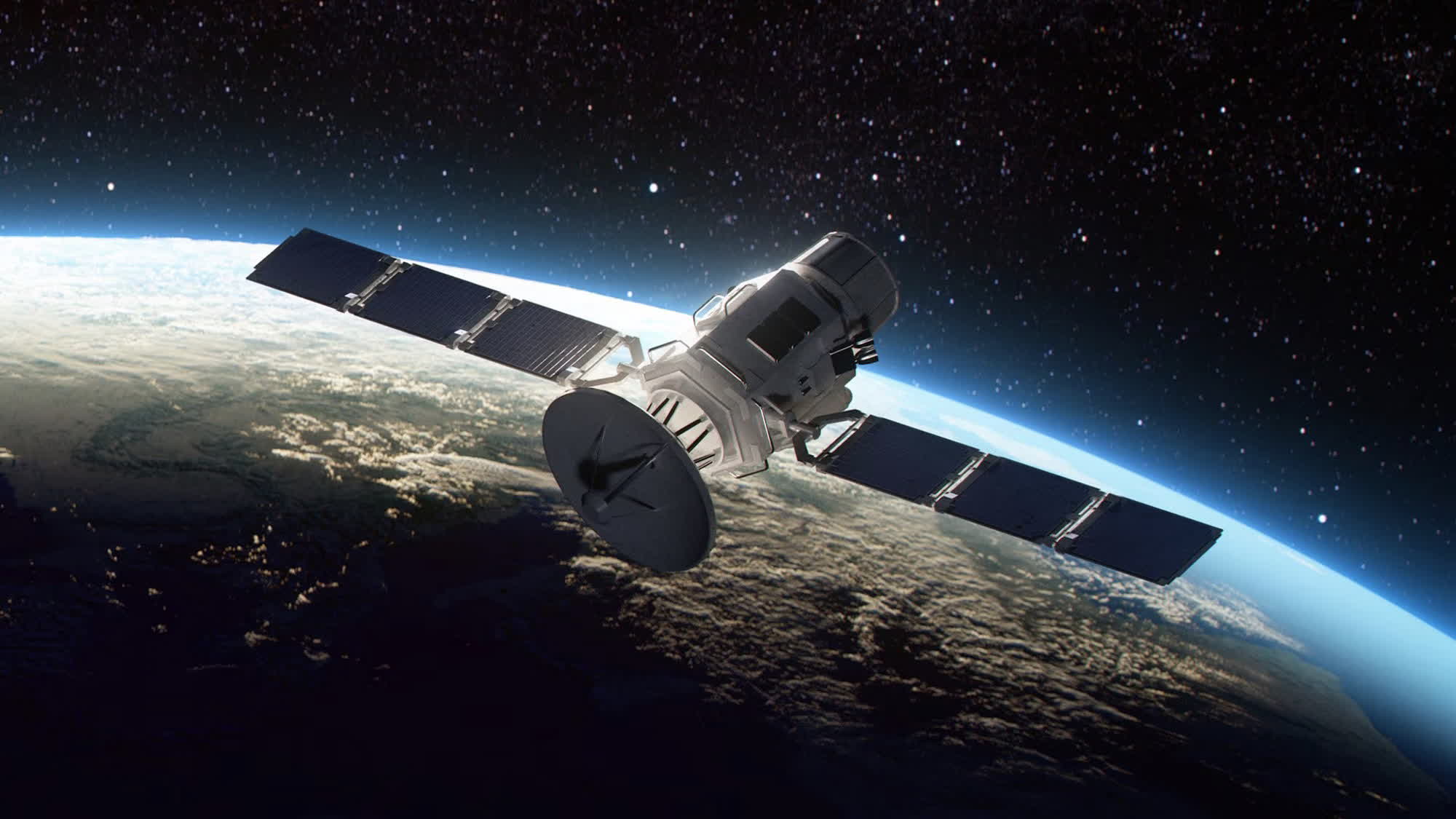
In an interview with Fox News over the weekend, Google CEO Sundar Pichai discussed the recently announced Project Suncatcher, which aims to find more efficient ways to power energy-hungry data centers by harnessing solar energy and potentially making them more sustainable than traditional facilities.

The space-based data centers are expected to go online in a limited capacity in 2027, with Google planning to send "tiny racks of machines" into orbit on two prototype satellites through a tie-up with Planet. Pichai added that he expects extraterrestrial data centers to become fairly common within ten years, with companies building giant gigawatt-scale facilities in space to power the AI boom.

Google announced Project Suncatcher last month, describing it as the best solution to the enormous power requirements of AI data centers. According to the company, the initiative is a "research moonshot" that will leverage solar energy to run satellite swarms powered by Tensor Processing Units (TPUs) that communicate with one another over laser links instead of fiber.

A 2024 Lawrence Berkeley National Laboratory report found that US data centers already use more than 4% of the country's electricity – putting a massive strain on power grids, driving up prices, and fueling protests in rural communities. Alarmingly, that figure is expected to rise to 12% by 2028 amid the continuing AI boom.

Google believes that scaling machine-learning compute in space will not only help meet AI data centers' insatiable demand for power, but also do so sustainably by substituting thermal power with solar.

The company is highly optimistic about the project and has published a preprint paper outlining plans to launch an interconnected network of solar-powered satellites running its TPU-based AI chips.

Google is not the only company bullish on data centers in space. Amazon founder Jeff Bezos recently claimed that space-based solar data centers will become common within the next 20 years and that they will also be more cost-effective than traditional data centers on Earth.

Permalink to story:

 
It says they are using TPU's.
So, GPUs with different name, designed more specifically for processing data than processing graphics. Still, made on TSMC lines, instead of Your next GPU.
But, Hey! Price of electricity will drop! Both because GPUs will be in space, and You won't be able to afford gaming rig. Win-win situation.
 
Moving significant weight to space is MONSTEROUSLY expensive. Like, on the cheap end, we're currently talking $1,225-$1814 per pound. The lightest 5090s weigh about 4.03 lbs, and the heaviest over 6. AI GPUs are even heavier, so we're being conservative here. That's $4936.75-$7350 PER GPU. A NVIDIA GB300 NVL72 rack of GPUs would cost likely around $440,000 to launch, not including the rack itself, just the GPUs.

And you say you're going to save money?

Bullspit.
 
Moving significant weight to space is MONSTEROUSLY expensive. Like, on the cheap end, we're currently talking $1,225-$1814 per pound. The lightest 5090s weigh about 4.03 lbs, and the heaviest over 6. AI GPUs are even heavier, so we're being conservative here. That's $4936.75-$7350 PER GPU. A NVIDIA GB300 NVL72 rack of GPUs would cost likely around $440,000 to launch, not including the rack itself, just the GPUs.

And you say you're going to save money?

Bullspit.
Getting the hardware up will be the most expensive part the cost over time will not be having be to cool it and the sun provide free power.
 
Getting the hardware up will be the most expensive part the cost over time will not be having be to cool it and the sun provide free power.
Eh? You know space isnt cold, right? It's a vacuum.

Cooling hardware in space is much harder then it is on earth. You are limited on actual heat output significantly because only radiation can be used. Just the cost of launcing a single 100k GPU datacenter into orbit would be $611 million jsut for the GPUs, not counting the racks, the satellites, or anything else, or the cost of any of this hardware. JUST the launch costs are $611 million just for the GPUs.

For the cost of the satellite, launches, controls, ece for a datacenter's worth of satellites, you could just build a datacenter on earth with its own power source, and be significantly cheaper in the long run. Even assuming you had 100k of the blackwell AI GPUs, said datacenter would pull $8,640 per hour in electricity. For the cost of launching JUST the GPUs into orbit, you could buy 70,736 hours of electricity at $0.20 per kWh. That is 2,947 days, or 8 years.

The TPUs or whatever they call them being launched into orbit will be obsolete long before then.
Umm, no.

Unless you consider a GPU to be just another name for a CPU too, in which case a TPU is a CPU, not a GPU.

Back in the real world though, completely different things.
It's all made on the same nodes. Call it a ROFLPU if you want, in the real world its still taking up manufacturing space and resources.
 
They will say any sci-fi bullshit just to keep the bubble growing.

Microsoft havily miscalculated by following Altman’s lies, by this time everyone realized how big is it but everyone career and money deep in this, so nobody wants it to burst and be the one holding the bag.
 
The TPUs or whatever they call them being launched into orbit will be obsolete long before then.
It's all made on the same nodes. Call it a ROFLPU if you want, in the real world its still taking up manufacturing space and resources.

Using manufacturing capacity is a wholly different conversation than what a CPU is.
 
So they resolved:
* Space radiation wrecking havoc on modern chips (it's why NASA kept using old chips made on old processes)
* Cooling (keeping heat in check in a vacuum isn't easy)
* Maintenance (sending out an astronaut every time?)
* Costs (launching stuff into space is awfully expensive)
* Hardware getting outdated (current hardware isn't going to compare favorably to that of the stuff in 10 years)

---

Dunno, just figuring out how to get more energy greenlit and building a data center next to it seems a lot easier.
 
There’s no way it will be cheaper. Data centres require regular replacements and upgrades. How are they going to manage that without incurring astronomical expenses?
 
Getting the hardware up will be the most expensive part the cost over time will not be having be to cool it and the sun provide free power.
Bro, do some research. Cooling in space is very hard because you can't rely on convection or conduction to remove heat. Only radiative cooling works and that requires a LOT of mass (aka launch costs).

Degradation of the solar panels in space is much faster than in Earth's atmosphere, maybe as much as 8x faster due to radiation, micrometeoroids, thermal cycling due to day/night exposure, atomic oxygen which is very corrosive in the upper atmosphere, etc.

And all of this ignores the servicing and maintenance costs. What, you are going to send up an astronaut every time you need to replace a chip or DRAM or NAND that malfunctions from radiation or just regular wear and tear?

This is just marketing hype and lies from Pichai, to keep the stock price up. Nothing more, nothing less than that.
 
Back