You can now rent an LG TV for hundreds per month instead of buying it

Daniel Sims

Posts: 2,416   +73
Staff
TL;DR: As premium electronics grow more expensive, manufacturers like LG are using rentals to entice customers across various budget levels. The company's new UK rental program offers high-end TVs for a few hundred dollars a month, but the math reveals a costly trade-off: rentals will eventually exceed MSRP.
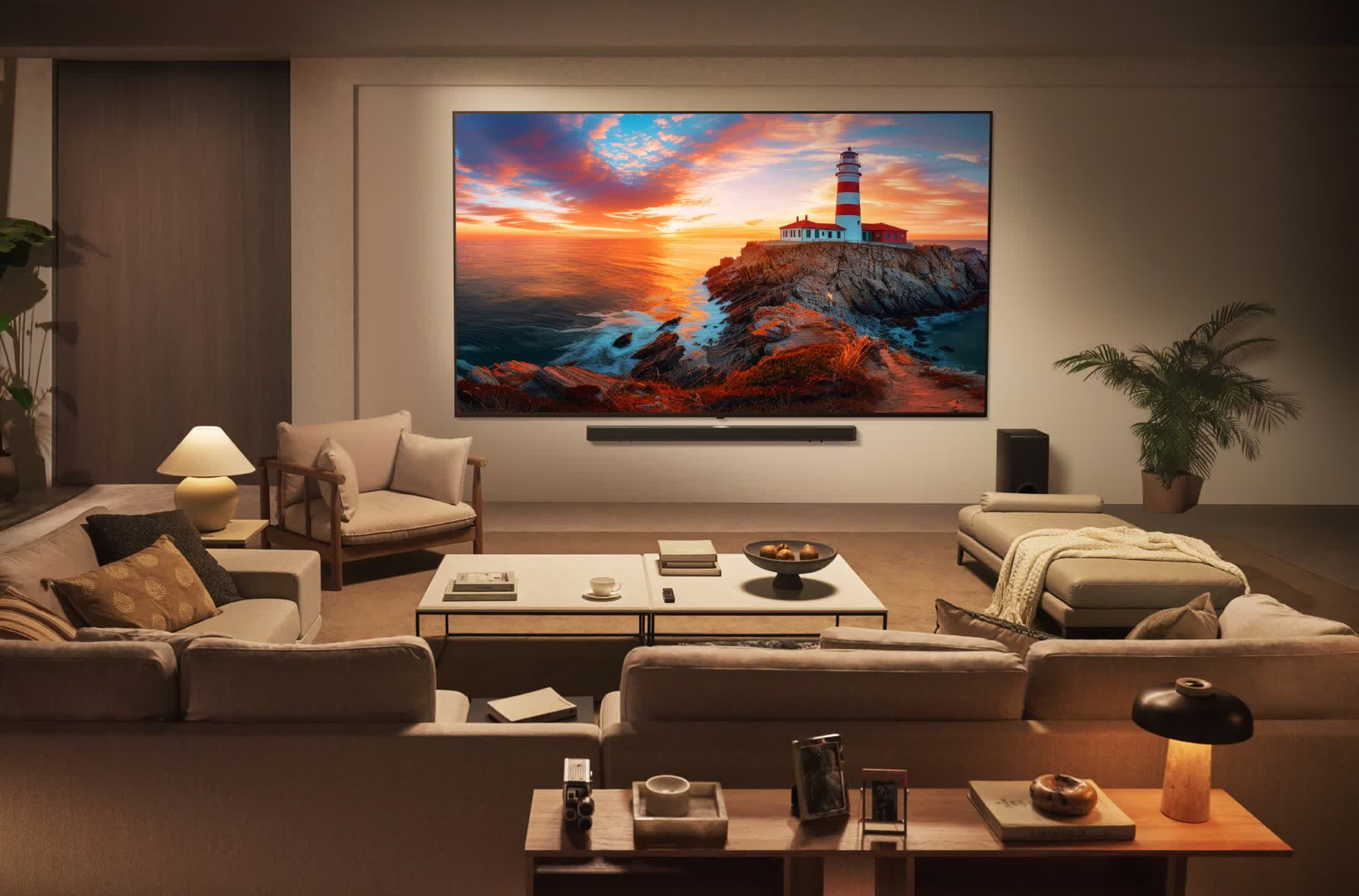
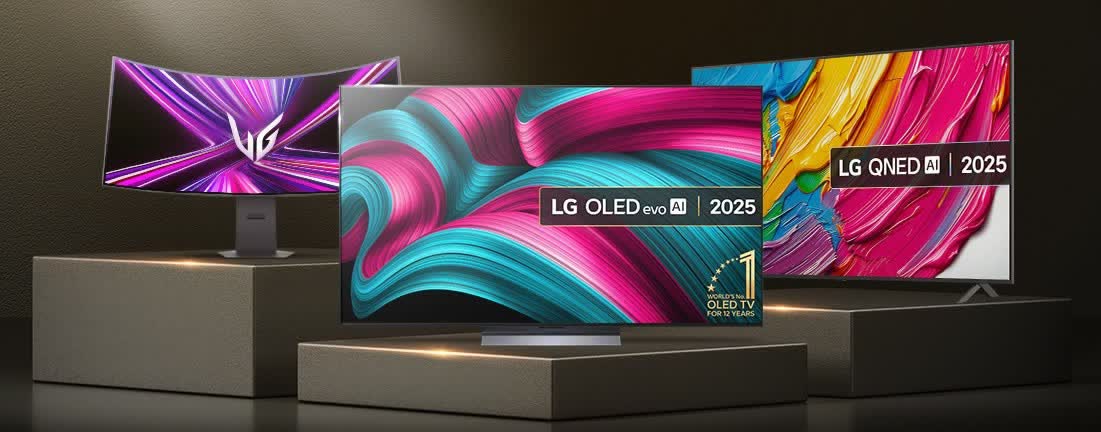
A wide selection of OLED, MiniLED, and QNED TVs and soundbars is now available on LG's UK website at no up-front cost as part of a rental program through Raylo. Customers can choose from multiple rental plans at various prices, and there are no extra cancellation fees.

To begin, select a TV or soundbar from the page for the company's subscription service, called Flex, and click the subscription button instead of adding it to the cart. After a free 14-day trial period, customers can begin monthly payments or commit to a one, two, or three-year plan. When a plan ends, customers can return the TV for a £50 (about $70) removal fee, continue renting it, or upgrade to a newer model at no additional cost.
Viewing the rental prices requires a UK address, but Ars Technica reports that, for example, LG's 83-inch OLED B5 2025 TV costs £277 ($382) for one month, and £93 ($128) per month over a three-year plan. However, the rental would exceed the £2,550 ($3,515) MSRP after about two years and three months under the three-year option, and just nine months under the standard plan. Meanwhile, the company's cheapest soundbar, a 2024 3.1.1 model with Dolby Atmos, is available with monthly plans ranging from £22 ($30) to £76 ($105).

Flex might be useful for people, companies, and organizations seeking to rent high-end displays for short periods. However, the service could become a trap for those seeking to keep the TVs but who could not ordinarily afford them. LG has not disclosed plans to expand Flex beyond the UK.
While subscription software is nothing new, subscription hardware appears to be a growing trend. HP introduced a monthly printer subscription in 2024, which includes automatic ink refills and 24/7 customer service, starting at $8 per month. That same year, NZXT began offering upper-midrange gaming PCs with round-the-clock customer support, starting at $54 per month, through a service also called Flex. Cloud gaming services such as Nvidia's GeForce NOW and Microsoft's Xbox Cloud Gaming could also be considered hardware rentals.

As rising prices put high-end hardware further out of the reach of many users and upper-income households drive the majority of spending, some fear that tech companies are attempting to turn owners into renters.

Permalink to story:

 
Rental is almost always economically a bad decision. This is no exception.
TV's are very reliable these days so a 2 year old set (about the time this takes to fully pay the RRP) is basically brand new. Even if you argue that you like to upgrade every couple of years then the resale value of a 2 year old set would make this madness.
 
Rent to own is bad unless it is the zero interest kind used for things like phones (at which point it's smart since you are paying back with inflated dollars later in the exchange).

But to be fair, the LG interest here is lower than putting it on a credit card for the same period.
 
Was it W.C. Fields who said "Never give a sucker an even break"..

Strikes me that the US is full of them.
 
When I landed from the US into the UK in the mid-80s, TV rentals were EVERYWHERE. Radio Rentals, Granada, Visionhire, Rumbelows… you couldn’t walk ten yards down a high street without another shop window proudly advertising the cash price next to the monthly rental.

It gave me an immediate sense of “what the hell is this place?” — a country so broke AF it had normalised renting basic household goods. Wow - pay 3x the value of the TV, never own it, then call it 'consumer choice', ha ha.

Don’t get me started on the cars either. Yes, smaller and often more “efficient” — but also less powerful, less durable, less comfortable, and usually still somehow *more expensive to keep running*.

By ’89 I was a school leaver, the UK was in recession, the job market was BLEAK, and the whole place felt like managed decline. I remember thinking very clearly: get me the hell outta here. The raves, good fashion & music is no replacement for a stagnant economy. Eventually, I did leave. Is the UK any better now? Go take a look — it’s grim.

So LG proudly reinventing 1985 Radio Rentals as a “subscription lifestyle product” should ring serious 'financial household alarm bells', as far as I see it.
 
When I landed from the US into the UK in the mid-80s, TV rentals were EVERYWHERE. Radio Rentals, Granada, Visionhire, Rumbelows… you couldn’t walk ten yards down a high street without another shop window proudly advertising the cash price next to the monthly rental.

It gave me an immediate sense of “what the hell is this place?” — a country so broke AF it had normalised renting basic household goods. Wow - pay 3x the value of the TV, never own it, then call it 'consumer choice', ha ha.

Don’t get me started on the cars either. Yes, smaller and often more “efficient” — but also less powerful, less durable, less comfortable, and usually still somehow *more expensive to keep running*.

By ’89 I was a school leaver, the UK was in recession, the job market was BLEAK, and the whole place felt like managed decline. I remember thinking very clearly: get me the hell outta here. The raves, good fashion & music is no replacement for a stagnant economy. Eventually, I did leave. Is the UK any better now? Go take a look — it’s grim.

So LG proudly reinventing 1985 Radio Rentals as a “subscription lifestyle product” should ring serious 'financial household alarm bells', as far as I see it.
I agree, renting is a crazy idea today. When I first arrived in UK in the late 60s the price of a new TV was not much less than those small cars you don't understand. The TVs weren't all that reliable and a repair man was hard to find. If you rented the repair or replacement was free. It made sense back then. So did the small cars. There were a small number of full size American cars there but since the roads were not big enough to swallow large numbers of them they simply did not catch on. At the time a gallon of Chevron ethyl in the US was under 30 cents a gallon so a big engine was no big deal. In England that gallon was about 5 times the price. You work it out.
 
Rent to own is bad unless it is the zero interest kind used for things like phones (at which point it's smart since you are paying back with inflated dollars later in the exchange).

But to be fair, the LG interest here is lower than putting it on a credit card for the same period.
I tend to pay all my monthly occuring fixed expenses at the beginning of the year up front. Mobile subscription, car insurance, internet, flat's maintenence fee. That way I have less worry for the whole year.
 
I tend to pay all my monthly occuring fixed expenses at the beginning of the year up front. Mobile subscription, car insurance, internet, flat's maintenence fee. That way I have less worry for the whole year.
Auto-pay does the same thing without sacrificing the time value of money (TVM is a foundational financial principle).
 
I just entertain myself with low end HiSense. If they break, which hasn't happened to me as of yet. I'd just throw it away and buy another, bigger, one.

And BTW, if you're willing to submit to a Google OS, they're another $50.00 cheaper then the incredibly cheap they already are with Roku.

At last check, I think I have a 36", a 40", a 46", a 58", and a 65", all working the last time I checked.

I know I should "need" a $1,000.+ OLED, but bear with me, I don't know any better.
 
Back