
The big picture: Chinese entrepreneur Lu Heng has built a global IPv4 leasing business from addresses initially allocated to Africa, igniting a legal and political fight over who should control one of the internet's scarcest resources. His model has given companies an additional source of IPv4 addresses while leaving African network operators to argue that space meant to support regional growth was diverted into a private arbitrage play. Altogether, Lu has accumulated more than 10 million IPv4 addresses, prompting backlash from African providers and internet governance figures.
Lu grew up in the Chinese fishing village of Shipu and moved from selling online game time cards in college to running an internet service firm in the Netherlands, where he learned how IP addresses underpin connectivity.
In his mid-20s, he began treating IPv4 blocks as financial assets, reasoning that legacy allocations, often underused, could be acquired at low cost and leased under clear contracts to operators facing shortages. His goal was to introduce a transparent, market-based leasing model into a system that had long treated address space mainly as an administrative record.
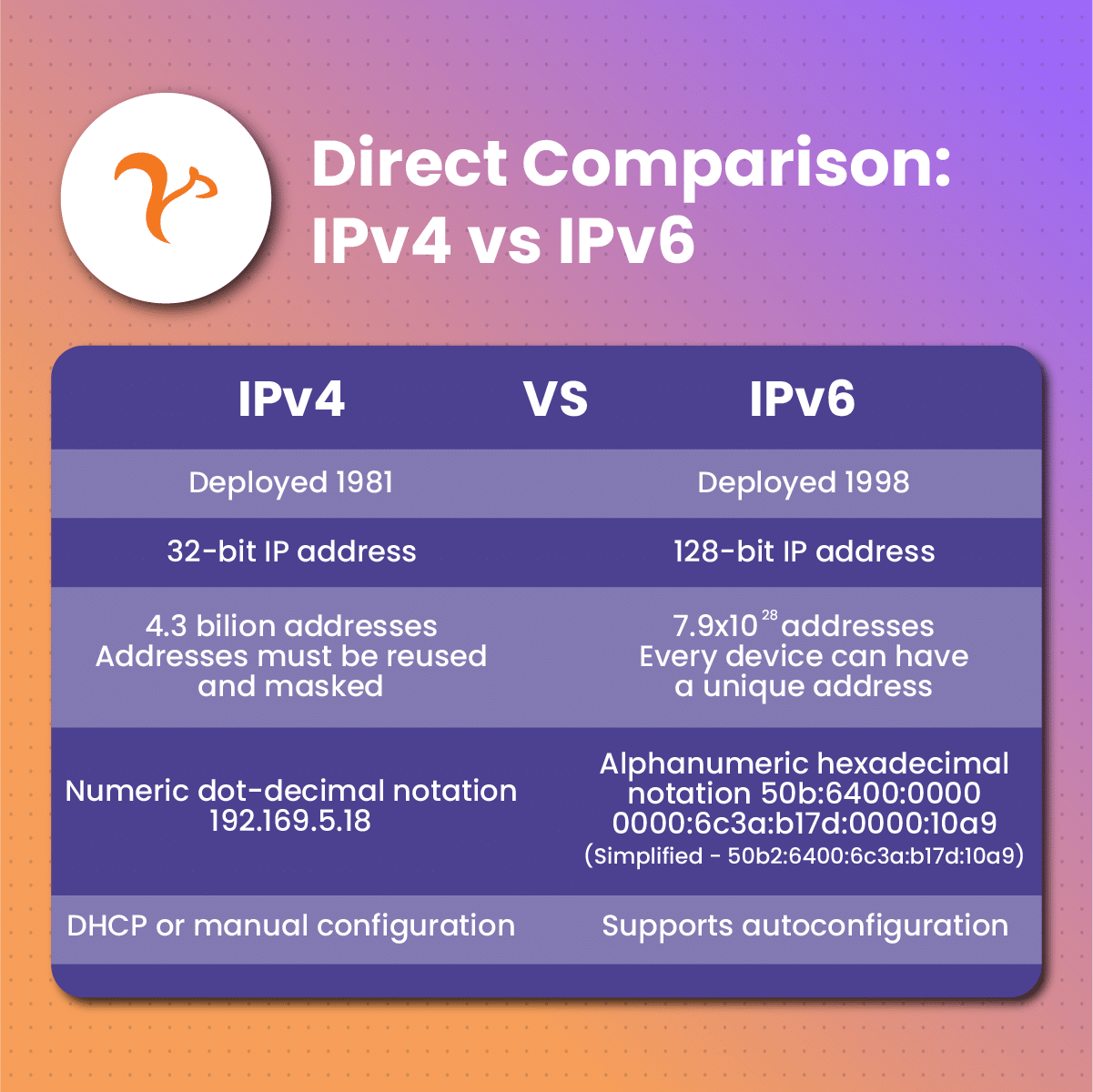
At the core of the conflict are the technical limits of IPv4 and the uneven transition to IPv6. IPv4's 32-bit space yields roughly 4.3 billion unique addresses – once a vast supply, now constrained by the explosion of connected devices and always-on cloud services.
IPv6 was introduced in 2012 with 128-bit addresses which effectively removes scarcity. Yet many networks and devices still depend on IPv4, and dual-stack and translation architectures keep demand high for routable IPv4 space.
Address allocation is handled by five regional internet registries, or RIRs, which record who holds which prefix and set policies for use and transfer. Africa's registry, the African Network Information Centre (Afrinic), is the only one that still has IPv4 addresses left in its original pool, due largely to slower infrastructure build-out on the continent.
That remaining stock, combined with older and loosely drafted policies, made Afrinic's space an attractive target for anyone seeking large blocks at allocation prices rather than full market rates.
In 2013, Lu registered "Cloud Innovation" in the Seychelles, which falls under Afrinic's jurisdiction, and used it to request IPv4 space. Between 2013 and 2016, Afrinic allocated the company 6.2 million IPv4 addresses, more than all of Nigeria has been assigned, despite its status as Africa's most populous country.
Lu also established Hong Kong-based Larus as the commercial arm for leasing addresses, with typical economics of about $50 per IPv4 address on transfer to an intermediary, and annual lease fees around 5% to 10% of that value. He told the Wall Street Journal that Larus and affiliates now control just over 10 million IPv4 addresses, making them a major player in the secondary IPv4 market.
From the outset, Lu has argued that early internet designers underestimated the economic value of IP space and failed to foresee the emergence of structured markets for it. In correspondence with the Journal, he framed his business as a way to unlock idle capacity using concepts borrowed from other asset classes: clear ownership records, enforceable leasing contracts, and pricing based on scarcity.
Critics counter that he exploited ambiguity in Afrinic's rules by obtaining addresses as an African operator, then repurposing them into a global leasing pool that heavily served demand in China and elsewhere.

Afrinic moved to confront the practice in 2020 after an internal review. The registry sent letters to Lu and other holders of sizeable blocks, asserting that some uses violated Afrinic policy – particularly leasing and off-region deployment. In Cloud Innovation's case, Afrinic said addresses allocated for networks in Africa were being used largely outside the continent, contrary to how the registry viewed its mandate.
Lu responded that, when Cloud Innovation obtained and began using the addresses, Afrinic had no explicit ban on leasing and no obligation to keep space in-region or to return it if business plans changed, a position he reiterated to the Wall Street Journal.
The dispute quickly escalated in court. Lu sued Afrinic in Mauritius, where the registry is incorporated, to preserve his allocations, eventually filing dozens of cases that entangled Afrinic's finances and governance.
Scholar Milton Mueller, who has advised RIRs on policy, told the Journal that Afrinic's rules at the time did not clearly bar off-region use. However, they did require disclosure when addresses were further assigned – a requirement he called onerous at scale. Mueller supports formal markets for buying and selling IPv4 and described Lu's model as part of a broader trend already visible in other regions, even if Lu himself is unpopular in governance circles.

For African operators, the practical damage came when one of Lu's lawsuits led a Mauritian court to freeze Afrinic's bank accounts in mid-2021, pushing the registry into receivership. With finances blocked, new IPv4 allocations largely stopped.
Afrinic's governance has struggled under the pressure. Board elections scheduled for June were annulled by the court-appointed receiver over alleged fraud, prolonging a period of unusual oversight. In July, Cloud Innovation petitioned Mauritius's Supreme Court to dissolve Afrinic, arguing that the registry's paralyzed status threatened African internet stability and suggesting that another region's registry could manage Africa's address space.
Days later, Mauritius's prime minister halted all Afrinic-related proceedings pending a review, saying in an official notice that the path into receivership appeared legally questionable.
A new Afrinic board was elected in September, and some African providers have since obtained fresh IPv4 allocations, signaling a partial return to normal operations. Yet the underlying question remains unresolved: should IPv4 addresses function as tradable assets controlled by those able to secure large blocks, or as constrained public resources managed through cooperative policy with regional development in mind?