
The takeaway: The Epic Games Store has spent the past several years trying to compete with Steam by offering developers a more generous revenue split, giving away free games, and securing exclusive titles. However, a review of the platform's last six annual reports suggests those efforts have failed to meaningfully increase spending on third-party games, despite a dramatic rise in the store's user base.
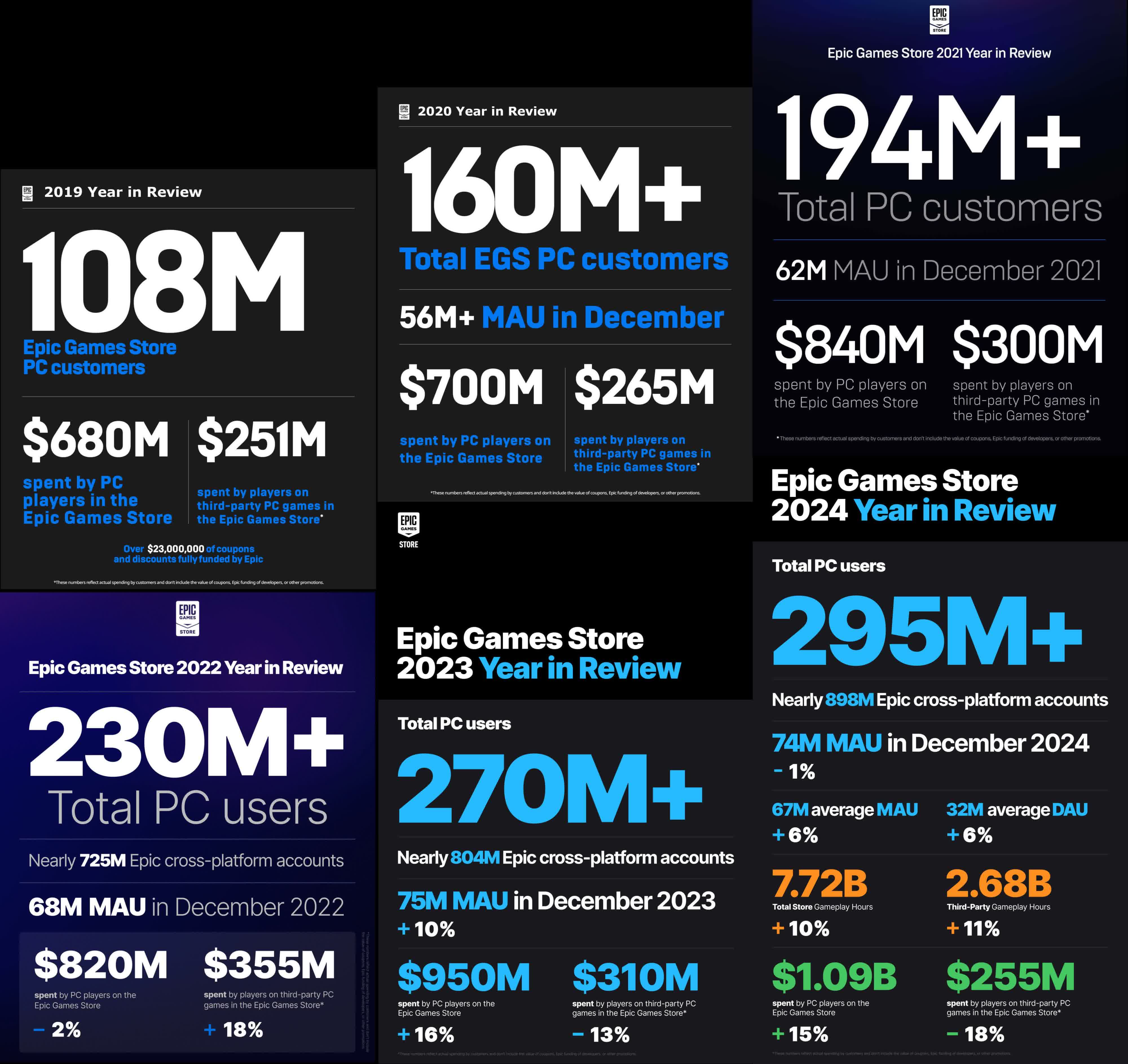
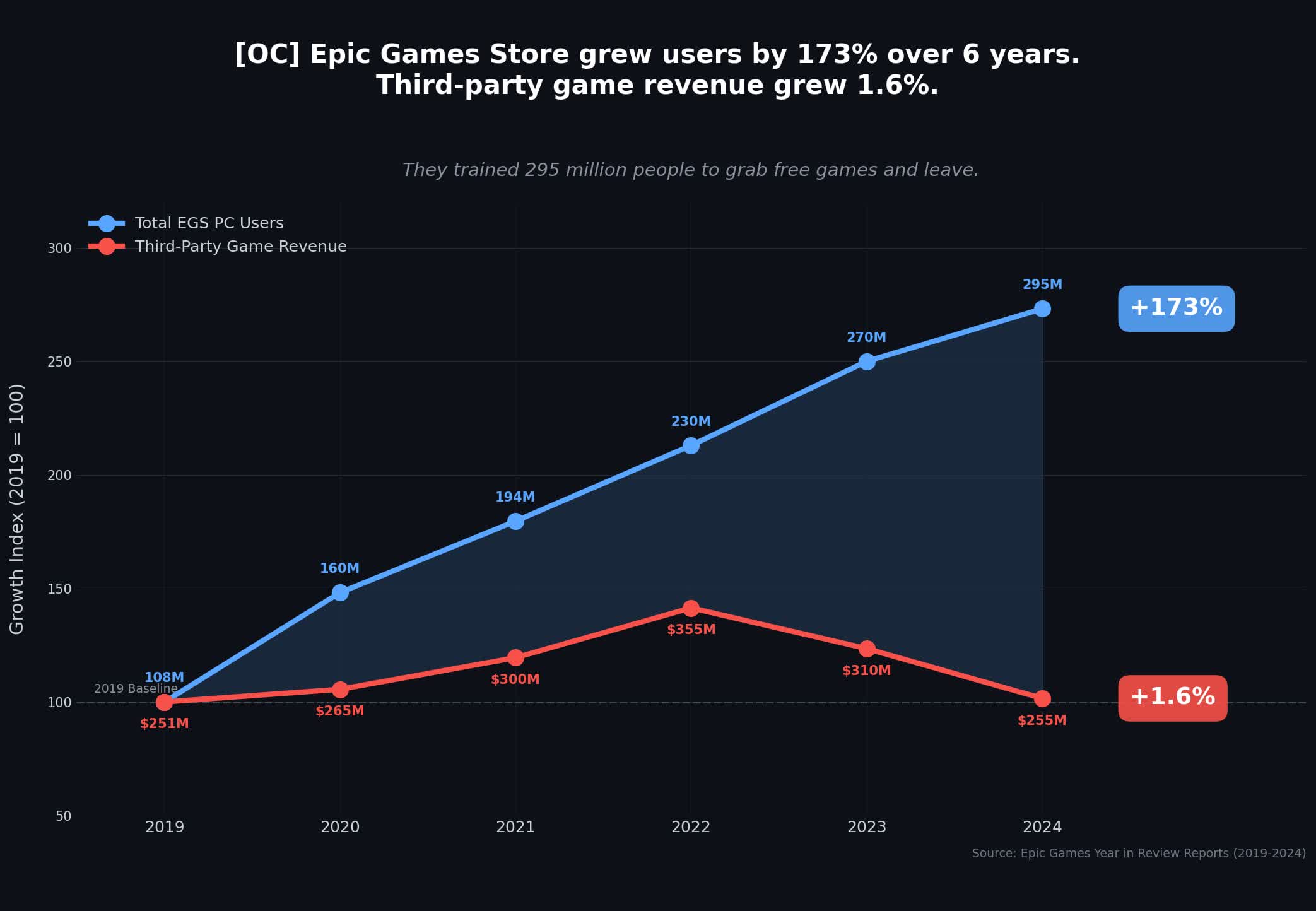
A chart recently shared on social media shows that spending on third-party games on the Epic Games Store grew by just 1.6% between 2019 and 2024. The data, drawn from Epic's annual review blog posts (see below), reveals that revenue climbed steadily until 2022 before reversing course and falling back to nearly the same level seen when the store first opened.
Between 2019 and 2022, third-party revenue rose from $251 million to $355 million. Revenue in 2022 increased by a notable 18% over the previous year, but dropped 13% in 2023 to $310 million and declined another 18% in 2024. By the end of that period, customers were spending only $4 million more on third-party games than they had in 2019.
That stagnation stands in stark contrast to the platform's rapid growth in users. Over the same period, the number of PC users climbed 173%, from 108 million in 2019 to 295 million in 2024.
The widening gap suggests many users may be signing up primarily to claim free games rather than to make purchases.
High-profile exclusives such as Tony Hawk's Pro Skater 1 + 2, Tetris Effect, Kingdom Hearts, and Alan Wake II also appear to have generated limited spending. Of those titles, Alan Wake II remains the only major release still unavailable on Steam.
Critics often point to the Epic Games launcher itself, which many describe as sluggish compared to Valve's storefront – now widely seen as a de facto monopoly. Although Epic's launcher has gained numerous critical features over the past several years, it remains far behind Steam's functionality.
Fortnite microtransactions likely account for a significant share of Epic store's overall revenue. In every year reported, spending on third-party games represented less than half of total revenue, and that share has continued to shrink since 2022. Unlike third-party sales, total store revenue grew by 60%, rising from $680 million in 2019 to $1.09 billion in 2024.
Epic is expected to publish its 2025 post-mortem in the coming weeks, which should offer a clearer picture of whether the store's strategy is beginning to shift or not at all.