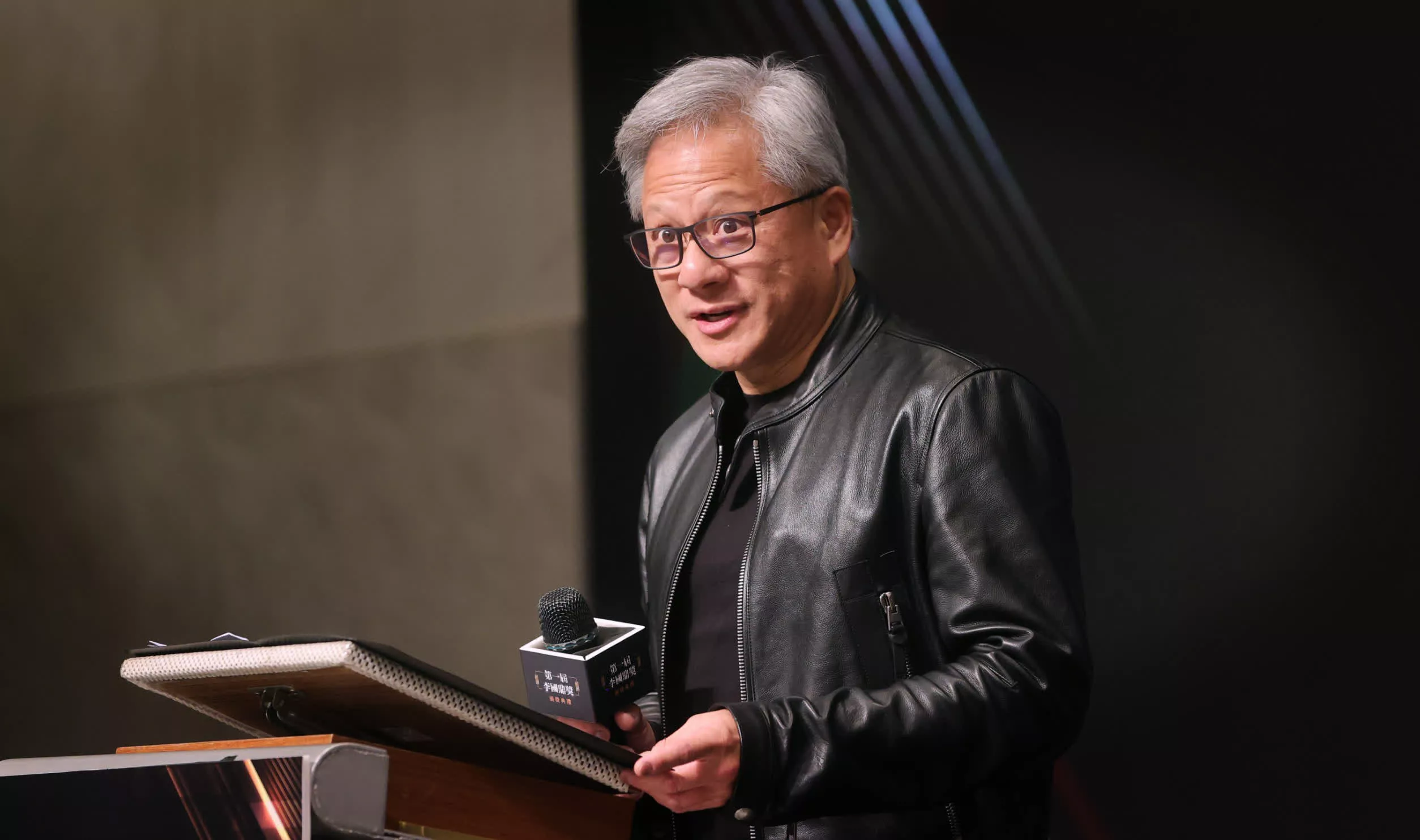
A hot potato: Ever since ChatGPT was released to the masses, there's been a lot of negativity around generative AI – from the number of jobs its set to make obsolete to more extreme concerns like an apocalyptic event. Nvidia's Jensen Huang isn't happy about it, claiming that this "doomer narrative" is "not helpful to society." It's not an entirely unsurprising view from the CEO of the company whose hardware powers the AI industry.
Huang made his feelings about AI skeptics, haters, and doom-mongers clear on a recent episode of the No Priors podcast.
The boss of the world's most valuable company said "the battle of the narratives" between those who think AI will benefit society and those who believe it will degrade or even destroy it was one of his biggest takeaways from 2025.
Huang did admit that "it's too simplistic" to dismiss either of these views entirely, but he believes some naysayers' views are having a detrimental effect.
"I think we've done a lot of damage with very well-respected people who have painted a doomer narrative, end of the world narrative, science fiction narrative," Huang said.
"And I appreciate that many of us grew up and enjoyed science fiction, but it's not helpful. It's not helpful to people. It's not helpful to the industry. It's not helpful to society. It's not helpful to the governments."
Huang never named names, but he's spoken out against those who've warned about AI's consequences in the past. Last June, soon after Anthropic leader Dario Amodei said that AI could wipe out about half of all entry-level white-collar jobs in the next five years, leading to unemployment spikes up to 20%, Huang said he "pretty much disagree[d] with almost everything" his fellow CEO said.
Huang appeared to reference Amodei again during the No Priors podcast. He said no company should ask governments for more AI regulation.
"Their intentions are clearly deeply conflicted, and their intentions are clearly not completely in the best interest of society," he said. "I mean, they're obviously CEOs, they're obviously companies, and obviously they're advocating for themselves."
In May 2025, Huang and Amodei clashed over the AI Diffusion Rules that restrict the export of advanced AI technologies to countries such as China.
Anthropic has argued for tighter controls and enforcement, and highlighted some of the unusual cases of people smuggling chips into the Asian nation. Nvidia hit back, stating its chips have never been smuggled into China via the likes of fake pregnant bellies or alongside live lobsters, despite Chinese customs documenting these cases.
Huang also claimed that the amount of negativity surrounding AI could make some skeptics' worst fears a reality.
"When 90% of the messaging is all around the end of the world and the pessimism, and I think we're scaring people from making the investments in AI that makes it safer, more functional, more productive, and more useful to society," he said.

This isn't the first case of a rich executive whose company is hugely invested in the AI industry complaining that people don't love the tech as much as they should. Microsoft's Satya Nadella recently complained that the conversation around AI needs to move beyond "slop." There was also Mustafa Suleyman, CEO of Microsoft's AI group, who called public criticism of AI "mind-blowing" in November.
As a reminder, it's now estimated that more than 20% of YouTube's feed can be defined as slop, and the number of people who lose their jobs due to AI or related technologies keeps growing. It's unlikely that the negativity is going to go away because it hurts a few executives' feelings.