
A hot potato: With New Jersey becoming the latest state to ban cellphones from being used by students in public schools, and support for this restriction growing among adults, a report has looked at what the kids themselves think. Unsurprisingly, almost three quarters of those surveyed think an all-day ban is a bad idea, but four in ten do support a classroom-only ban.
New Jersey Gov. Phil Murphy signed a "bell to bell" cellphone ban in schools last week – one of his final acts before leaving office.
"Teachers report that students are more focused, less anxious, and they are socializing and laughing with each other - not through a screen - but in hallways and classrooms," Murphy said. "By getting rid of needless distractions, we are fundamentally changing our schools' learning environments and encouraging our children to be more attentive and engaged during the school day."
The law restricts students from accessing smartphones and other internet-enabled devices during the school day. The hope is that this will remove distractions and improve the kids' mental health.
Following Florida's 2023 law – the first statewide mandate of its kind – New Jersey has now joined 26 other states that have also introduced full-day bans on student cellphone use. Many others have issued guidance for schools to enact their own cellphone policies.
The Pew Research Center wanted to find out what the teenagers themselves thought about these bans. So, it asked almost 1,500 US teens their opinions.
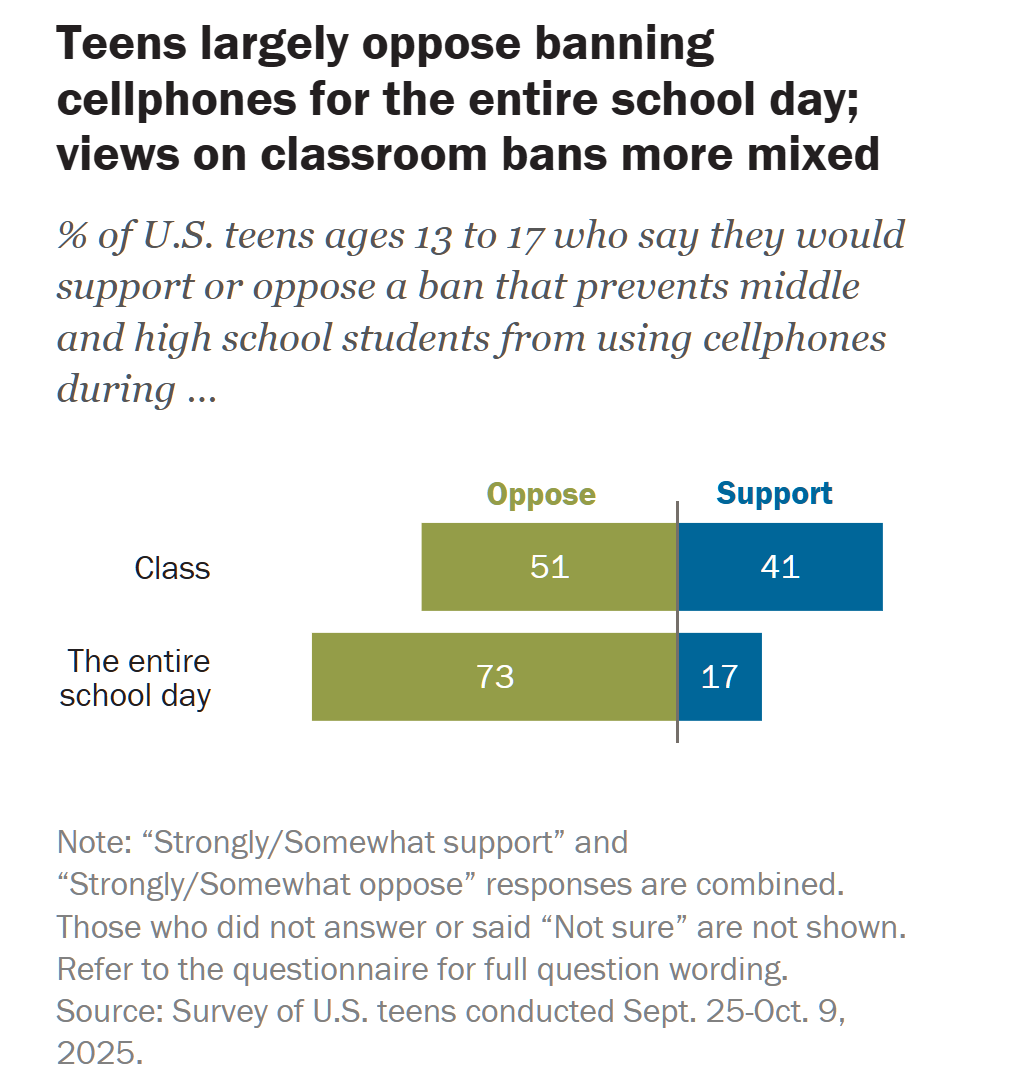
Most participants – 73% – opposed banning cellphones during the entire school day, including at lunch and between classes. The only surprise there is that the figure isn't even higher. Another 17% said they support the ban, and 10% said they weren't sure.
However, 41% of those who took part said that they do support banning middle and high school students from using cellphones during class. Fifty-one percent said they opposed this ban, while 9% were not sure.
Pew also broke down the results by race, age, and gender. While 46% of White teens say they support banning cellphones in classrooms, that share drops to about a third among Hispanic and Black teens. The pattern is the same for all-day bans, though support is low across all groups.
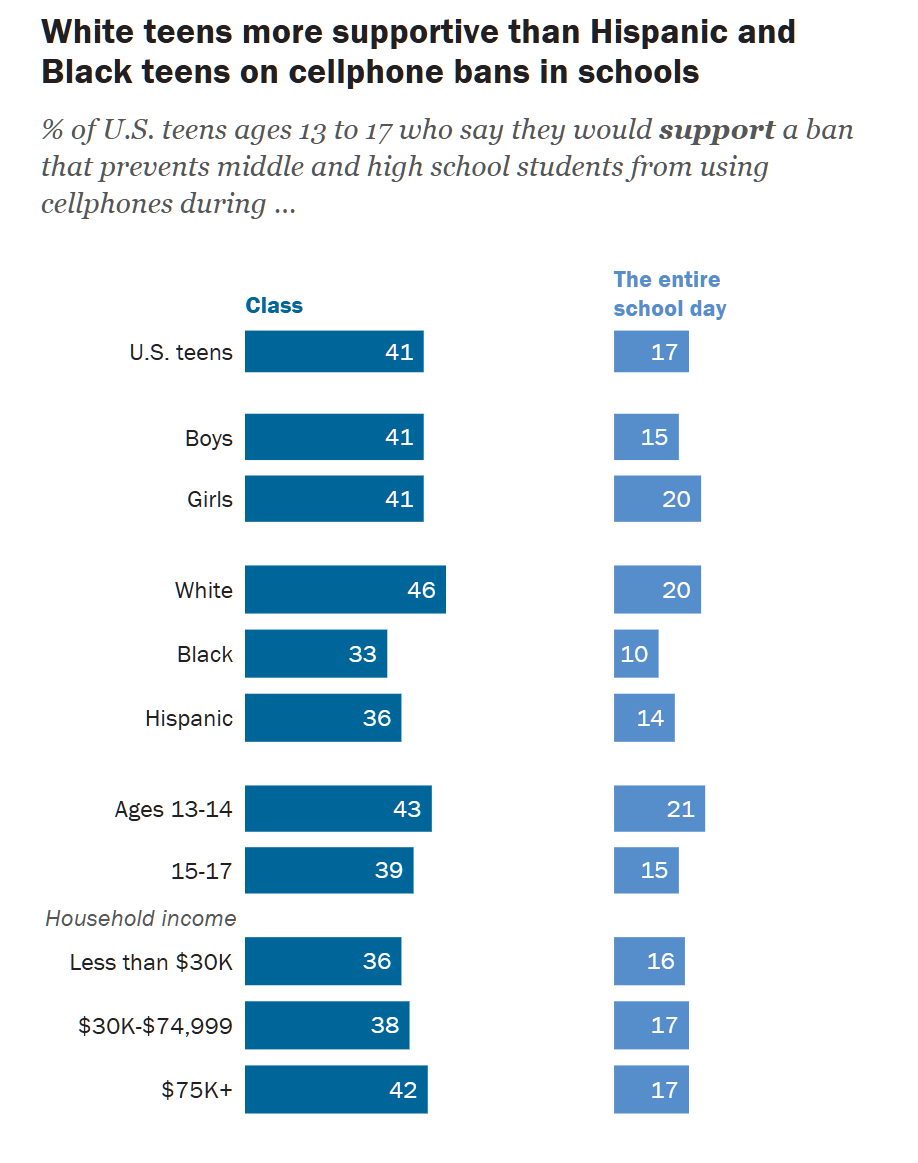
Older and younger teens are similarly likely to support a classroom ban, and teens ages 13 to 14 are slightly more likely to back a full-day ban.
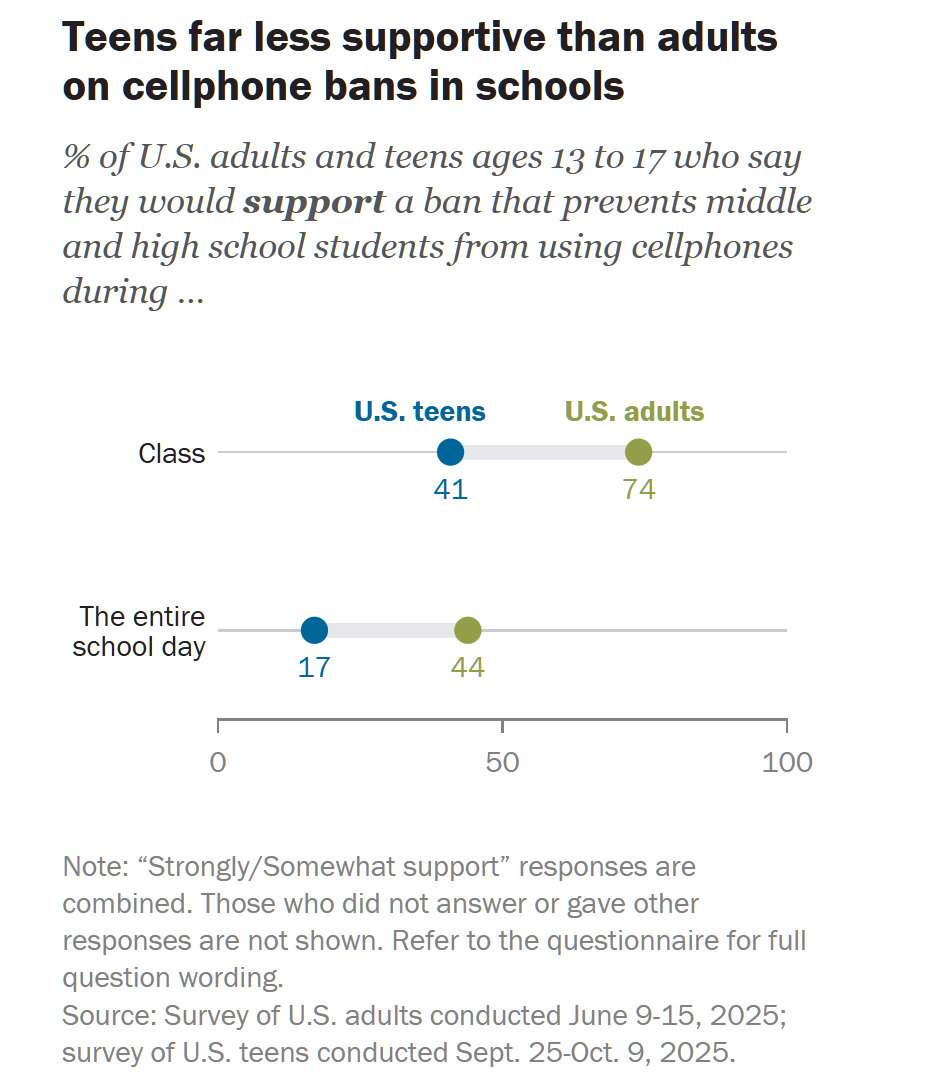
Previously, most adults were against any kind of cellphone ban in schools, mostly due to fears they would not be able to contact their children in an emergency. Other concerns included the ban being too difficult to enforce, that phones are a useful teaching tool, and that parents, rather than teachers, state authorities, or the federal government, should decide if their child can use a phone in class.
But most adults' stance is softening. In October 2024, 68% supported a classroom ban and 36% supported all-day bans. Now, those figures have increased to 74% and 44%, respectively. Post-school-age teens were a lot less supportive.