
In context: TikTok's yearslong standoff with Washington ended this week not with a ban, but with a restructuring. The company has officially formed a US-based joint venture, bringing an end to half a decade of uncertainty over whether the Chinese-owned app could continue operating in the United States.
The deal, first announced in December, transfers control of TikTok's US operations to a new entity majority-owned by American investors, including cloud-computing giant Oracle, private-equity firm Silver Lake Management, and Abu Dhabi-based MGX.
The move follows a 2024 law mandating that ByteDance, the Chinese parent company, divest its US TikTok assets or face an outright ban. During his second term, President Donald Trump repeatedly extended the deadline before approving the final agreement this week.
The newly formed venture gives Oracle, Silver Lake, and MGX 15 percent ownership each – together controlling 45 percent – while existing US-based TikTok investors hold 30.1 percent. ByteDance retains a minority 19.9 percent stake.
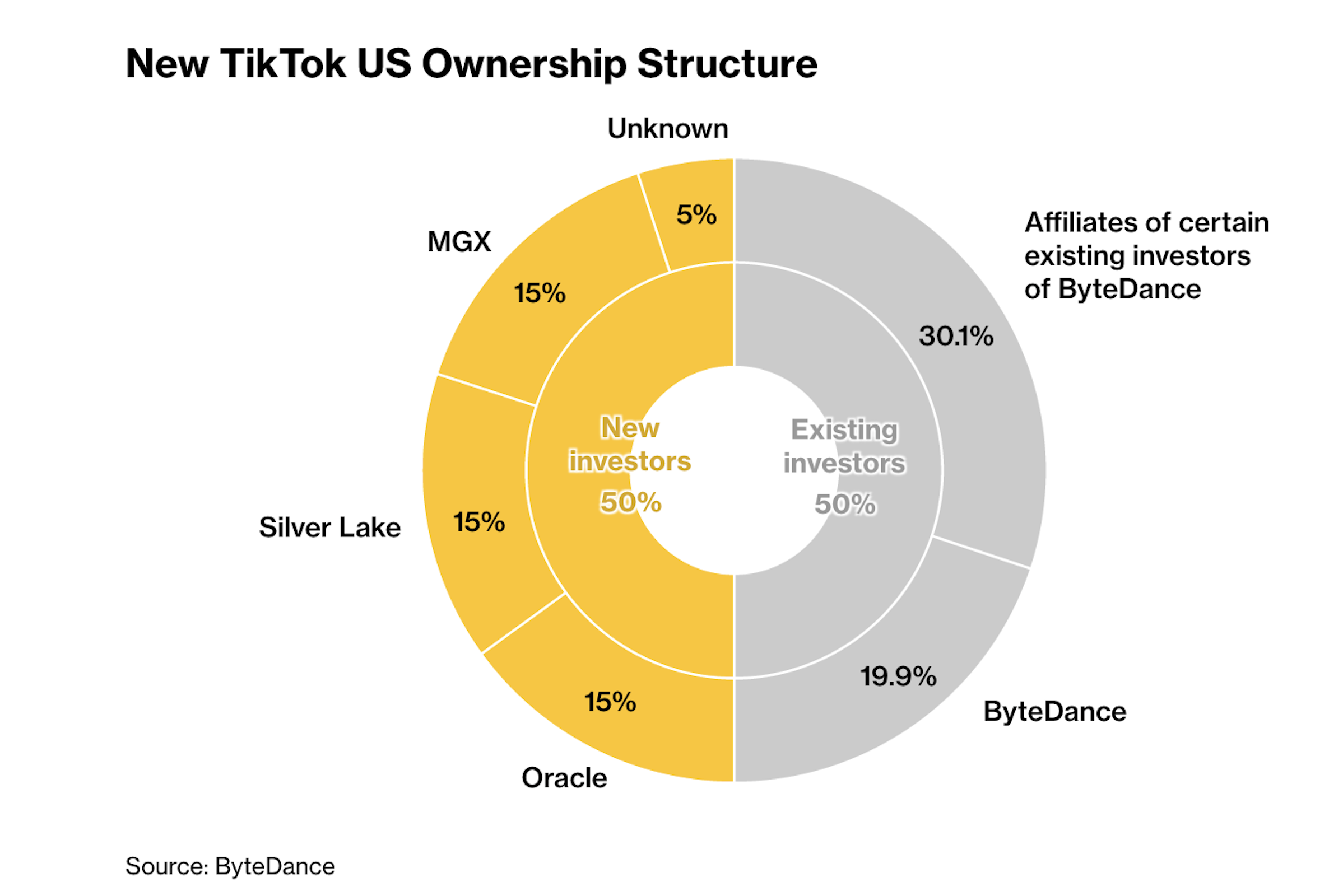
Oracle executive Ken Glueck joins TikTok CEO Shou Chew and newly appointed chief executive Adam Presser on the board of the US firm, which will be overseen by a seven-member majority-American board.
Oracle will play a central role as TikTok's official data and algorithm security partner, continuing its prior role as a cloud host for US user data. Under the agreement, ByteDance will lease its recommendation algorithm to the new entity, which will retrain it exclusively on American user data. The arrangement is designed to comply with congressional mandates for algorithmic separation and national security oversight.

Vice President JD Vance, whose former firm, Revolution, participated in the deal, has said the new US venture is valued at about $14 billion. That figure marks the highest public estimate tied directly to government disclosures, although analysts previously placed TikTok's broader US business – advertising, e-commerce, and live streaming – at between $35 billion and $50 billion.
The conclusion of the TikTok deal removes an enduring uncertainty from the social media landscape. But while the new ownership structure ends immediate regulatory pressure, questions remain about compliance and whether it fully isolates TikTok from Chinese control. Lawmakers have not ruled out further scrutiny as the new US operation begins managing the platform's domestic data and content pipelines.
Meanwhile, the app continues to grow in popularity among American users. TikTok said it now counts 200 million monthly users in the US, up from about 170 million in 2024.