
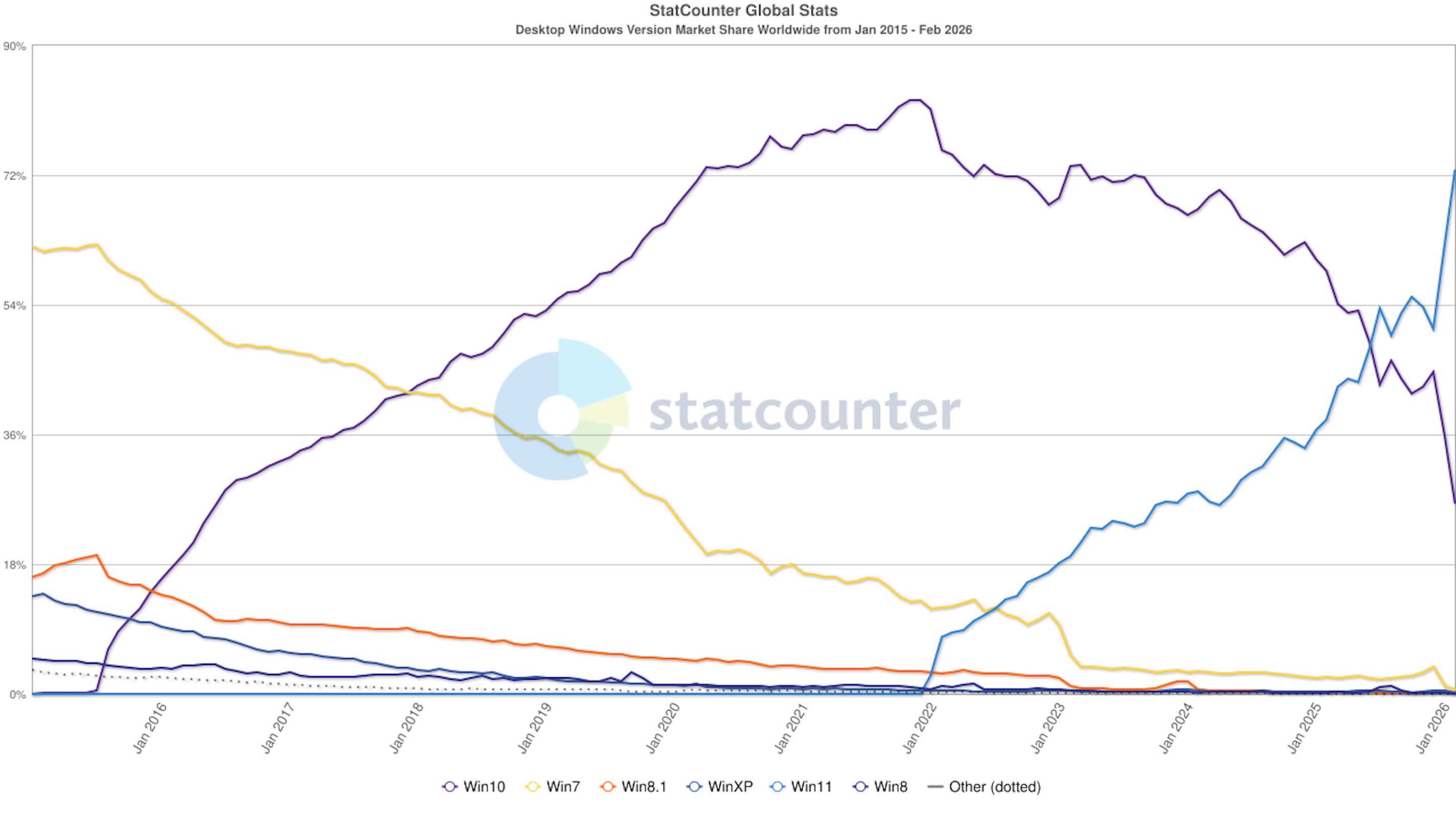
Connecting the dots: Windows 11 finally takes over the desktop, but maybe not on Microsoft's preferred terms. StatCounter's latest numbers show Microsoft's latest OS running on nearly three-quarters of Windows desktops worldwide, with Windows 11 at 72.78% and Windows 10 down to 26.27%. It is a sharp swing from only late 2025, when Windows 11 hovered above the 50% mark and Windows 10 still powered nearly half of all machines.
But this shift in Windows adoption looks less like a wave of enthusiastic upgrades and more like a forced march driven by expiring support deadlines, strict hardware policies, and a steady drumbeat of problematic patches.
At the same time, some Windows 10 holdouts aren't moving to Windows 11 at all. Instead, they're replacing their PCs and switching to macOS or Linux as Microsoft and Qualcomm promote a new generation of "Copilot+ PCs."
Driving this transition is a set of technical decisions that redefine what a Windows PC is allowed to be. Windows 11 formalizes a stack of security and platform requirements: TPM 2.0, Secure Boot, modern CPUs, UEFI firmware, and an always-online identity that tighten the link between hardware, the operating system, and Microsoft's cloud services.
Those same decisions are fueling a backlash from power users and enterprises who see their upgrade paths blocked, their recovery options weakened, and their control over the system eroded.
Unsurprisingly, technically adept users have explored and exploited every available workaround. Documented methods exist to bypass hardware checks through registry edits, custom installation media, or patched setup files, allowing Windows 11 to install on unsupported CPUs, systems without TPM 2.0, or machines that fall short on RAM or storage.
Similar techniques can still, in some cases, force the OS to accept a local account. But Microsoft is steadily closing these gaps, making it clear that systems running outside the official specifications may be denied updates or face reliability issues.
For those who do not want to play cat-and-mouse with each new build, the choice is stark: buy new, compliant hardware and accept the full security and identity stack, or stay on Windows 10 and face an end-of-support cliff.
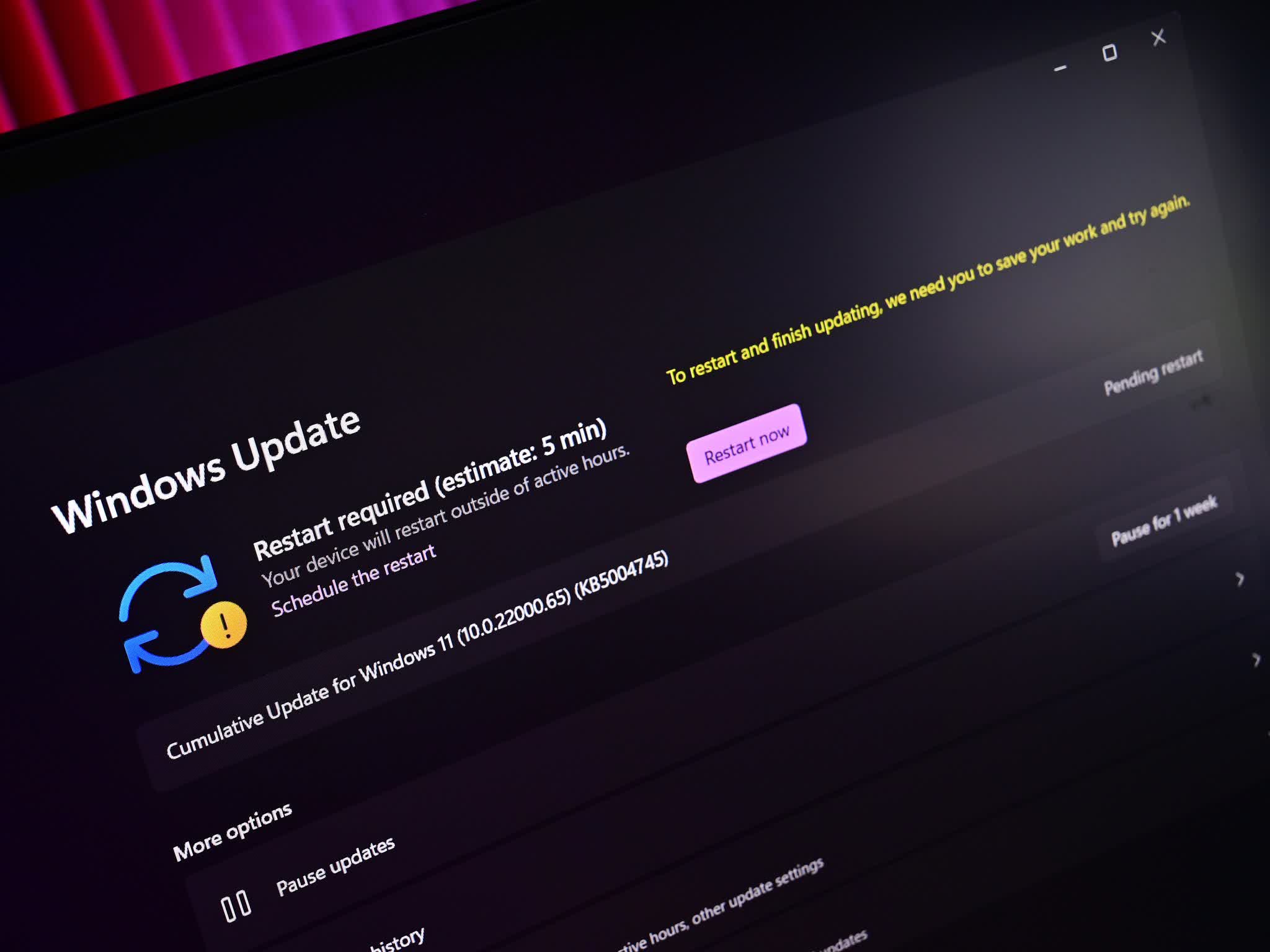
The experience on supported hardware has also been uneven. Windows 11's security architecture leans heavily on features like BitLocker, Secure Boot and the Windows Recovery Environment, yet a series of buggy updates has undercut confidence in the stack. Recent patches have triggered unintended BitLocker recovery on some systems, forcing users to locate recovery keys they may not realize they needed.
These incidents matter because they strike at the safety net. Windows 11 asks users to trust a more tightly integrated hardware-firmware-OS stack, with encryption and secure boot paths that depend on everything working in lockstep. When an update misfires and leaves users stuck on a BitLocker screen or in a recovery environment that cannot accept input, it undermines the argument that stricter controls and mandatory security features are an unambiguous win.
So while Windows 11 has finally achieved numerical dominance, the path it took raises questions. Whether Microsoft can improve reliability and rebuild trust while maintaining its stricter model will determine whether Windows 11 is seen as a solid foundation for the next decade – or as the moment a critical segment of power users decided to walk away.