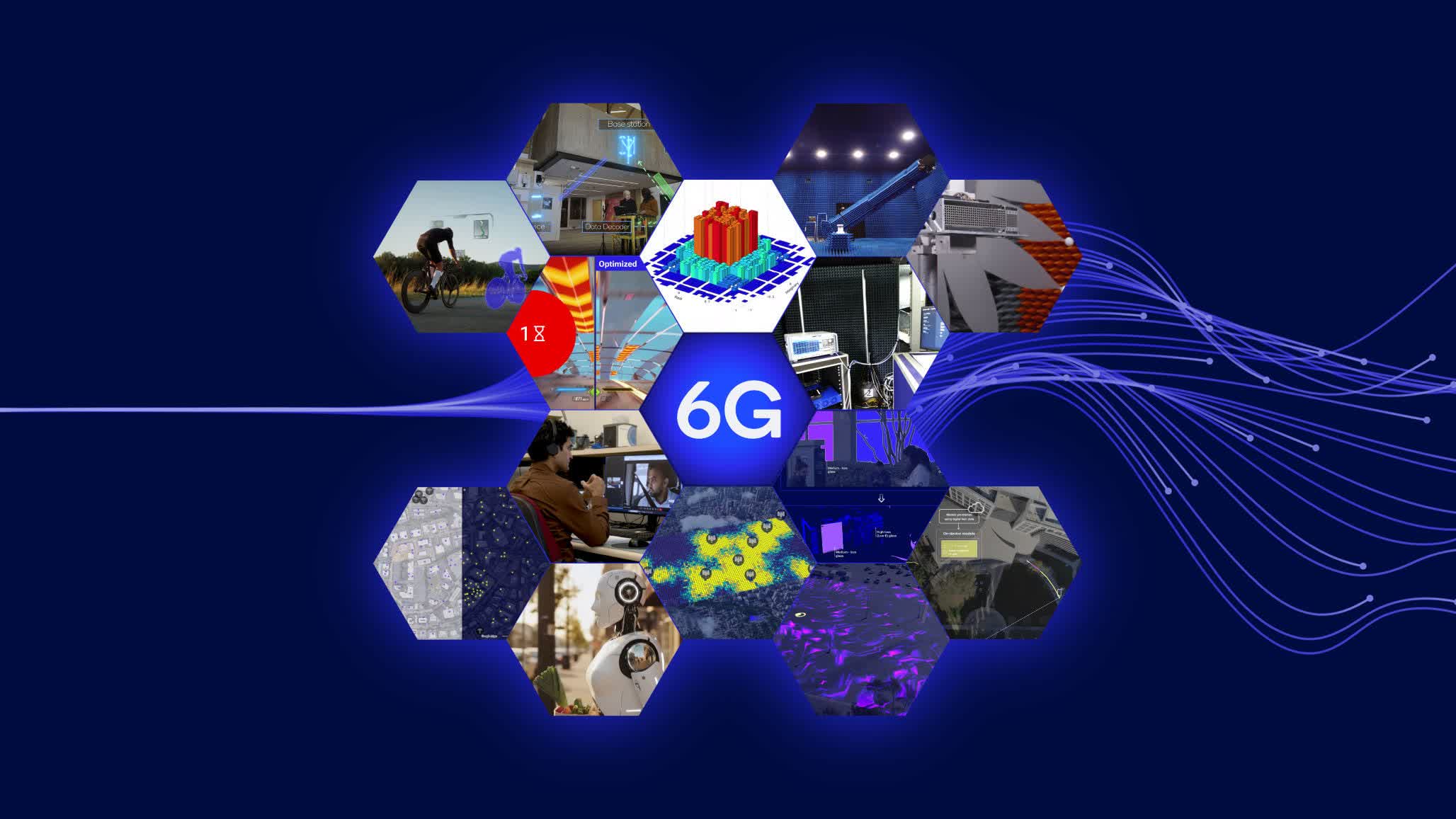
Heading to Barcelona for this year's Mobile World Congress, I had a feeling there might be some early discussions on the potential for 6G. Boy, was I wrong. Instead of 6G being a sideline topic, it was the center of attention for many of the vendors there.
In particular, the theme of how 6G could become a critical enabler for hybrid AI applications that span hyperscalers, data centers, devices, and cellular networks received a surprising amount of attention at this year's show.
Chip companies like Qualcomm and Nvidia, network infrastructure vendors such as Nokia and Ericsson, and even telcos like T-Mobile and Deutsche Telekom all offered strategic plans and even some early demonstrations for how they were going to tackle the next generation of cellular networks.
From a pure technology enablement perspective, it is probably not surprising that semiconductor vendors like Qualcomm and Nvidia had some of the most forward-looking perspectives. After all, chip designers have to plan for capabilities they expect will be required several years in advance, so they are wired to think that way.
Qualcomm, in particular, made a very strong statement about the importance of 6G and the numerous technologies it believes can contribute to its evolution. The company positioned itself as a key supplier for everything from next-gen modem designs for early 6G testing, to AI acceleration silicon for devices and data centers, AI-powered RAN (Radio Access Network) operation and automation, and implementations of Wide Area Network physical AI applications such as robotics and cars.
For physical AI, Qualcomm discussed how the new ISAC (Integrated Sensing and Communications) technology expected to be a key differentiator for 6G compared with 5G would play an important role. ISAC leverages something called RF sensing, which uses radio frequency waveforms to provide a real-time radar-like view of the physical world around us.
In a manner conceptually similar to existing WiFi sensing technology, ISAC tracks the path and reflections of cellular signals sent from towers and uses that data to create a physical display and map of the surrounding area. While it does not offer camera-like visibility, nor does it carry the privacy concerns that networks of connected cameras often have, it provides a strong solution for applications such as digital twins of locations and facilities, asset tracking, connected cars, robots, and much more.
Though not directly tied to 6G, one of the Qualcomm's big MWC announcements was the unveiling of the Snapdragon Wear Elite SoC for wearable devices such as smartwatches and smart glasses. Wear Elite should significantly improve the on-device AI capabilities of devices that use it. The SoC is the first in the company's wearable chip line to integrate an NPU.
Wear Elite also includes an impressive range of low-power wireless connectivity options, including cellular, WiFi, Bluetooth, Threads, UWB, and satellite, that will enable a wider variety of wearable form factors and applications.
Nvidia's impact was strongly felt at this year's MWC even with the company not physically present at the show. Given its dominant position in AI and the momentum driving telecom providers to offer more of those services, the company's products and capabilities were an essential ingredient in many of the discussions around AI and 6G.
The company also had an outsized presence in announcements surrounding the use of AI acceleration for core RAN applications. While Nvidia first introduced the concept of its Aerial software project for using GPUs to accelerate L1 RAN workloads and run AI applications more than five years ago, it was only at this year's MWC that it seemed to have a real impact.
Until now, many industry players wrote off GPUs as too expensive, too power hungry, and unnecessary for telecom applications, but that perspective appeared to have come full circle at this year's show.
In fairness, some of that change was driven by small but important tweaks to how Nvidia talks about Aerial, but most of it comes from how quickly the world has changed and how AI is now at the center of every tech discussion.
Last fall, Nvidia unveiled its Aerial RAN Computer Pro (ARC Pro), which focuses almost exclusively on running core RAN workloads. Instead of using the kilowatt-level GPUs the company is famous for in today's most advanced data centers, ARC Pro leverages lower-power versions that fit within the same type of power envelope, around 330 watts, as existing non-GPU-based solutions.
While ARC Pro can also run other AI applications in the same environment, the company has also discussed how more of those workloads are likely to run in telco core network locations such as central offices and other data centers. In these environments, new Vera Rubin-class Nvidia GPUs can run, providing a split computing option that seems better suited to the generally more conservative telco operators.
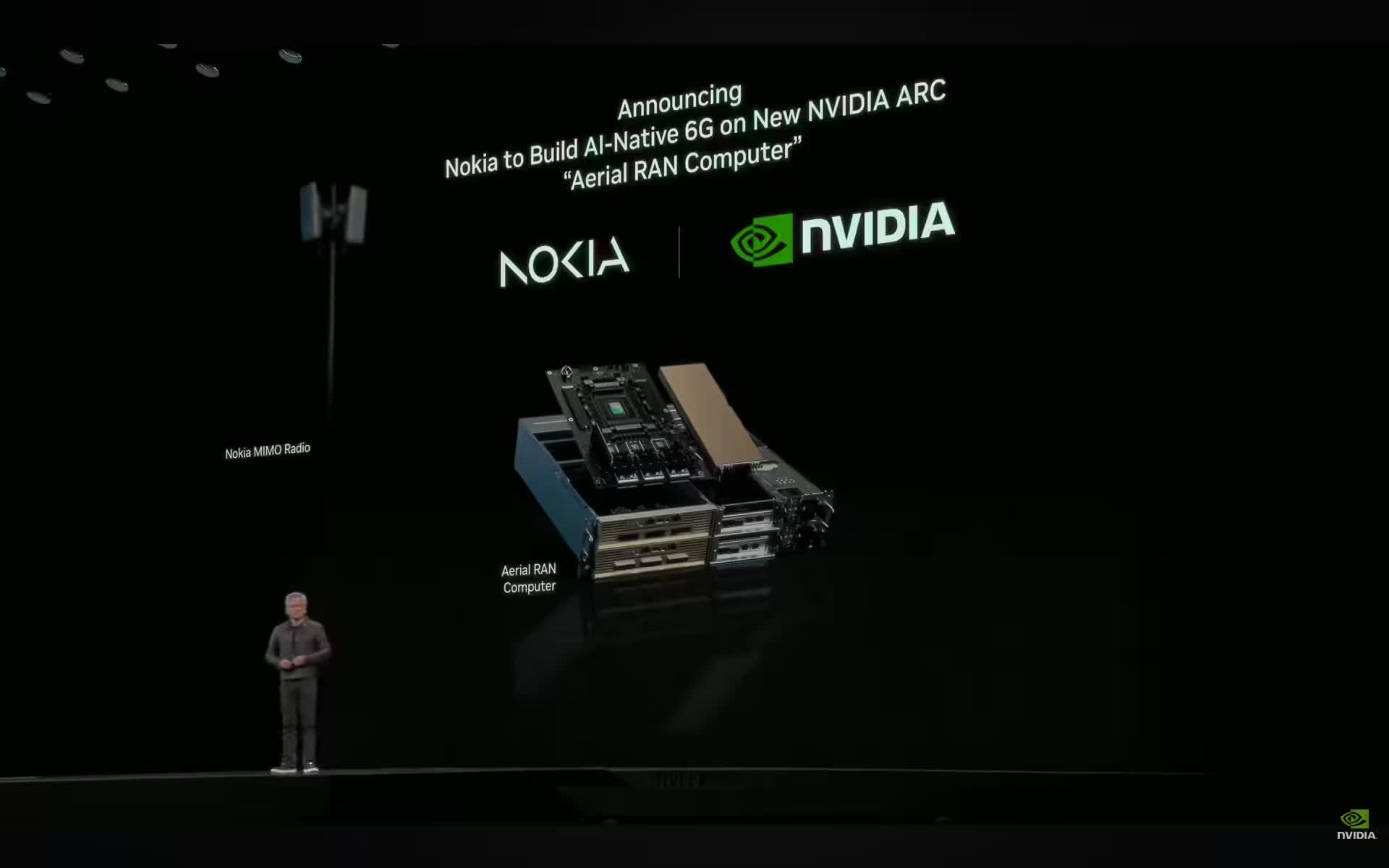
Nvidia also took center stage with Nokia (the company announced a $1 billion investment last fall), as the network equipment provider revealed several real-world installations of its Nvidia-powered options for both 5G and 6G environments. Nokia showed both GPU-equipped upgrade card options for its existing Airscale line of baseband solutions and a new set of GPU-equipped cards that can be used with standard x86-based COTS servers from companies like Dell, HPE, Lenovo, Cisco, and others.
Importantly, Nokia emphasized its increasing focus as a software provider that can bring battle-tested telecom applications to a wide variety of hardware environments. In the process, this move helps the company shift away from the increasingly difficult challenge of keeping its custom silicon ReefShark-based products on a performance par with the rapid advancements in other general-purpose AI accelerators such as GPUs. In addition, it highlights the modern realities of software-based radio designs.
In fact, another key industry-wide development from MWC was the focus on software-defined radios. While the concept certainly is not new, the reality of how important it will be as the industry transitions from 5G to 6G became very apparent at this year's show. That software-based focus was also a critical part of Ericsson's positioning and its key announcements. Like Nokia, the company has new Nvidia GPU-based options leveraging the CUDA-based Aerial software stack, but it also continues to believe that its custom silicon can and will play an important role in both the 5G and 6G worlds.
In addition, Ericsson made significant announcements with Intel about how the company's new Xeon 6+ family of CPUs, based on Intel's new 18A process technology, can help enable a software-upgradable path to 6G when telco customers choose to make that move.
Ericsson focused on the pivotal role that AI plays across RAN, core network, and edge applications, highlighting how the worlds of compute and traditional mobile networks are merging into a new type of entity with important implications and big questions not just for the tech industry but for society overall.
As in previous years, Ericsson also had a wide range of interesting demos at its booth, including some featuring the ISAC sensing capabilities expected for 6G, as well as demonstrations of how AI-based tools can enable increasingly sophisticated network automation.
Several telcos also began discussions around the potential role that 6G could play in their environments. T-Mobile and its German counterpart Deutsche Telekom, for example, highlighted the work they are starting to do in enabling AI applications on their networks with the debut of a new 6G Innovation Hub.
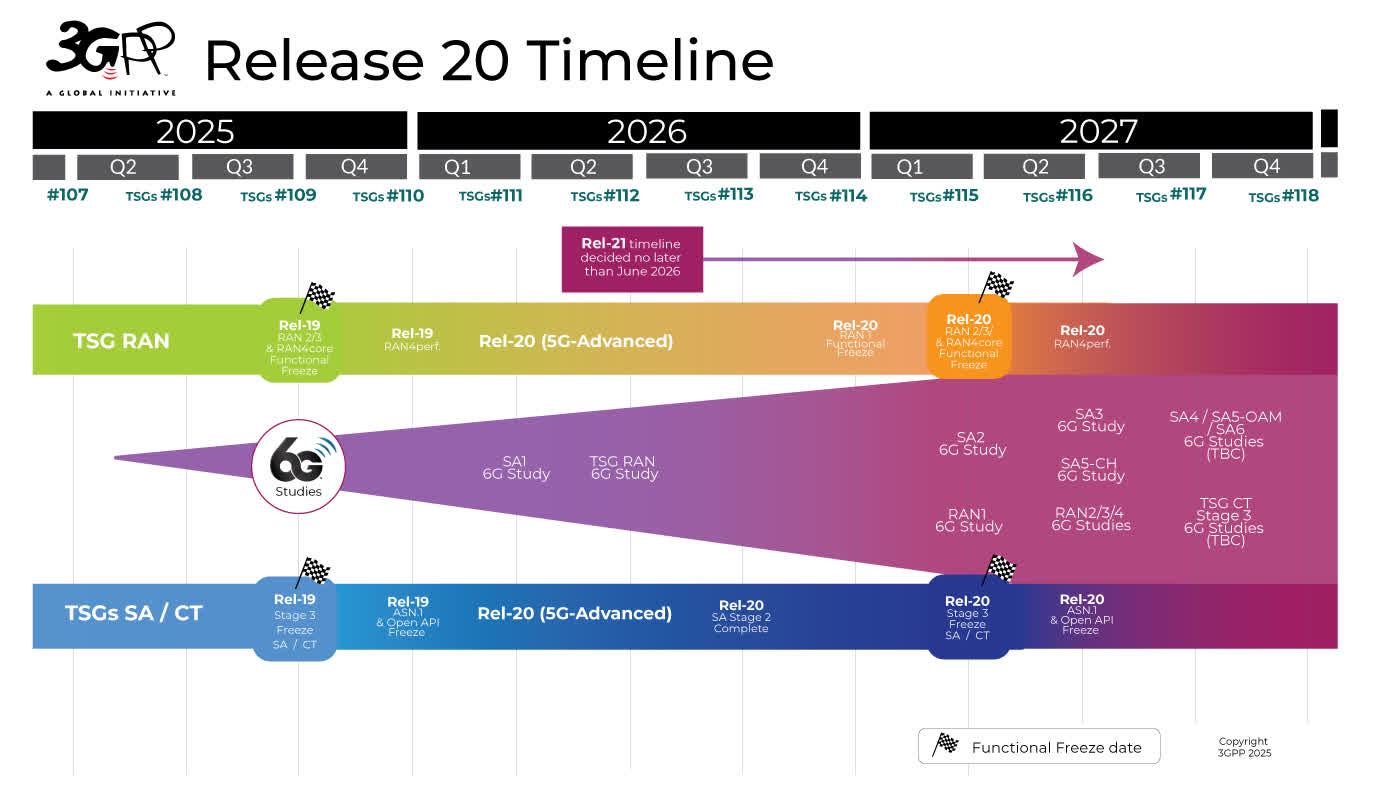
According to the two, their efforts will focus on "the evolution of connectivity, sensing, and compute to support the next generation of Physical AI applications." T-Mobile also made a joint announcement with Ericsson and Nvidia about how they are leveraging GPU-accelerated AI RAN capabilities to improve the performance and efficiency of their networks, and with Qualcomm to discuss how they are working together to make the first 6G installations real starting in 2029.
When it comes to any telco, the one big question hanging over all of them regarding 6G and AI is business models. Unfortunately, most of the new revenue opportunities that 5G was supposed to deliver through a more intelligent network have yet to materialize. That reality raises legitimate concerns that the same problems could emerge with 6G.
In addition, many telcos are still paying back the huge investments they made to upgrade their infrastructure to 5G, and very few have even made the transition to 5G SA (Stand Alone). As a result, the willingness and ability to adopt 6G could be limited for some time. The bottom line is that telco providers have to figure out ways to create and successfully charge for new AI-powered services, or the industry could remain stuck in its more utility-like role for some time.
If MWC 2026 made one thing clear, it is this: 6G has moved from a speculative future concept to a strategic planning framework for the next wave of AI-enabled networks.
Of course, because it is still very early days and the official specifications for 6G are barely getting started, there is a fair bit of room for interpretation and several possible paths that the evolution to 6G could take. Plus, to be honest, on many levels it still feels like the industry needs several more years to get 5G right before any serious discussions about 6G occur.
At the same time, there seemed to be more people at this year's show than ever before who had given up on 5G and 5G Advanced ever reaching the full potential that was promised. Comments about "every other G" being the impactful one, implying that 5G would not be as important as 4G but 6G would be, were made by several people I interacted with.
Even so, progress is being made on the 5G front, and there were some important announcements about those advancements at the show. The new Live Translation feature and other voice-based capabilities that T-Mobile recently unveiled, for example, are solid examples of the "intelligent network" capabilities that 5G was supposed to bring us.
The net result is that the telecom industry and its suppliers seem to be at that uncertain stage in the middle of a major technology transition where more people are looking forward or backward than focusing on the realities of where we currently are. Nevertheless, there is no question that AI is going to be the critical component in moving the telecom industry ahead, but many uncertainties remain about exactly how, where, and who are best positioned to drive that AI development. If MWC 2026 made one thing clear, it is this: 6G has moved from a speculative future concept to a strategic planning framework for the next wave of AI-enabled networks.
How it ultimately evolves remains to be seen, but there is no question that it will be a fascinating process to watch.
Bob O'Donnell is the founder and chief analyst of TECHnalysis Research, LLC a technology consulting firm that provides strategic consulting and market research services to the technology industry and professional financial community. You can follow him on Twitter @bobodtech