
A hot potato: Nintendo's legal team has become notorious over the years for aggressively pursuing modders and software pirates. This week, the console maker filed a claim against a much bigger target – the US government – joining many other entities in demanding nearly $200 billion in refunds after the Supreme Court declared the Trump administration's 2025 "Liberation Day" tariffs unlawful.
The claim, obtained by Aftermath, recounts how President Donald Trump raised historically high import tariffs last year and how the Supreme Court struck them down last month. Per the court's decision, Nintendo is demanding an unspecified sum in refunds, plus interest.
Trump imposed tariffs exceeding 25% on countries including Japan, Taiwan, South Korea, India, Vietnam, and China last April in an attempt to strengthen US manufacturing. Over the following months, the duties shifted chaotically, with anti-China tariffs at times exceeding 100%.

Hardware manufacturers, whose supply chains depend heavily on international trade and manufacturing in Asian countries, were hit particularly hard.
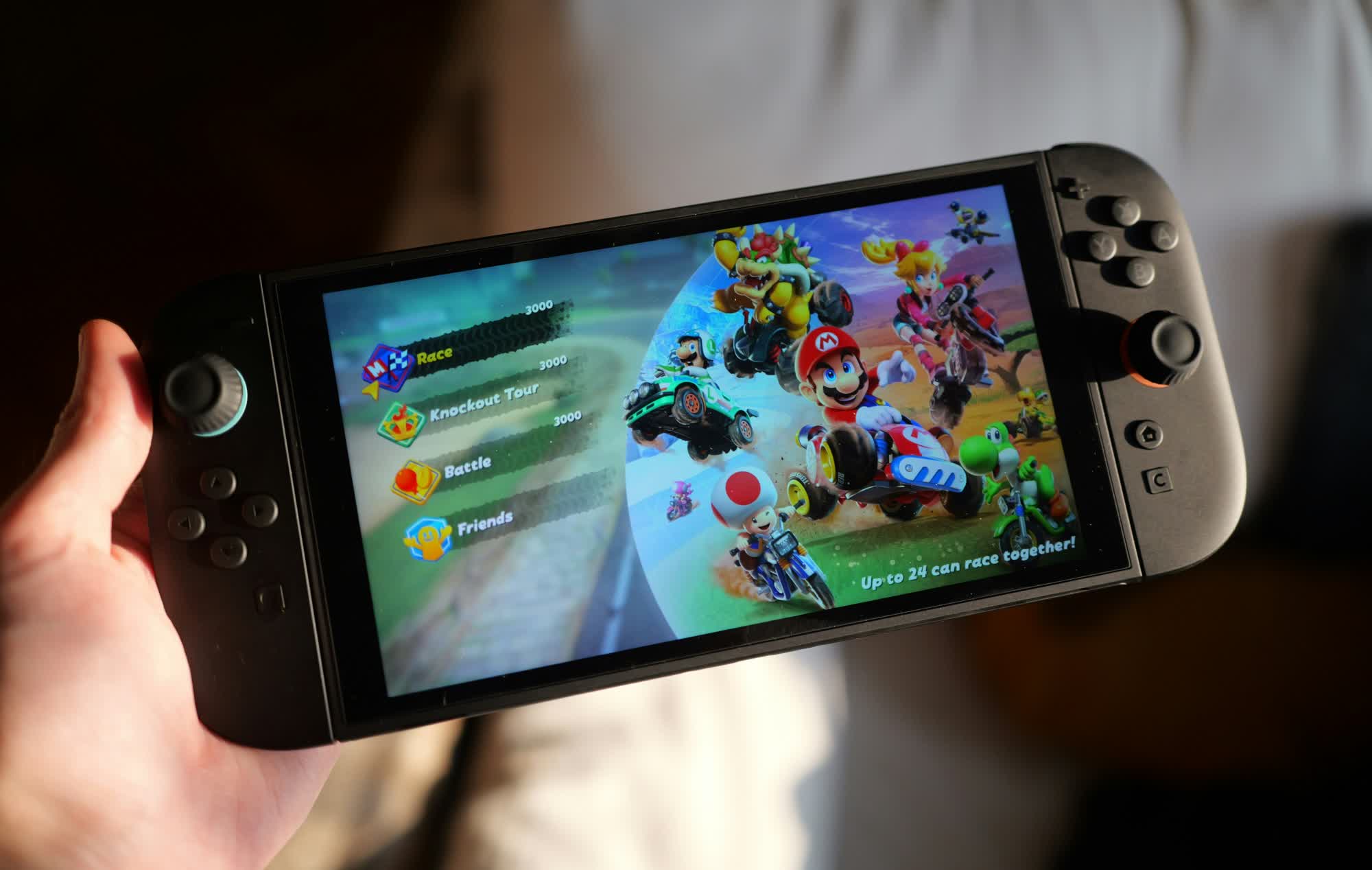
Although Nintendo claimed that the "Liberation Day" tariffs did not impact the Switch 2 handheld console's $450 launch price, and the company had shifted manufacturing from China to Vietnam during the first Trump administration, it delayed pre-orders for the device from April 9 to April 24 before launching the Switch 2 on June 5. Nintendo also released a Japan-only version of the handheld that is over $100 cheaper.
The Supreme Court struck down the tariffs last month, ruling that the president had overstepped his authority. Trump issued the duties through a novel interpretation of the International Emergency Economic Powers Act (IEEPA), which empowers the president to regulate imports in response to emergencies.
However, the IEEPA does not mention tariffs, and no previous president had used it to impose tariffs, let alone tariffs of last year's magnitude. The court ruled that Trump could not enact such "extraordinary" duties without congressional approval, which he did not have.
In response, Trump immediately imposed a global 10% tariff through Section 122 of the Trade Act of 1974, later threatening to raise it to 15%. Two dozen state attorneys general sued to block the new duties this week.
Moreover, Customs and Border Protection told a US Court of International Trade judge this week that its computer systems and staff lack the capacity to process the roughly $166 billion in government-owed tariff refunds.
In a filing acquired by CNBC, CBP stated that it aims to upgrade its equipment to handle roughly 53 million tariff incidents from 330,000 importers within 45 days.