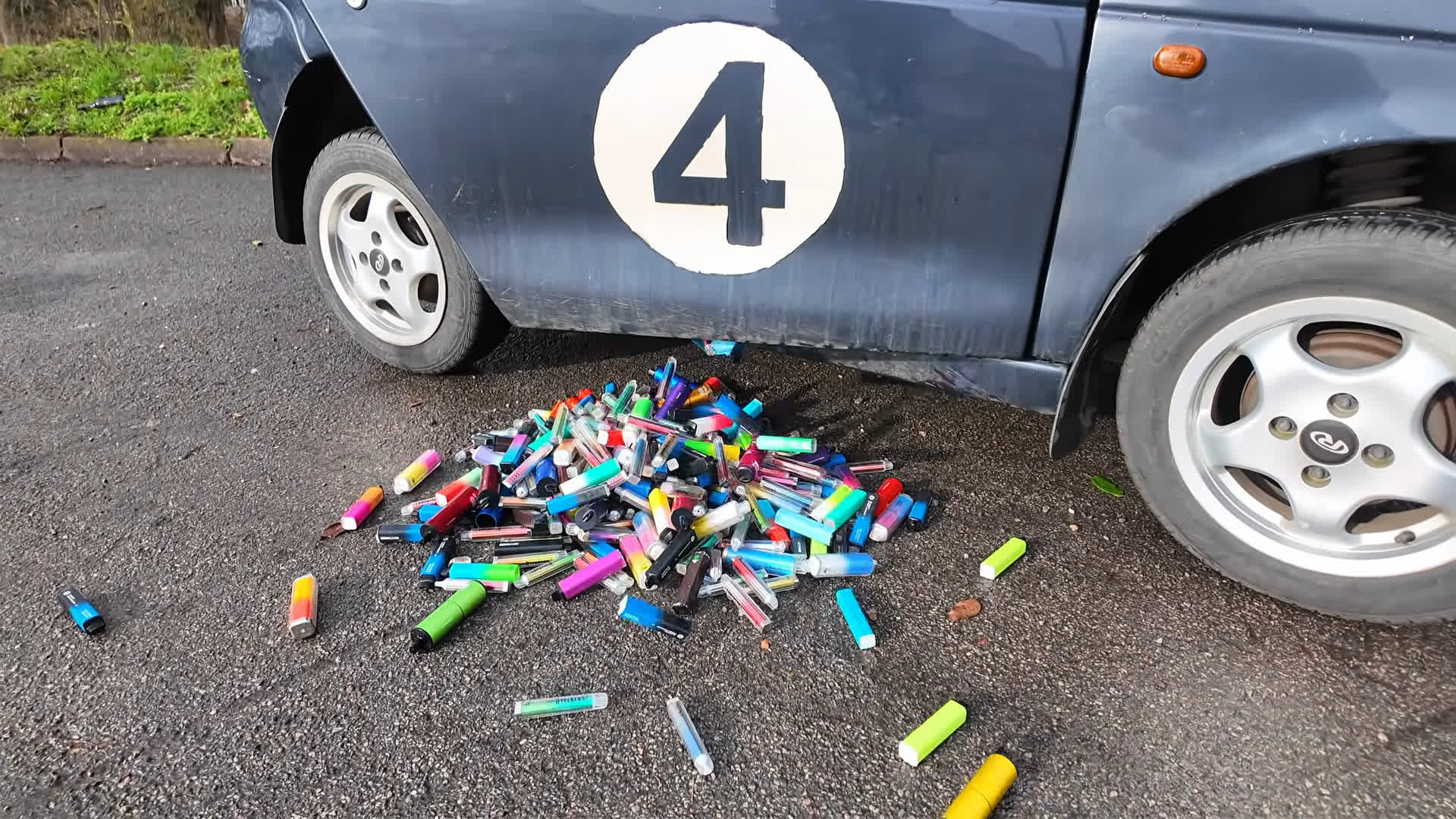
The takeaway: A small car parked in a rainy British driveway might seem an unlikely place for a battery revolution. Yet that's where engineer and YouTuber Chris Doel has built the world's first vape-powered vehicle – a working proof of concept that challenges both the limits of lithium-ion recycling and society's growing mountain of electronic waste.
Doel's curiosity has long centered on what happens to the lithium batteries buried inside every disposable vape pen. Each one contains a rechargeable cell roughly the size of a finger, capable of multiple charge cycles yet routinely tossed with the trash. In the UK alone, an estimated million of these vapes are discarded daily, he notes, meaning hundreds of thousands of usable power sources are literally thrown away every day.
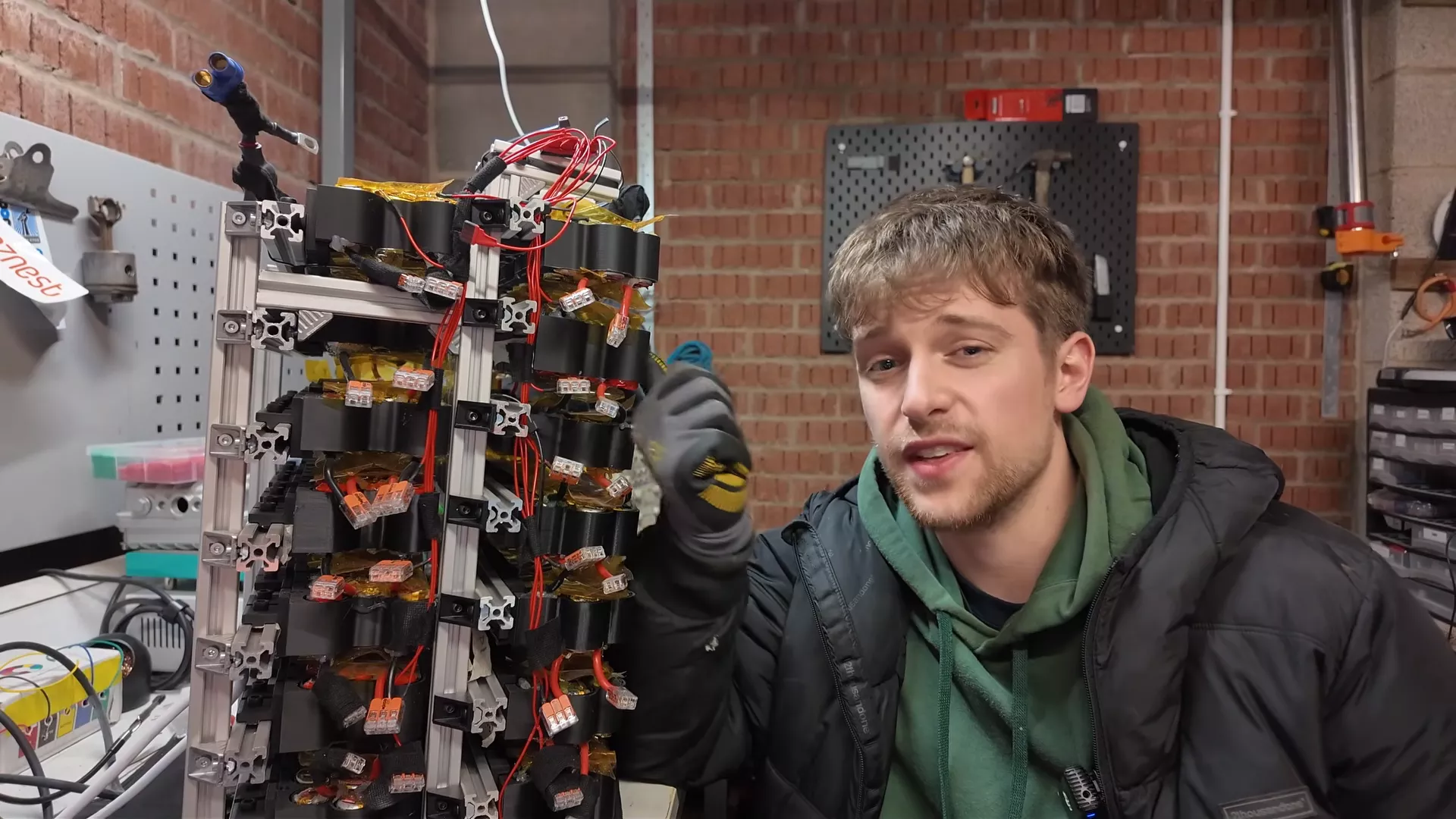
His response was to extract those cells, test and group the viable ones, and use them in successive power projects. Earlier experiments produced compact USB power banks and eventually a full-scale home powerwall made from 500 salvaged cells – enough to run his house and workshop for several hours. That same homemade battery now sits at the heart of his newest test platform: a Reva G-Wiz, a lightweight electric microcar from the early 2000s.
Originally, the G-Wiz relied on a 48-volt lead-acid pack that delivered modest performance, roughly a 50 mph top speed and short range. The chemistry was outdated, but its low-power drivetrain provided a rare compatibility match for Doel's 50-volt vape battery array.
Doel mounted his reconstructed pack inside an aluminum case, wired the cells into series-parallel groups for voltage stability, and set the unit in place of the original batteries. To mitigate risk, Doel programmed the inverter to cap current draw well below the vehicle's stock limit of 350 amperes. The system could safely deliver about 120 amperes continuous, and software tuning ensured fuses wouldn't fail under acceleration. The rebuilt car powered up cleanly on the first try.
Perhaps the most delightfully absurd twist: the G-Wiz recharges through USB-C – yes, the same standard connector used on laptops and phones. When Doel plugged it in, the setup worked instantly.
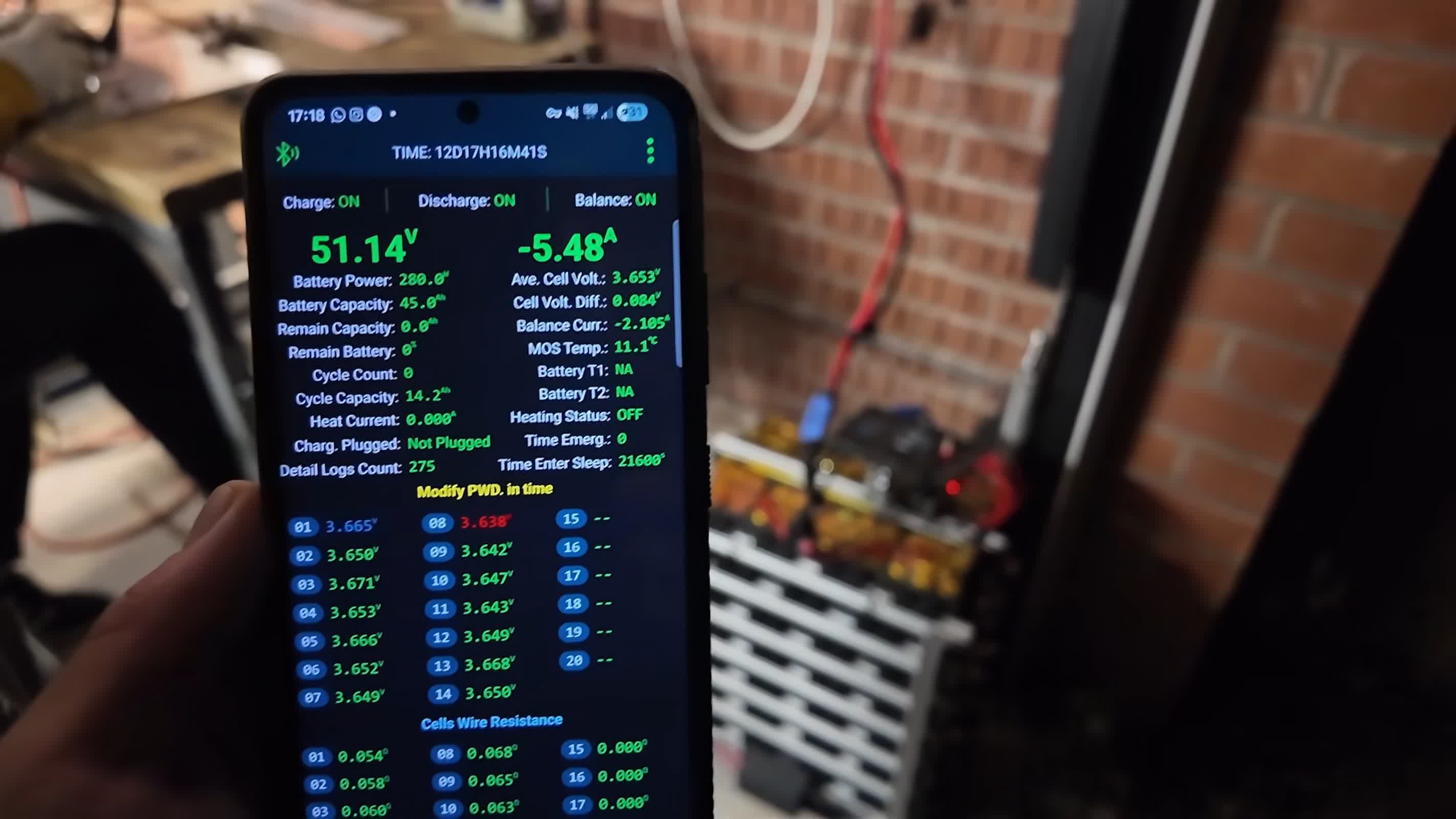
Once the system passed safety checks, it was time for a cautious road test. A smartphone monitoring app tracked cell voltages and temperatures in real time. The small car hummed out of the driveway, steady at 35 mph, showing that its regenerative braking system still functioned, returning approximately 10 amperes on deceleration.
Over the next several miles, Doel tested normal driving conditions: headlights and wipers under rain, quick stops for food and supplies, and climbs that demanded bursts of over 100 amperes.
On its final ascent – a steep hill outside town – the handmade battery reached its limits. One of the 12 cell banks tripped out, cutting total output. The car coasted to a stop after 18 miles of travel. The highest recorded cell temperature was a mild 19°C, well within safe range for lithium-ion chemistry in winter.
Beyond novelty, the achievement raises broader questions. Disposable vape batteries often use lithium-cobalt oxide or lithium-manganese chemistry, materials identical to those used in premium consumer electronics. Their short product lifespan isn't about technical feasibility but economics: these devices are marketed for single use, even when their cells could provide hundreds more cycles. Doel's work visualizes what's possible if such waste streams were instead harvested, tested, and redeployed at scale.
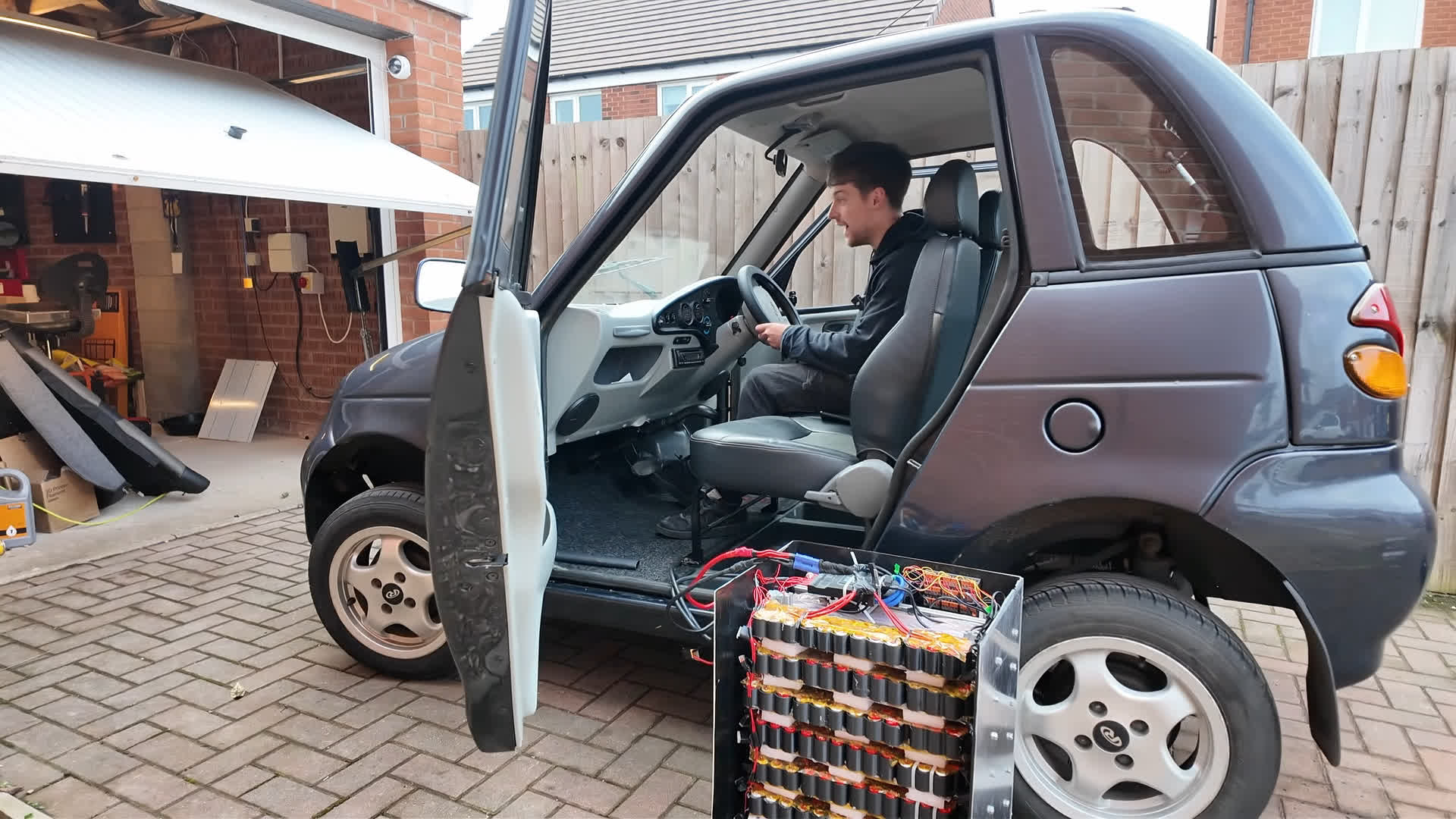
The environmental angle is hard to ignore. While a car powered by 500 discarded vapes isn't a production-ready concept, it neatly illustrates the hidden potential in everyday waste, and the growing need for proper e-waste management standards. The engineering challenge of aggregation, balancing, and safety remains significant, but projects like Doel's offer both data and inspiration to researchers exploring micro-cell recycling.